rss

joined 2 months ago
MODERATOR OF
 

The Gaelic Athletic Association (GAA) has chosen to maintain its insurance and sponsorship agreement with Allianz, despite the company being part of so-called Israel’s economy of genocide, outlined in a landmark UN report. The GAA is the main administrator of traditional Irish sports such as Gaelic football and hurling, with over 2,200 clubs registered as members.

Gaelic Athletic Association

The sporting body had assigned a review of the deal with the German financial services monstrosity to its Ethics and Integrity Commission (EIC). The Gaelic Athletic Association set up the EIC in the wake of pressure from members demanding that the association drop Allianz, citing its appearance in a report by the brilliant UN Special Rapporteur Francesca Albanese. In that report, entitled From economy of occupation to economy of genocide, Albanese outlined how Allianz have been ploughing money into the illegitimate Zionist pseudo-state, saying:

Global insurance companies, including Allianz and AXA, also invest large sums in shares and bonds implicated in the occupation and genocide, partly as capital reserves for policyholder claims but primarily to generate returns. Allianz holds at least $7.3 billion and AXA, despite some divestment decisions, still invests at least $4.09 billion in tracked companies named in this report.

She went on to detail how they fund the high-risk work of companies that operate as part of ‘Israel’s’ ongoing land theft project, enabling them to continue their criminality knowing they have an insurance behemoth at their back:

Their insurance policies also underwrite the risks other companies necessarily take when operating in Israel and the occupied Palestinian territory, thus enabling the commission of human rights abuses and “de-risking” their operational environment.

GAA’s ‘Ethics and Integrity’ Commission doesn’t understand its own name

Nonetheless, the authors of the Ethics and Integrity Commission report determined that the genocide funding company should be kept. A Gaelic Athletic Association statement gives the reasons, including:

  • If the GAA was to terminate its contracts with Allianz it would be impossible to secure an alternative insurer that would not have similar links.
  • The unilateral termination of the contract with Allianz plc by the GAA could expose the Association to legal consequences apart from loss of sponsorship.
  • The GAA is ethically and legally bound to honour its contracts and a failure to do so has the potential to damage its reputation and undermine its ability to do business with commercial entities.
  • Allianz plc has no involvement with the IDF or corporate entities involved in the war in Gaza. Any such relationship is with a ‘sibling or cousin company’.

Now, this might be linguistic pedantry, but one might think an ‘Ethics and Integrity’ Commission might want to focus on – just as a starting point – ethics and integrity. Instead, the reasons cited focus on the practicalities of securing alternative insurance, legal consequences and potential reputation damage. The moments where they get close to honouring their own name still manage to find a means of falling short.

In terms of alternate insurance providers, the Boycott, Divestment and Sanctions (BDS) movement do not have a policy of finding a perfect, spotless option when dealing with complicity companies. An emphasis is placed on avoiding the primary targets of the movement, and other companies that egregiously fail, as Albanese’s report proves Allianz do.

That Allianz supposedly have “no involvement with the IDF” is a red herring; again the UN findings are clear on Allianz’s criminality. The fact that the GAA report refers to “the war in Gaza” rather than the Zionist holocaust in Gaza, tells the reader all they need to know about the useless commission’s starting point for examining these issues.

Decision condemned by activist groups

Activist group Gaels Against Genocide have condemned the Gaelic Athletic Association decision, saying:

It was important to give the GAA an opportunity to show us where they stand. The content, tone and utter lack of human empathy in the press release is telling. The GAA executive has adopted a ‘business as usual’ approach in a time of genocide.

The ethics that the Executive concerned itself with was not the genocide rather, the ethics of ending a commercial contract. It is now up to the grassroots of the GAA to make their position known at Congress.

They concluded by saying:

Given the history and values of the GAA, it should adopt a human rights based approach in its commercial dealings. This requires contracts to be screened for human rights violations in times of conflict.

System change is vital and we remain dedicated to our aim. We have faith in the great goodness and decency of the people of our Association.

The Gaelic Athletic Association has historically characterised itself as not being politically neutral. It has claimed to act as a vessel for the preservation of Irish culture, and as a vehicle for anti-imperialism.

This pretence now appears to have evaporated. Business concerns now appear to trump doing the bare minimum during a modern-day holocaust. As musician Nodlaig Ní Bhrollaigh put it:

For the GAA, it’s ‘business as usual’ – the banality of evil.

Featured image via the Canary

By Robert Freeman


From Canary via This RSS Feed.


Superficially, one would think that there is substantial progress being made in Lebanon toward an enduring peace. Lebanese officials are advancing the disarmament of Hezbollah south of the Litani River, as required by the ceasefire, and Lebanese and Israeli officials have twice met in US-brokered talks surrounding that ceasefire. Israeli strikes on Lebanon have continued […]


From News From Antiwar.com via This RSS Feed.


The Mental Health Act has received Royal Assent to become law, replacing its predecessor from 1983. Although aspects of the new Act are significant changes, many activists and charities have concerns that it does not go far enough. 

This reform was almost certainly a once-in-a-generation opportunity to make true change, but many gaps and issues were never addressed during its time in Parliament, even though they were highlighted by many. Similarly, many of the changes hinge entirely on a properly funded and functioning system: one this country does not have. 

Inequalities could persist under the Mental Health Act

Racial inequalities in mental healthcare and the treatment of those in mental distress are significant. Black people are over three and a half times more likely to be detained under the Act than their white peers, and more than 7 times more likely to later be subject to a Community Treatment Order (supervised community treatment which restricts people’s lives). Although this has been a very hot topic when it comes to the new Mental Health Act, there is little more than ‘clearer guidance for professionals’ being introduced around this issue. 

One of the most key changes is the removal of police stations and prison cells as ‘places of safety’ for those in mental health crisis. This is a critical change in a country that consistently criminalises mental ill-health, especially in racialised and marginalised people – though it must be acknowledged that mental health crisis can present in many ways, including actions against the law, and police bias in this country may not remove the issue of those in distress being detained in cells. Places of safety in hospitals like S136 suites are often busy or are still cold, distressing spaces, so there needs to be significant change for this to have proper benefit. 

There is also a lack of change for physically disabled people who are detained, who often face significant issues in receiving physical healthcare or are often held on completely inaccessible wards, and a lack of discussion of the fact that those from deprived areas are more likely to be detained by 3 and a half times. 

The impact on autistic people and people with learning disabilities

On paper, the new Mental Health Act should revolutionise care for autistic people and people with learning disabilities, but swathes of the changes rely on there being enough funding and capacity for community care. The new Act says that these individuals will not be able to be detained without a co-occurring mental health diagnosis, but this brings up several other issues – leaving behind those who do have other diagnoses, and causing huge potential for misuse of other labels and misdiagnosis. 

There are currently 2,020 autistic people and people with a learning disability in mental health hospitals in England, and throughout the pathway to Royal Assent, this has not been properly discussed or prioritised. It is severely unclear as to what happens to these people and their care, without promise to revolutionise community care or provide more placements, support living or similar alternative care models. 

The new Act does write Care, Education and Treatment Reviews (C(E)TRs) into the law, which are multi-disciplinary meetings with independent panels (a Chair, Clinical Expert and Expert by Experience) which look at whether an admission is appropriate, looks at alternative pathways and choices, and think about discharge planning for those who are admitted. The writing in the law would appear to suggest that those waiting for a diagnosis could have one, if ‘considered by the commissioner’ to be autistic or have a learning disability – in the past, it has been very difficult for those without a diagnosis to advocate for access to this process. 

The Act says that those involved in care ‘must have regard’ to recommendations set in C(E)TRs. This is still extremely weak language, and many C(E)TR panels are unable to suggest the recommendations they truly believe would be best due to lack of funding or commissioner support. For this to manifest itself as truly supportive for these groups, these recommendations should be seen as must haves, and there must be enough funding for them to happen. 

Care should be better – but will it be under the Mental Health Act?

Some of the more positive changes to the Act include changing the role of advocacy, both regarding making sure family advocacy is not defaulted to next of kin, and making sure there is automatic access to an independent advocate. In the past, advocacy has not been taken seriously and many patients do not realise it is available. Similarly, Care and Treatment Plans will be a legal right, and Advance Choice documents will also be introduced to give people more autonomy and dignity if they are detained. 

There is also significantly more discussion in the Act about how we support children and young people when it comes to issues of autonomy and dignity, and the guidance will encourage much better safeguards around issues such as not detaining young people on adult wards. Of course, issues such as this are largely caused by lack of infrastructure, which is not fixed by a change in the law. 

Another key aspect of change is the clarification of the role of private care providers in them having the same legal duty to the Human Rights Act 1998 when delivering aftercare or inpatient care arranged by the NHS. This clause was supported by the British Institute of Human Rights alongside other organisations, and is critical for ensuring equal protection.  

Ultimately, for many campaigners and charities in the sector, such as Mind, there is a lot to celebrate in the new Mental Health Act, but it has to be seen as a mixed bag when you consider the reality of how much of a landmark moment this should be for care. The government insists this is ‘revolutionising care’ – but for many, there is so much further it could have gone. It should perhaps be celebrated in this moment, but we must keep pushing back. 

Legislation is not liberation

It is difficult to imagine how many of the new aspects of the law could possibly be fully enacted in a system that is chronically underfunded and under severe levels of pressure. Although there are many times where it is outdated law or issues of discrimination that cause some of the gaps, the reality is that much of mental healthcare cannot be better because there is no money, time or capacity.

The commitment of £473 million for mental health infrastructure by 2030 sounds positive, but in reality, that will not even begin to fill the gaps left by austerity and fifteen years of decimating our healthcare system.

And, on a fundamental level, legislation is not what liberates us as disabled people or people with mental ill-health and distress. We live in a society that criminalises and pathologises as the standard, and the psychiatric system will always be built to continue to hide us away, not to truly treat and support the individuals using it. Any Mental Health Act was never going to be true liberation, and it is important for those working around this system to remember that. 

Featured image via the Canary

By Charli Clement


From Canary via This RSS Feed.


Israel’s so-called security cabinet has given final approval to a highly contested project of 19 new settlements in  the occupied West Bank.


From Presstv via This RSS Feed.


The tremor, which had a depth of 34 kilometers, was felt in nearby cities such as Garzon, Armenia, Ibague, Cali, Popayan, and Florencia, as well as other municipalities in the central and southwestern parts of the country, according to local media reports.

Following this earthquake, which occurred at 9:05 a.m. (local time), the SGC reported two other tremors.

A 3.1 magnitude earthquake struck San Jose del Palmar, in the department of Choco, in northwestern Colombia, at 9:36 a.m. (local time), and a third, measuring 2.6, occurred at 10:10 a.m. in Murindo, Antioquia.

Authorities have not yet reported any damage following the earthquakes.

jdt/oda/ifs

The post Southwestern Colombia shaken by a 4.6 magnitude earthquake first appeared on Prensa Latina.


From Prensa Latina via This RSS Feed.


The PCCh called for a united front in defense of sovereignty and territorial integrity, which are threatened throughout Latin America, and recalled that the region has been declared a Zone of Peace.

The organization condemned the illegal and unpunished attacks by the US Navy against small civilian vessels, which have already claimed the lives of more than 100 people.

“Donald Trump displays his summary executions as war trophies, using the fight against drugs as an excuse, without presenting any evidence,” the statement warned, adding that the blockade of oil tankers entering and leaving Venezuela also raises concerns.

This situation foreshadows the possibility of a new wave of US military interventions in the region, which has been considered for decades as the United States’ “backyard” and a source of natural resources, the organization stated.

In that regard, it is worth noting that, in recent statements, Trump included Mexico and Colombia as possible locations for his military operations.

“There is no acceptable reason or circumstance to justify foreign military intervention in any country in the region, creating a new hotspot of conflict among those that threaten humanity today,” warned the Communist Party of Chile.

jdt/oda/car

The post Chilean communists against US intervention in the Caribbean first appeared on Prensa Latina.


From Prensa Latina via This RSS Feed.


Writer Adriano Valarezo highlighted independently distributed works, including Extremidad fantasma (Ghostly Extremity) by Guillermo Moran, and Esquema del aura hemicraneal (Scheme of the Hemicranial Aura), in the short story genre.

In poetry, he mentioned works by Leonardo Lopez Verdugo, as well as Nueve poemas (Nine Poems) by Martha Ordonez; Cuadernos de la tempestad (Notebooks of the Tempest) by Pablo Carrillo; and El cuaderno del paria del poeta (The Poet’s Pariah’s Notebook) by Vinicio Manotoa.

The list also includes Contraintuitivo (Counterintuitive) by Bruno Burgos, and La nueva vida (The New Life) by Cristian Lopez Talavera.

In critical biography, Valarezo extoled ¡Basta de bestias! (Enough of Beasts!) by musician and writer Jaime Guevara.

Writer Andrea Crespo highlighted narrative works such as Onirias (Dreams) by Solange Rodriguez; My name is Claudia Cardinale, by Paulina Briones; and Objects from the Deep Sky, also by Briones.

Editor Daniel Lastra included among the most relevant titles of the year The Ghost of Correa, by Paula Marin, and Lawfare for All, by Abraham Verduga.

His selection also includes Another Fool, by journalist Orlando Perez, one of the year’s best-selling books.

Joining that title are Delirium Semens, by Ramiro Oviedo; Avoiding War, Creating New Worlds, by Raul Zibechi; and Human Rights and Social Struggle, by Romel Jurado.

The list is completed with Bad Love, by Silvia Vera; From the Other Heart, by Abdon Ubidia; Complete Stories, by Vladimiro Ribas; and Hitmen of Quito, by Alvaro Samaniego.

jdt/oda/avr

The post Ecuador: Editors and writers highlight the best books of 2025 first appeared on Prensa Latina.


From Prensa Latina via This RSS Feed.


The head of Internal Security for the Damascus-County Province, Ahmed Al-Dalati, reported that the operation targeted a hideout used by members of the extremist organization and was carried out after meticulous intelligence work and continuous monitoring of the cell’s movements. According to the official, the operation ended with the complete dismantling of the terrorist network and the arrest of its leader along with six other members, as well as the seizure of weapons and ammunition in their possession. Al-Dalati emphasized that this action is part of a comprehensive strategy aimed at eradicating the sources of terrorism, preventing threats to national security, and consolidating peace and stability in the country.

In early November, the Ministry of the Interior announced the launch of a large-scale security operation against extremist cells in several provinces, in coordination with the General Directorate of Intelligence.

As part of this campaign, on November 26, Internal Security forces dismantled a Daesh-affiliated cell in the city of Afrin, in Aleppo province, thwarting destabilization plans in the north of the country.

Also, earlier this month, Syrian security forces dismantled another Daesh-linked network in the city of Kanaker, west of Damascus.

jdt/oda/fm

The post Syria dismantles ISIS terrorist network near Damascus first appeared on Prensa Latina.


From Prensa Latina via This RSS Feed.


Retired career ambassador Jorge Castaneda disseminated this suggestion in a lengthy article analyzing what he considers to be the potential advantages and disadvantages of the controversial partnership recently announced by US President Donald Trump.

Following this assessment, he concludes that “the decision must be preceded by a fundamental national debate that defines the type of international actor Peru aspires to be.” “This debate must coldly assess the material advantages of each option against the principles of autonomy and diversification of alliances that have historically guided” Peruvian foreign policy, he adds in the text published on the website of the firm Efectividat Consultores.

He further warns that “Only with a clear, long-term state strategy will it be possible to determine whether Major Ally status is a useful instrument for national objectives or, on the contrary, a superfluous or even counterproductive commitment.”

Castaneda believes that, in any case, it must be established that Peruvian foreign policy, and not the other party, should define the use and limits of any diplomatic or security tool.

He also points out that the impact of designation as a Major Non-NATO Ally depends crucially on the strength, cohesion, and strategic clarity of the recipient country.

jdt/oda/mrs

The post Peruvian diplomat suggests debate on proposed alliance with the US first appeared on Prensa Latina.


From Prensa Latina via This RSS Feed.


By Carmen Parejo Rendón  –  Dec 17, 2025

While the major international media outlets insist on portraying a so-called increase in “tensions” between the US and Venezuela as if it were a bilateral conflict, what we are seeing—once again—is a unilateral offensive by US imperialism against Venezuela and, by extension, against all of Latin America.

There are no “tensions” between equals when a global power deploys naval ships, sanctions, financial blackmail, covert operations, and media campaigns against a country that has been resisting for more than two decades. Calling structural and habitual aggression “tension” is a new perversion of language that dilutes the real hierarchy of power, conceals the aggressor, and turns the victim into a “pole of the conflict.”

In this framework, the recent security doctrine presented by Donald Trump functions as a brutal—and now unmasked—update of the Monroe Doctrine. The Caribbean and Latin America are once again being designated as a “natural zone” of control for the US, a space where any intervention is normalized if the goal is to halt popular projects or contain the presence of international powers such as China or Russia. It is a full-fledged declaration of intent that is, in fact, already being implemented on the ground. The killings of fishers in Caribbean waters by branding them as drug traffickers—without any evidence, trial, or legal basis—carried out by US forces are part of this increasingly crude logic of regional recolonization.

It is in this renewed climate of aggression that Gustavo Petro had positioned himself as one of the most lucid voices of continental progressivism. His address at the United Nations, firmly denouncing the genocide in Gaza and the impunity for crimes in the Caribbean, opened a symbolic crack: for a moment, Colombia seemed to break free from its historical role as a disciplined satellite of Washington. It was not just a rhetorical gesture; it was a rupture in political positioning: speaking from a position of Latin American dignity in a forum designed to domesticate it.

However, that clarity has been eroded precisely as threats against Venezuela intensify. And here the contradiction emerges: an experienced political leader acts as if imperialism could be contained through concessions. Petro is trying out a narrative of “fuzzy bridges” toward the US administration, as if the problem were one of diplomatic tone rather than of strategic interests.

This shift is reflected in his social media posts, where he projects from Bogotá a tutelary narrative of what a “democratic transition” in Venezuela should be, also suggesting formulas for “amnesty” or reintegration for sectors that for years have promoted coup d’états, political terrorism, and class violence against the Venezuelan people. The political significance of that proposal is clear: it shifts the focus from external aggression to an alleged symmetrical “internal conflict,” and, in doing so, it equates the Bolivarian process—collective, popular, and constituent, with those who have tried to destroy it: its traditional oligarchy and US and European imperialism.

The implication is serious: it introduces the idea that Latin American “peace” depends on restoring legitimacy and power quotas to the historical agents of dispossession. Here the question is not moral, but structural: would Petro apply that same logic in Colombia? Would he accept a “political amnesty” for Uribismo as a condition for stability, despite its history of paramilitary ties, crimes, and dispossession? If the answer is no, then the double standard is exposed: Venezuela is being asked to accept what no people would accept for themselves. The Venezuelan experience has already left the lesson written in blood: a real democratic revolution is not negotiated with those who want you dead.

Imperialism by Invitation: Murder, Mafioso Politics and Caribbean-Venezuelan Futurity

While Bogotá seeks to reduce the contradiction to manageable terrain, Venezuela understands the true nature of the conflict: a systematic siege—blockades, sabotage, coup attempts, economic warfare, financial asphyxiation—faced by an organized people who, under constant fire, have developed forms of popular democracy from below. That is why, amid the threat, what is growing is not the rhetoric of resignation, but the capacity to defend the process itself: organization, cohesion, and the willingness to sustain the project, even with arms.

As was to be expected, Washington has not rewarded Petro’s prudence but has instead tightened the noose around him: public hostility from Trumpism, legislative pressure, institutional disciplining, and a judicial war aimed at paralyzing both his government and the political horizon surrounding it. The sequence is well known in Latin America: concessions do not guaranty security. It is not a communication error, but a reading of power: imperialism does not respond to goodwill, but to the balance of forces. Every conciliatory gesture is interpreted as a sign of vulnerability and as practical evidence that there is “room for maneuver” to tighten the screws even further.

What happened in Chile is a brutal warning to any government that believes it can “moderate” its commitments to the people in the name of “governability.” The electoral triumph of Pinochetismo—in a country that just a few years ago experienced one of the continent’s most powerful social uprisings—cannot be understood as a mere “cultural shift” among the electorate. It is, above all, a political consequence. And in that consequence there is a direct responsibility on the part of the government led by Gabriel Boric.

Boric arrived as a promise of rupture and ended up operating as a guaranty of continuity. Prioritizing dialogue with traditional elites and alignment with Washington over the social force that brought him to power was a strategic decision that shifted the center of gravity from the mobilized populace to the Chilean state and its pacts. Instead of deepening the constituent momentum unleashed by the uprising, Boric’s government contained it; instead of expanding popular organization, it dismantled it; instead of dismantling the inherited repressive apparatus, it normalized it. The result was the recomposition of the oligarchic bloc and the restoration of the common-sense notion of order.

Thus, Chile demonstrates a political law that is repeated with precision throughout Latin America: fascism does not enter solely through propaganda; it also enters through the open door of demobilization. The setback does not stem solely from the enemy’s strength; above all, it stems from the weakening of the popular subject. And that weakening occurs when governments born of a social wave begin to manage that wave as if it were foreign to them.

Therefore, what is at stake in Bogotá is not merely the survival of a government, but the continuity, or the defeat of the transformation processes that the people have pushed forward with sacrifice. There are no shortcuts or third ways when the adversary is an imperial system in decline and in an especially violent phase. Imperialism does not negotiate with those who give in; it interprets concession as an exploitable weakness and turns that “margin” into an opportunity to attack.

Thus, Latin American history teaches something else: the only processes that have withstood sustained onslaughts from capitalism—and especially from Washington—have been those that deepened their social base, such as Cuba and Venezuela, which shifted the center of gravity from the palace to the organized people and understood that the struggle is not merely electoral but, above all, structural. Because, in the end, the dilemma is neither moral nor discursive. It is political and strategic: either change has to be deepened with the people as the central subject, or the door gets opened for the enemies of the people to regain control by any means to unleash their revenge.

(RT)

Translation: Orinoco Tribune

OT/SC/DZ


From Orinoco Tribune – News and opinion pieces about Venezuela and beyond via This RSS Feed.


Heglig oil field clashes between Sudan’s RSF and South Sudan’s army threaten the region’s economic stability and energy exports.

Heglig oil field clashes between Sudan’s paramilitaries and South Sudan’s army risk regional stability and expose the fragility of post-independence energy sovereignty.

Related: Sudan: UN Reports Over 1,000 Civilians Killed in Darfur


Violent Heglig oil field clashes erupted on the night of Saturday, December 20, 2025, when Sudan’s paramilitary Rapid Support Forces (RSF) launched an armed incursion into the strategically vital Heglig oil region—a zone officially under South Sudanese control. The surprise attack triggered fierce fighting with the South Sudanese People’s Defence Forces (SSPDF), leaving dozens dead on both sides and threatening to derail a fragile tripartite agreement governing oil production and transit.

Located in Sudan’s Western Kordofan state but economically tied to South Sudan, Heglig has long been a flashpoint of territorial and resource disputes since South Sudan’s independence in 2011. The recent assault, according to South Sudanese military sources, was not a random act of violence but a calculated attempt by the RSF to seize control of crude exports and extract a share of oil revenues from Juba’s government.

“The RSF sought to obstruct existing agreements and pressure South Sudan into granting them a cut of oil income,” a senior SSPDF commander stated. “Their goal was economic blackmail through military force.”

The Heglig field currently operates 75 active oil wells, producing 20,000 barrels of crude per day—all of which feed into a processing plant with a capacity of 130,000 barrels, much of it sourced from South Sudanese fields. This infrastructure serves as the primary conduit for South Sudan’s oil exports, which account for over 90% of the country’s national revenue and flow through pipelines to Red Sea ports controlled by Sudan.


Heglig Oil Field Clashes: A Battle Over Economic Sovereignty

South Sudanese President Salva Kiir immediately mobilized emergency measures to protect the installation from sabotage. “This is not just an oil field—it is the economic lung of our nation,” Kiir declared in an emergency address. Any destruction of Heglig’s infrastructure would cripple South Sudan’s already fragile economy, which has struggled to recover from years of civil war and the broader regional spillover of Sudan’s ongoing conflict.

The Heglig oil field clashes mark a dangerous escalation in the RSF’s regional ambitions. Since the outbreak of Sudan’s civil war in April 2023—pitting the RSF against the Sudanese Armed Forces (SAF)—the paramilitary group has increasingly targeted cross-border energy assets to finance its war machine. With international arms embargoes and frozen assets limiting traditional funding, oil has become a battlefield commodity.

Read the UN Panel of Experts report on RSF’s illicit financing and cross-border operations

Notably, Heglig has been devoid of civilians since the 2023 war began, making independent verification of battlefield claims nearly impossible. Humanitarian organizations and international observers remain barred from the area, allowing disinformation and propaganda to fill the void. The RSF claims it is “restoring order” in a lawless zone; Juba insists it is defending its sovereign economic interests under international law and bilateral agreements.

The current security arrangement is based on a tripartite framework involving Sudan, South Sudan, and international monitors—a fragile pact now in jeopardy. The RSF’s incursion directly violates this understanding and raises fears of a broader spillover conflict that could reignite the 2012 Heglig crisis, when South Sudanese forces briefly occupied the field before withdrawing under intense diplomatic pressure from the African Union and the UN Security Council.

Review the African Union’s 2012 Heglig mediation statement and current peace architecture

For South Sudan, the stakes could not be higher. With inflation soaring, food insecurity affecting over 7 million people, and public services near collapse, oil revenue is the only lifeline keeping the state afloat. Losing control of Heglig—or even facing disrupted flows—could trigger a full-blown fiscal and humanitarian collapse.


Geopolitical Context: Energy, War, and the Fragility of Post-Colonial Borders

The Heglig oil field clashes cannot be understood in isolation. They reflect the deep entanglement of resource control, post-colonial border disputes, and proxy warfare that defines the Horn of Africa. Heglig sits precisely on the contested boundary between Sudan and South Sudan—a line drawn not by local consent, but by British colonial administrators in the early 20th century.

When South Sudan seceded in 2011, it inherited 75% of the former united Sudan’s oil reserves—but none of the refineries or export pipelines, which remained in the north. This forced the two nations into an uneasy interdependence, with Juba paying Khartoum transit fees to access global markets. The arrangement has been repeatedly weaponized during political crises, turning oil into a tool of coercion.

Today, the RSF—widely accused of war crimes, ethnic cleansing, and trafficking in arms and gold—is exploiting this structural vulnerability. By threatening Heglig, the group not only seeks revenue but also leverage over both Khartoum and Juba, positioning itself as a power broker in a fractured region.

Regionally, the crisis threatens to destabilize the entire East African energy corridor. South Sudan’s oil exports help finance infrastructure projects across the region, including roads, power grids, and regional integration initiatives under the Intergovernmental Authority on Development (IGAD). A prolonged disruption could delay development and fuel further conflict over scarce resources.

Explore IGAD’s regional security and economic integration strategy amid Sudan crisis

Globally, the Heglig incident underscores how localized resource conflicts can have systemic consequences. As the world seeks alternative energy sources amid climate transition, African oil remains strategically relevant—particularly for Asian markets like China and India, which import the bulk of South Sudan’s crude. Any prolonged halt in production would ripple through global supply chains and exacerbate energy insecurity.

Yet beyond economics, the battle for Heglig is about sovereignty and dignity. For South Sudan—a nation born from decades of struggle against northern domination—the defense of its oil fields is symbolic of its right to self-determination. As one South Sudanese diplomat put it: “They fought us for our land. Now they want our oil. But we will not let history repeat itself.”

As ceasefire talks stall and regional diplomacy falters, the Heglig oil field clashes stand as a warning: without a political solution to Sudan’s civil war and a reinforced commitment to international agreements, energy infrastructure will remain a frontline in Africa’s new wars.


From teleSUR English via This RSS Feed.


Last year, I wrote a mixed review of Naomi Klein’s Doppelganger: A Trip into the Mirror World. I praised many aspects of the book, and described Klein herself as a “serious person who’s guided by a humane and egalitarian worldview.” But I also said that her anxious desire to sign off on “every piety of radical-liberal identity politics” sometimes led her to strange places that aren’t really consistent with her own best instincts.

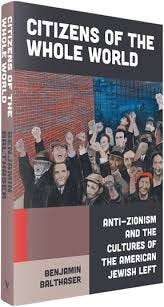
In particular, I highlighted what seemed to be the glaring contradiction between her position on Zionism and Jewish identity on the one hand and her attitude toward Canada’s racial reckoning over indigenous issues on the other. In his new book Citizens of the Whole World: Anti-Zionism and the Cultures of the American Jewish Left, literature professor Benjamin Balthaser claims that this criticism is misguided. He uses my review as an example of a flawed form of Jewish “diasporism” that, in his view, ends up being wretchedly liberal rather than truly liberatory.


As far as I can tell, Klein, Balthaser, and I all agree on quite a lot. We’re all democratic socialists. We’ve all written about the oppression of the Palestinians. We’re all hostile to Zionism on a basic ideological level. Hell, we’ve all written for Jacobin, and my own forthcoming book shares a publisher with Citizens of the Whole World.1 So, I can understand how an outside observer looking at these disagreements might chalk it all up to the narcissism of small differences.

I do think, though, that there’s something at stake here that actually matters.

Should the socialist left start from a belief in universal human equality? And if so, can that be reconciled with the belief that anyone’s rights or status should depend on where their ancestors lived?


In the review, I singled out the chapter of Doppleganger on Israel/Palestine for praise, noting that Klein “rightly abhors the violence and oppression directed by the Israeli state against the non-citizen Palestinian population, and she rightly bristles at the suggestion that her Jewish identity should lead her to be an apologist for this form of apartheid.” I’ve hit similar themes in my own work (e.g. here).

The next part of the review is worth quoting at length to provide the context for Balthaser’s critiuqe.

This sounds like one more entry in the list of creditable egalitarian positions from Klein—and it certainly is that—but what’s particularly interesting to me is that she grounds her rejection of Zionism in an exploration of the history of Jewish radicalism. In a typically sharp passage, she acknowledges a grain of truth in antisemitic tropes about “Judeo-Bolshevism.” It is true that an awful lot of socialism’s early leading lights were Jewish. (Leon Trotsky! Emma Goldman! Rosa Luxemburg! Even Karl Marx came from a secular Jewish family who’d recently gone through the motions of converting to Lutheranism to evade legal discrimination.) A fascist would respond to this list with, “See! I told you so.” Alternatively, Klein writes, you could go with one of the “flattering lefty stories” she herself grew up with—that Jews, having been subject to so much oppression themselves, were more motivated to combat the oppression of other people. But she suggests an interesting third option:

...that Jewish interest in the theoretical side of what we now call Marxism—with its sweeping and scientific explanations and analyses of global capitalism—is an attempt to compete with those conspiracy theories that have dogged our people through the ages.

In other words, it’s not hooked-nosed Jews ripping off hard-working goyim. It’s economic structures that, quite apart from the subjectivity of the people located in them, are geared to “extract maximum wealth from working people.”

She singles out the Jewish Labor Bund in Tsarist Russia for praise:

One of the Bund’s core principles was doi’kavt, or “hereness”—the idea that Jews belonged where they lived, in what was known as “the pale of settlement,” and should fight for greater rights and increased justice as Jews and as workers, alongside non-Jewish members of their class. They should not have to place their hopes in a far-off Jewish homeland, as the early Zionists had begun to argue in the same period. Nor should they have to flee to North America, as hundreds of thousands of German and Eastern European Jews had already been forced to do. Doi’kayt proclaimed that Bundists would stay here—and make here better.

This is great stuff. But it’s a very odd fit with another section of the book, where she discusses the aftermath of the discovery of evidence of mass graves at the sites of Canada’s old “residential schools” for native children. In the countries ensuing racial reckoning, Canadians were, she says, “digging deeper than ever before” in her lifetime. Of this “national excavation,” she enthuses:

In place of the ephemera and boosterism of national mythmaking and official histories, a solid idea seemed to be forming about where we live and how this land came to be available to settlers like me—and what it might take to finally be good guests and neighbors…

The premise that the dispossession of the natives by early European settlers was a terrible thing—a grave violation of rights all humans should have—is certainly correct. It’s similarly true that various forms of discrimination continued long after the initial settlement, and that any such history tends to drag a trail of continuing material disparities in its wake.

But Naomi Klein isn’t even descended from anyone who could sanely be described as a “settler” of Canada. As I understand it, her parents emigrated from the US to Canada so that her father could avoid being drafted and sent to Vietnam. Klein’s self-identification here (“settlers like me”) is a prime example of identity politics making otherwise very smart people stupid. Beyond that, though, there’s a contradiction here that should be visible from space. Jews in Tsarist Russia “belonged where they lived,” but the Klein family apparently doesn’t “belong” in Canada. They’re only “guests” of the ethnic group entitled to be there by a suitable blood-and-soil connection to the territory.

If you called a family of Guatemalan immigrants who’d been naturalized as Canadian citizens last week “guests” rather than fully paid-up members of Canadian society because their ancestors didn’t live there a hundred years ago, Naomi Klein would presumably call you a fascist. So how is it that someone like her who was born in Canada is nevertheless a “guest” because she’s white and her ancestors didn’t live there before the first wave of European settlement? And, come to think of it, why isn’t she a Zionist? After all, wouldn’t Jews be mere “guests” everywhere in the diaspora—always having to mind their Ps and Qs in front of the various gentile groups who actually belong in their various ancestral lands?


In Citizens of the Whole World, Balthaser writes:

What does it mean to embrace the diaspora? In one sense, there is a kind of liberal, commonsense diasporism of American Jewish life. We can hear echoes of it in Seth Rogan’s “No, I am not going to live in Israel” and Larry David’s defense of a Palestinian American restaurant defiantly opening next door to a Jewish deli as an affirmation of American multiculturalism: “This is America; people can open a restaurant wherever they want.” Both are statements less of solidarity with Palestinians or grand visions of internationalism and more of a liberal-American common sense of personal freedom.

It’s worth pausing here to recall that we live in a time when civic nationalism and even birthright citizenship are under attack from reactionaries who believe that America should belong to “heritage Americans” rather than to everyone who lives here. It seems to me that there’s quite a bit to be said on behalf of a “a liberal-American common sense of personal freedom.” I’m all in favor of pushing beyond liberal civic nationalism if we get to the point where we can have borderless *Star Trek-*style global socialism instead. Until then, though, instead of being dismissive of this kind of democratic common sense as insufficiently radical, it seems to me that the socialist left should defend it as an immensely important achievement and a vital starting point for our own goals.


After exploring Philip Roth’s novels The Counterlife and Operation Shylock as expressions of the bad liberal kind of “diasporism,” Balthaser turns to me.

Jacobin writer Ben Burgis evoked the idea of diasporism-as-cosmopolitanism in his critique of Naomi Klein’s Doppelganger. While applauding her rejection of the blood-and-soil nationalism of a Jewish supremacist state in the Levant, Burgis takes her to task for suggesting that as a white Canadian, she is but a “guest” in the northern republic, a settler in a settler-colonial state. For Burgis, the diasporist idea of doikayt—hereness—suggests that Jews belong wherever they live; there are no real indigenous people, just as there are no real nations. Suggesting that diasporism is synonymous with universal humanism, Burgis argues that “cosmopolitan, egalitarian universalism,” and not relational identity, has “historically formed the normative bedrock of the socialist Left.” Much like Roth’s invocation of Jewish diaspora, for Burgis, to be a Jew is little different from, or perhaps just another way of articulating, a deracinated, modern subject who belongs nowhere and thus belongs everywhere. While Klein I believe would argue that it is precisely the idea of doikayt to critically analyze the structures of power within the political and economic system in which one lives, Burgis’s reading of diasporism as just another name for cosmopolitan universalism begs the question of what, if anything, diasporism means beyond a rejection of Zionism. In Burgis’s framing, diasporism rejects Zionism, but then is a modality to erase settler histories elsewhere: to not belong in Tel Aviv is another way of naturalizing belonging in Toronto or New York City.

This is a mess. Balthaser is running together several very different issues.

Just for starters, I have no clue where he’s getting the idea that my Doppleganger review advocated any sort of position about what it is “to be a Jew.” I was writing about core socialist principles as they have been and should be espoused by people of all ethnicities, religions, and cultural backgrounds. If you want to know what I think about Jewishness and my own (fairly ambiguous) relationship to it, that’s something I’ve written about elsewhere, but it’s a separate issue from anything I touch on in the review.

Subscribe now

A “cosmopolitan, egalitarian universalism” about the rights and status of all human beings doesn’t entail that there’s anything wrong with anyone identifying with any particular culture or religion, or having that identity be important be important to them. If as a Jewish person you want to be a “deracinated, modern subject'“ (which I take it is Balthaser’s way of saying “not having a particularly strong sense of Jewish identity”), that’s fine. If you want to embrace such a strict and traditionalist form of Judaism that you start saying prayers every time you pee or wash your hands, that’s fine too. So is anything in between.

Again, this is just a separate issue from universalism about rights and status. Whatever religion you practice, whoever your ancestors were, and whichever aspects of your cultural background are meaningful to you, you and everyone who lives in the same society that you do should have an equal claim to being full members of that society. That, and not anything about how “deracinated” a “subject” you are or should be, is the point of “cosmpolitan, egalitarian universalism.”


Then there’s the question of “hereness” (doi’kavt). Again, Balthaser writes:

For Burgis, the diasporist idea of doikayt—hereness—suggests that Jews belong wherever they live; there are no real indigenous people, just as there are no real nations.

If Balthaser had read more carefully, he might have noticed that I never once used either the Yiddish or the English word for “hereness” myself. The only time either word appears in my review is in a quote from Klein where she suggested that hereness means Jews that belong wherever they live (or certainly at least that the ones in Tsarist Russia belonged there).

Klein was the one who wrote that one of “the Bund’s core principles” was “doi’kavt, or ‘hereness’—the idea that Jews belonged where they lived” and thus that they shouldn’t have to migrate either to Palestine or the United States to find a better life and that it was better to stay and fight for a better society where they were. Her emphasis on this point was what led me to object to the apparent contradiction.

Jews in Tsarist Russia “belonged where they lived,” but the Klein family apparently doesn’t “belong” in Canada. They’re only “guests” of the ethnic group entitled to be there by a suitable blood-and-soil connection to the territory.

And here, one more time, is Balthaser’s response:

While Klein I believe would argue that it is precisely the idea of doikayt to critically analyze the structures of power within the political and economic system in which one lives, Burgis’s reading of diasporism as just another name for cosmopolitan universalism begs the question of what, if anything, diasporism means beyond a rejection of Zionism.

This is so muddled that it’s hard to know where to begin, but a good first step when you’re trying to impose clarity on a passage like this is to sort out the descriptive part (the claims about how things actually are) from the normative part (the claims about what’s good or bad, right or wrong, just or unjust). I’m all in favor of “analyz[ing] structures of power within the political and economic system in which one lives.” But what exactly is that supposed to do with whether white Canadians like Klein should humbly understand themselves as mere “guests” of Canadians whose ancestors were there before the first European settlers?

Balthaser’s claim surely isn’t that existing political and economic structures actually do relegate white Canadians in present-day reality to a secondary status analogous to a literal “guest” in someone else’s home. Presumably, he’d say just the opposite—that white Canadians are treated by the existing structures as if they were Canada’s “homeowners,” and the less privileged First Nations population is structurally in a much worse position, as if they were mere houseguests.2 Pretty clearly, the issue in dispute is not anything about the political economy of contemporary Canada or anything about the history leading up to present conditions, but whether some people have a better normative claim on Canadian belonging than others because of their ancestry.

Citizens of the Whole World: Anti ...

My position is that no piece of land anywhere in the world has ever “belonged” to some ethnic unit defined by common culture or ancestry, but rather that every human being has an equal normative claim on wherever they live. I’d reject any normative claim that Jews in Tsarist Russia should have humbled themselves as “guests” of ethnic Russians, for example, or that people who’s parents came to the United States from India in the 1980s are not full-fledged Americans but mere “guests” of properly credentialed “heritage Americans,” and I’d equally reject any other such claim about any other pair of ethnic groups without exception. We should object to the oppression of indigenous Canadians and the oppression of Palestinians not because “indigeneity” conveys some special moral status, but because of a universalistic moral objection to the oppression of anyone.

If Balthaser disagrees with that normative standard, I’d be fascinated to hear why. But chiding me for supposedly not wanting to “analyze the structures of power within the political and economic system in which one lives” is just an evasion.


The same fact/value confusion shows up in the final line of his critique:

In Burgis’s framing, diasporism rejects Zionism, but then is a modality to erase settler histories elsewhere: to not belong in Tel Aviv is another way of naturalizing belonging in Toronto or New York City.

You don’t have to “erase settler histories” to believe that the descendants of settlers and the descendants of the people who lived that piece of land when the settlers showed up have precisely the same normative claim on belonging now. Nor do you have to erase the relevance of those histories to explaining disparities in present-day conditions. You just have to believe that no one’s rights should depend on where their ancestors lived, full stop.

Nor do I think, as Balthaser oddly implies that I do, that Israeli Jews don’t belong in Tel Aviv in some sense in which American or Canadian Jews do belong in Toronto or New York City. I believe (with Klein, when she’s talking about the Bundists, and against Klein, when she’s talking about Canadians) that everyone belongs wherever they are. That’s why I’m an anti-Zionist. I reject Zionism’s core premise that Jews have a special claim to their ancestral homeland, and that it’s thus acceptable to do things like encourage Jewish migration there from all around the world while blocking Palestinian refugees from coming back. It’s also why I reject the cutting-edge ethnonationalism of the “heritage American” freaks. I think Israel should be a pluralistic state equally belonging to Jews, Palestinians, and everyone else who lives there, and America should be a pluralistic state equally belonging to “heritage Americans,” people who took their citizenship exams last Tuesday, people who’s ancestors showed up around when mine did in the early twentieth century, people who are Ojibwe on both sides and have had ancestors continually living on this continent for thousands of years, and everyone else who’s here. The whole point of the political project I share with Naomi Klein and Benjamin Balthaser is that everyone should have all the same civil and democratic rights, everyone should have housing and healthcare and a decent standard of living, and everyone should have a democratic say in their workplaces, just for being a person.

That’s it. That’s the beginning and end of the point about universalism.

Somehow, though, it’s a point that Balthaser manages to badly miss.

Thanks for reading Philosophy for the People w/Ben Burgis! This post is public so feel free to share it.

Share

1

All three of us even seem to share some level of fondness for Philip Roth novels. In the review, I describe the extensive use Klein makesof Roth’s book Operation Shylock. In Citizens of the Whole World, Balthaser extensively discusses Roth’s work and describes the novelist as “perhaps” the “most articulate champion” of the “liberal version of diasporism” that he otherwise attributes to Seth Rogan, Larry David, and…me. And for some sense of I feel about Roth, see the write-up I did of American Pastoral in this roundup of book recommendations from Jacobin writers a few years ago.

2

In a sense, this is clearly correct, although I also think it’s important for reasons I wrote about two weeks ago to be careful about not conflating statistical facts about disparities between broad demographic groups with facts about the actual material position of any particular member of one of those groups.


From Philosophy for the People w/Ben Burgis via This RSS Feed.

view more: ‹ prev next ›