
Heglig oil field clashes between Sudan’s paramilitaries and South Sudan’s army risk regional stability and expose the fragility of post-independence energy sovereignty.
Related: Sudan: UN Reports Over 1,000 Civilians Killed in Darfur
Violent Heglig oil field clashes erupted on the night of Saturday, December 20, 2025, when Sudan’s paramilitary Rapid Support Forces (RSF) launched an armed incursion into the strategically vital Heglig oil region—a zone officially under South Sudanese control. The surprise attack triggered fierce fighting with the South Sudanese People’s Defence Forces (SSPDF), leaving dozens dead on both sides and threatening to derail a fragile tripartite agreement governing oil production and transit.
Located in Sudan’s Western Kordofan state but economically tied to South Sudan, Heglig has long been a flashpoint of territorial and resource disputes since South Sudan’s independence in 2011. The recent assault, according to South Sudanese military sources, was not a random act of violence but a calculated attempt by the RSF to seize control of crude exports and extract a share of oil revenues from Juba’s government.
“The RSF sought to obstruct existing agreements and pressure South Sudan into granting them a cut of oil income,” a senior SSPDF commander stated. “Their goal was economic blackmail through military force.”
The Heglig field currently operates 75 active oil wells, producing 20,000 barrels of crude per day—all of which feed into a processing plant with a capacity of 130,000 barrels, much of it sourced from South Sudanese fields. This infrastructure serves as the primary conduit for South Sudan’s oil exports, which account for over 90% of the country’s national revenue and flow through pipelines to Red Sea ports controlled by Sudan.
Heglig Oil Field Clashes: A Battle Over Economic Sovereignty
South Sudanese President Salva Kiir immediately mobilized emergency measures to protect the installation from sabotage. “This is not just an oil field—it is the economic lung of our nation,” Kiir declared in an emergency address. Any destruction of Heglig’s infrastructure would cripple South Sudan’s already fragile economy, which has struggled to recover from years of civil war and the broader regional spillover of Sudan’s ongoing conflict.
The Heglig oil field clashes mark a dangerous escalation in the RSF’s regional ambitions. Since the outbreak of Sudan’s civil war in April 2023—pitting the RSF against the Sudanese Armed Forces (SAF)—the paramilitary group has increasingly targeted cross-border energy assets to finance its war machine. With international arms embargoes and frozen assets limiting traditional funding, oil has become a battlefield commodity.
Read the UN Panel of Experts report on RSF’s illicit financing and cross-border operations
Notably, Heglig has been devoid of civilians since the 2023 war began, making independent verification of battlefield claims nearly impossible. Humanitarian organizations and international observers remain barred from the area, allowing disinformation and propaganda to fill the void. The RSF claims it is “restoring order” in a lawless zone; Juba insists it is defending its sovereign economic interests under international law and bilateral agreements.
The current security arrangement is based on a tripartite framework involving Sudan, South Sudan, and international monitors—a fragile pact now in jeopardy. The RSF’s incursion directly violates this understanding and raises fears of a broader spillover conflict that could reignite the 2012 Heglig crisis, when South Sudanese forces briefly occupied the field before withdrawing under intense diplomatic pressure from the African Union and the UN Security Council.
Review the African Union’s 2012 Heglig mediation statement and current peace architecture
For South Sudan, the stakes could not be higher. With inflation soaring, food insecurity affecting over 7 million people, and public services near collapse, oil revenue is the only lifeline keeping the state afloat. Losing control of Heglig—or even facing disrupted flows—could trigger a full-blown fiscal and humanitarian collapse.
Geopolitical Context: Energy, War, and the Fragility of Post-Colonial Borders
The Heglig oil field clashes cannot be understood in isolation. They reflect the deep entanglement of resource control, post-colonial border disputes, and proxy warfare that defines the Horn of Africa. Heglig sits precisely on the contested boundary between Sudan and South Sudan—a line drawn not by local consent, but by British colonial administrators in the early 20th century.
When South Sudan seceded in 2011, it inherited 75% of the former united Sudan’s oil reserves—but none of the refineries or export pipelines, which remained in the north. This forced the two nations into an uneasy interdependence, with Juba paying Khartoum transit fees to access global markets. The arrangement has been repeatedly weaponized during political crises, turning oil into a tool of coercion.
Today, the RSF—widely accused of war crimes, ethnic cleansing, and trafficking in arms and gold—is exploiting this structural vulnerability. By threatening Heglig, the group not only seeks revenue but also leverage over both Khartoum and Juba, positioning itself as a power broker in a fractured region.
Regionally, the crisis threatens to destabilize the entire East African energy corridor. South Sudan’s oil exports help finance infrastructure projects across the region, including roads, power grids, and regional integration initiatives under the Intergovernmental Authority on Development (IGAD). A prolonged disruption could delay development and fuel further conflict over scarce resources.
Explore IGAD’s regional security and economic integration strategy amid Sudan crisis
Globally, the Heglig incident underscores how localized resource conflicts can have systemic consequences. As the world seeks alternative energy sources amid climate transition, African oil remains strategically relevant—particularly for Asian markets like China and India, which import the bulk of South Sudan’s crude. Any prolonged halt in production would ripple through global supply chains and exacerbate energy insecurity.
Yet beyond economics, the battle for Heglig is about sovereignty and dignity. For South Sudan—a nation born from decades of struggle against northern domination—the defense of its oil fields is symbolic of its right to self-determination. As one South Sudanese diplomat put it: “They fought us for our land. Now they want our oil. But we will not let history repeat itself.”
As ceasefire talks stall and regional diplomacy falters, the Heglig oil field clashes stand as a warning: without a political solution to Sudan’s civil war and a reinforced commitment to international agreements, energy infrastructure will remain a frontline in Africa’s new wars.
From teleSUR English via This RSS Feed.

Last year, I wrote a mixed review of Naomi Klein’s Doppelganger: A Trip into the Mirror World. I praised many aspects of the book, and described Klein herself as a “serious person who’s guided by a humane and egalitarian worldview.” But I also said that her anxious desire to sign off on “every piety of radical-liberal identity politics” sometimes led her to strange places that aren’t really consistent with her own best instincts.
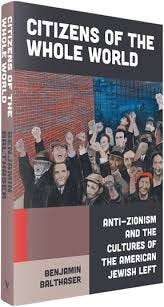
In particular, I highlighted what seemed to be the glaring contradiction between her position on Zionism and Jewish identity on the one hand and her attitude toward Canada’s racial reckoning over indigenous issues on the other. In his new book Citizens of the Whole World: Anti-Zionism and the Cultures of the American Jewish Left, literature professor Benjamin Balthaser claims that this criticism is misguided. He uses my review as an example of a flawed form of Jewish “diasporism” that, in his view, ends up being wretchedly liberal rather than truly liberatory.
As far as I can tell, Klein, Balthaser, and I all agree on quite a lot. We’re all democratic socialists. We’ve all written about the oppression of the Palestinians. We’re all hostile to Zionism on a basic ideological level. Hell, we’ve all written for Jacobin, and my own forthcoming book shares a publisher with Citizens of the Whole World.1 So, I can understand how an outside observer looking at these disagreements might chalk it all up to the narcissism of small differences.
I do think, though, that there’s something at stake here that actually matters.
Should the socialist left start from a belief in universal human equality? And if so, can that be reconciled with the belief that anyone’s rights or status should depend on where their ancestors lived?
In the review, I singled out the chapter of Doppleganger on Israel/Palestine for praise, noting that Klein “rightly abhors the violence and oppression directed by the Israeli state against the non-citizen Palestinian population, and she rightly bristles at the suggestion that her Jewish identity should lead her to be an apologist for this form of apartheid.” I’ve hit similar themes in my own work (e.g. here).
The next part of the review is worth quoting at length to provide the context for Balthaser’s critiuqe.
This sounds like one more entry in the list of creditable egalitarian positions from Klein—and it certainly is that—but what’s particularly interesting to me is that she grounds her rejection of Zionism in an exploration of the history of Jewish radicalism. In a typically sharp passage, she acknowledges a grain of truth in antisemitic tropes about “Judeo-Bolshevism.” It is true that an awful lot of socialism’s early leading lights were Jewish. (Leon Trotsky! Emma Goldman! Rosa Luxemburg! Even Karl Marx came from a secular Jewish family who’d recently gone through the motions of converting to Lutheranism to evade legal discrimination.) A fascist would respond to this list with, “See! I told you so.” Alternatively, Klein writes, you could go with one of the “flattering lefty stories” she herself grew up with—that Jews, having been subject to so much oppression themselves, were more motivated to combat the oppression of other people. But she suggests an interesting third option:
...that Jewish interest in the theoretical side of what we now call Marxism—with its sweeping and scientific explanations and analyses of global capitalism—is an attempt to compete with those conspiracy theories that have dogged our people through the ages.
In other words, it’s not hooked-nosed Jews ripping off hard-working goyim. It’s economic structures that, quite apart from the subjectivity of the people located in them, are geared to “extract maximum wealth from working people.”
She singles out the Jewish Labor Bund in Tsarist Russia for praise:
One of the Bund’s core principles was doi’kavt, or “hereness”—the idea that Jews belonged where they lived, in what was known as “the pale of settlement,” and should fight for greater rights and increased justice as Jews and as workers, alongside non-Jewish members of their class. They should not have to place their hopes in a far-off Jewish homeland, as the early Zionists had begun to argue in the same period. Nor should they have to flee to North America, as hundreds of thousands of German and Eastern European Jews had already been forced to do. Doi’kayt proclaimed that Bundists would stay here—and make here better.
This is great stuff. But it’s a very odd fit with another section of the book, where she discusses the aftermath of the discovery of evidence of mass graves at the sites of Canada’s old “residential schools” for native children. In the countries ensuing racial reckoning, Canadians were, she says, “digging deeper than ever before” in her lifetime. Of this “national excavation,” she enthuses:
In place of the ephemera and boosterism of national mythmaking and official histories, a solid idea seemed to be forming about where we live and how this land came to be available to settlers like me—and what it might take to finally be good guests and neighbors…
The premise that the dispossession of the natives by early European settlers was a terrible thing—a grave violation of rights all humans should have—is certainly correct. It’s similarly true that various forms of discrimination continued long after the initial settlement, and that any such history tends to drag a trail of continuing material disparities in its wake.
But Naomi Klein isn’t even descended from anyone who could sanely be described as a “settler” of Canada. As I understand it, her parents emigrated from the US to Canada so that her father could avoid being drafted and sent to Vietnam. Klein’s self-identification here (“settlers like me”) is a prime example of identity politics making otherwise very smart people stupid. Beyond that, though, there’s a contradiction here that should be visible from space. Jews in Tsarist Russia “belonged where they lived,” but the Klein family apparently doesn’t “belong” in Canada. They’re only “guests” of the ethnic group entitled to be there by a suitable blood-and-soil connection to the territory.
If you called a family of Guatemalan immigrants who’d been naturalized as Canadian citizens last week “guests” rather than fully paid-up members of Canadian society because their ancestors didn’t live there a hundred years ago, Naomi Klein would presumably call you a fascist. So how is it that someone like her who was born in Canada is nevertheless a “guest” because she’s white and her ancestors didn’t live there before the first wave of European settlement? And, come to think of it, why isn’t she a Zionist? After all, wouldn’t Jews be mere “guests” everywhere in the diaspora—always having to mind their Ps and Qs in front of the various gentile groups who actually belong in their various ancestral lands?
In Citizens of the Whole World, Balthaser writes:
What does it mean to embrace the diaspora? In one sense, there is a kind of liberal, commonsense diasporism of American Jewish life. We can hear echoes of it in Seth Rogan’s “No, I am not going to live in Israel” and Larry David’s defense of a Palestinian American restaurant defiantly opening next door to a Jewish deli as an affirmation of American multiculturalism: “This is America; people can open a restaurant wherever they want.” Both are statements less of solidarity with Palestinians or grand visions of internationalism and more of a liberal-American common sense of personal freedom.
It’s worth pausing here to recall that we live in a time when civic nationalism and even birthright citizenship are under attack from reactionaries who believe that America should belong to “heritage Americans” rather than to everyone who lives here. It seems to me that there’s quite a bit to be said on behalf of a “a liberal-American common sense of personal freedom.” I’m all in favor of pushing beyond liberal civic nationalism if we get to the point where we can have borderless *Star Trek-*style global socialism instead. Until then, though, instead of being dismissive of this kind of democratic common sense as insufficiently radical, it seems to me that the socialist left should defend it as an immensely important achievement and a vital starting point for our own goals.
After exploring Philip Roth’s novels The Counterlife and Operation Shylock as expressions of the bad liberal kind of “diasporism,” Balthaser turns to me.
Jacobin writer Ben Burgis evoked the idea of diasporism-as-cosmopolitanism in his critique of Naomi Klein’s Doppelganger. While applauding her rejection of the blood-and-soil nationalism of a Jewish supremacist state in the Levant, Burgis takes her to task for suggesting that as a white Canadian, she is but a “guest” in the northern republic, a settler in a settler-colonial state. For Burgis, the diasporist idea of doikayt—hereness—suggests that Jews belong wherever they live; there are no real indigenous people, just as there are no real nations. Suggesting that diasporism is synonymous with universal humanism, Burgis argues that “cosmopolitan, egalitarian universalism,” and not relational identity, has “historically formed the normative bedrock of the socialist Left.” Much like Roth’s invocation of Jewish diaspora, for Burgis, to be a Jew is little different from, or perhaps just another way of articulating, a deracinated, modern subject who belongs nowhere and thus belongs everywhere. While Klein I believe would argue that it is precisely the idea of doikayt to critically analyze the structures of power within the political and economic system in which one lives, Burgis’s reading of diasporism as just another name for cosmopolitan universalism begs the question of what, if anything, diasporism means beyond a rejection of Zionism. In Burgis’s framing, diasporism rejects Zionism, but then is a modality to erase settler histories elsewhere: to not belong in Tel Aviv is another way of naturalizing belonging in Toronto or New York City.
This is a mess. Balthaser is running together several very different issues.
Just for starters, I have no clue where he’s getting the idea that my Doppleganger review advocated any sort of position about what it is “to be a Jew.” I was writing about core socialist principles as they have been and should be espoused by people of all ethnicities, religions, and cultural backgrounds. If you want to know what I think about Jewishness and my own (fairly ambiguous) relationship to it, that’s something I’ve written about elsewhere, but it’s a separate issue from anything I touch on in the review.
A “cosmopolitan, egalitarian universalism” about the rights and status of all human beings doesn’t entail that there’s anything wrong with anyone identifying with any particular culture or religion, or having that identity be important be important to them. If as a Jewish person you want to be a “deracinated, modern subject'“ (which I take it is Balthaser’s way of saying “not having a particularly strong sense of Jewish identity”), that’s fine. If you want to embrace such a strict and traditionalist form of Judaism that you start saying prayers every time you pee or wash your hands, that’s fine too. So is anything in between.
Again, this is just a separate issue from universalism about rights and status. Whatever religion you practice, whoever your ancestors were, and whichever aspects of your cultural background are meaningful to you, you and everyone who lives in the same society that you do should have an equal claim to being full members of that society. That, and not anything about how “deracinated” a “subject” you are or should be, is the point of “cosmpolitan, egalitarian universalism.”
Then there’s the question of “hereness” (doi’kavt). Again, Balthaser writes:
For Burgis, the diasporist idea of doikayt—hereness—suggests that Jews belong wherever they live; there are no real indigenous people, just as there are no real nations.
If Balthaser had read more carefully, he might have noticed that I never once used either the Yiddish or the English word for “hereness” myself. The only time either word appears in my review is in a quote from Klein where she suggested that hereness means Jews that belong wherever they live (or certainly at least that the ones in Tsarist Russia belonged there).
Klein was the one who wrote that one of “the Bund’s core principles” was “doi’kavt, or ‘hereness’—the idea that Jews belonged where they lived” and thus that they shouldn’t have to migrate either to Palestine or the United States to find a better life and that it was better to stay and fight for a better society where they were. Her emphasis on this point was what led me to object to the apparent contradiction.
Jews in Tsarist Russia “belonged where they lived,” but the Klein family apparently doesn’t “belong” in Canada. They’re only “guests” of the ethnic group entitled to be there by a suitable blood-and-soil connection to the territory.
And here, one more time, is Balthaser’s response:
While Klein I believe would argue that it is precisely the idea of doikayt to critically analyze the structures of power within the political and economic system in which one lives, Burgis’s reading of diasporism as just another name for cosmopolitan universalism begs the question of what, if anything, diasporism means beyond a rejection of Zionism.
This is so muddled that it’s hard to know where to begin, but a good first step when you’re trying to impose clarity on a passage like this is to sort out the descriptive part (the claims about how things actually are) from the normative part (the claims about what’s good or bad, right or wrong, just or unjust). I’m all in favor of “analyz[ing] structures of power within the political and economic system in which one lives.” But what exactly is that supposed to do with whether white Canadians like Klein should humbly understand themselves as mere “guests” of Canadians whose ancestors were there before the first European settlers?
Balthaser’s claim surely isn’t that existing political and economic structures actually do relegate white Canadians in present-day reality to a secondary status analogous to a literal “guest” in someone else’s home. Presumably, he’d say just the opposite—that white Canadians are treated by the existing structures as if they were Canada’s “homeowners,” and the less privileged First Nations population is structurally in a much worse position, as if they were mere houseguests.2 Pretty clearly, the issue in dispute is not anything about the political economy of contemporary Canada or anything about the history leading up to present conditions, but whether some people have a better normative claim on Canadian belonging than others because of their ancestry.
My position is that no piece of land anywhere in the world has ever “belonged” to some ethnic unit defined by common culture or ancestry, but rather that every human being has an equal normative claim on wherever they live. I’d reject any normative claim that Jews in Tsarist Russia should have humbled themselves as “guests” of ethnic Russians, for example, or that people who’s parents came to the United States from India in the 1980s are not full-fledged Americans but mere “guests” of properly credentialed “heritage Americans,” and I’d equally reject any other such claim about any other pair of ethnic groups without exception. We should object to the oppression of indigenous Canadians and the oppression of Palestinians not because “indigeneity” conveys some special moral status, but because of a universalistic moral objection to the oppression of anyone.
If Balthaser disagrees with that normative standard, I’d be fascinated to hear why. But chiding me for supposedly not wanting to “analyze the structures of power within the political and economic system in which one lives” is just an evasion.
The same fact/value confusion shows up in the final line of his critique:
In Burgis’s framing, diasporism rejects Zionism, but then is a modality to erase settler histories elsewhere: to not belong in Tel Aviv is another way of naturalizing belonging in Toronto or New York City.
You don’t have to “erase settler histories” to believe that the descendants of settlers and the descendants of the people who lived that piece of land when the settlers showed up have precisely the same normative claim on belonging now. Nor do you have to erase the relevance of those histories to explaining disparities in present-day conditions. You just have to believe that no one’s rights should depend on where their ancestors lived, full stop.
Nor do I think, as Balthaser oddly implies that I do, that Israeli Jews don’t belong in Tel Aviv in some sense in which American or Canadian Jews do belong in Toronto or New York City. I believe (with Klein, when she’s talking about the Bundists, and against Klein, when she’s talking about Canadians) that everyone belongs wherever they are. That’s why I’m an anti-Zionist. I reject Zionism’s core premise that Jews have a special claim to their ancestral homeland, and that it’s thus acceptable to do things like encourage Jewish migration there from all around the world while blocking Palestinian refugees from coming back. It’s also why I reject the cutting-edge ethnonationalism of the “heritage American” freaks. I think Israel should be a pluralistic state equally belonging to Jews, Palestinians, and everyone else who lives there, and America should be a pluralistic state equally belonging to “heritage Americans,” people who took their citizenship exams last Tuesday, people who’s ancestors showed up around when mine did in the early twentieth century, people who are Ojibwe on both sides and have had ancestors continually living on this continent for thousands of years, and everyone else who’s here. The whole point of the political project I share with Naomi Klein and Benjamin Balthaser is that everyone should have all the same civil and democratic rights, everyone should have housing and healthcare and a decent standard of living, and everyone should have a democratic say in their workplaces, just for being a person.
That’s it. That’s the beginning and end of the point about universalism.
Somehow, though, it’s a point that Balthaser manages to badly miss.
Thanks for reading Philosophy for the People w/Ben Burgis! This post is public so feel free to share it.
All three of us even seem to share some level of fondness for Philip Roth novels. In the review, I describe the extensive use Klein makesof Roth’s book Operation Shylock. In Citizens of the Whole World, Balthaser extensively discusses Roth’s work and describes the novelist as “perhaps” the “most articulate champion” of the “liberal version of diasporism” that he otherwise attributes to Seth Rogan, Larry David, and…me. And for some sense of I feel about Roth, see the write-up I did of American Pastoral in this roundup of book recommendations from Jacobin writers a few years ago.
In a sense, this is clearly correct, although I also think it’s important for reasons I wrote about two weeks ago to be careful about not conflating statistical facts about disparities between broad demographic groups with facts about the actual material position of any particular member of one of those groups.
From Philosophy for the People w/Ben Burgis via This RSS Feed.

Colombia defense budget 2025 allocates $12.7 billion over a decade to strengthen security, protect vulnerable communities, and confront armed groups—while reaffirming commitment to peace.
Related: Colombian Government Rejects Nobel Peace Prize Award for Machado Due to Belligerent Stance
In a strategic move to confront escalating violence in rural regions, the Colombian government has unveiled a sweeping Colombia defense budget 2025 initiative that commits $12.7 billion (49 trillion Colombian pesos) over the next decade to modernize national defense and reinforce state presence in conflict-affected territories. President Gustavo Petro announced the plan as part of a broader vision centered on human security—prioritizing the protection of civilian life over purely military objectives.
Speaking alongside Defense Minister Pedro Sánchez, Petro emphasized that the investment is not a return to militarism, but a necessary shield for peacebuilding. “This is about guaranteeing the right to life in territories abandoned by the state for decades,” he stated. The funding will be formalized through a National Development Plan document issued by the Consejo Nacional de Política Económica y Social (Conpes)—Colombia’s highest planning authority—and will guide defense and security policy through 2035.
The decision comes amid a surge in attacks by residual armed groups, including dissident factions of the former FARC, paramilitary successors, and narcotrafficking networks. In 2025 alone, 170 social leaders have been assassinated, and recent bombings in Aguachica and Buenos Aires have left dozens of security forces injured, underscoring the urgent need for a coordinated state response.
“The priority is the security of people—not just territory,” said Minister Sánchez. “We are investing in technology, logistics, and the well-being of our military personnel to ensure they can operate effectively while respecting human rights.”
Colombia Defense Budget 2025: Human Security and Technological Modernization
Unlike previous defense strategies focused on combat metrics, the new Colombia defense budget 2025 framework integrates human security as its core principle. This means deploying not only troops, but also social programs, early warning systems, and community protection mechanisms in coordination with local authorities.
Key components of the plan include the acquisition of advanced surveillance drones, encrypted communication systems, armored medical evacuation vehicles, and biometric identification tools to track armed actors. Equally important is the commitment to improve living conditions for frontline troops, many of whom operate in remote jungle or mountain regions with limited infrastructure.
Read Colombia’s Ministry of Defense official statement on the 2025–2035 security strategy
The government has already defined tactical adjustments for immediate deployment in high-risk departments such as Cauca and Norte de Santander, where armed groups control illicit economies and frequently attack energy infrastructure, roads, and community leaders. The new strategy will increase military mobility, enhance intelligence fusion, and establish joint civil-military command posts to improve coordination with mayors, Indigenous councils, and Afro-Colombian community boards.
Critically, the plan explicitly rejects the notion that security can be achieved through force alone. Instead, it positions defense capabilities as enablers of social development. As Petro explained: “You cannot build schools, clinics, or roads in areas where armed groups dictate who lives and who dies. Security is the foundation of justice.”
Explore the UN Office on Colombia’s support for integrated rural security and peace implementation
This integrated approach reflects lessons from the 2016 Peace Agreement, which showed that disarmament without state presence leads to power vacuums—quickly filled by new armed actors. The current strategy aims to prevent that cycle by ensuring that military advances are followed immediately by investments in health, education, land restitution, and rural electrification.
Geopolitical Context: Sovereignty, Peace, and the Global South’s Security Dilemma
The Colombia defense budget 2025 must be understood within a complex regional and global context. As one of the few Latin American nations still grappling with active internal armed conflict, Colombia faces unique security challenges that blend criminal violence, ideological insurgency, and transnational drug trafficking.
Yet the Petro administration is navigating this reality without aligning itself with U.S.-led militarized counter-narcotics models that have historically fueled displacement and environmental destruction. Instead, it is crafting a sovereign, rights-based security doctrine—one that aligns with progressive governments in Mexico, Brazil, and Chile that view violence as a symptom of inequality, not merely a law enforcement problem.
Regionally, Colombia’s approach could influence debates in countries like Ecuador and Venezuela, where similar hybrid threats—criminal gangs mixed with political violence—are destabilizing border zones. A successful model that combines defense, development, and dialogue could offer a template for the entire Andean region.
Globally, the plan challenges the dominant narrative that associates “strong defense” with offensive capabilities or foreign intervention. In the Global South, where state weakness is often the root of insecurity, true defense means protecting civilians, not projecting power. Colombia’s emphasis on human security resonates with UN frameworks and the African Union’s “Silencing the Guns” initiative—both of which prioritize community resilience over battlefield dominance.
Moreover, the investment comes at a time when global defense spending is skyrocketing—yet Colombia’s allocation remains modest relative to GDP (under 3.5%) and is explicitly tied to social outcomes. This positions the country not as a militarized state, but as a laboratory for post-conflict security innovation.
As Minister Sánchez noted, “The ultimate goal is not to have more soldiers, but to need fewer of them—because peace has taken root.”
For now, communities in Cauca and Norte de Santander await tangible change. But with a clear legal framework, long-term financing, and a doctrine centered on dignity, the Colombia defense budget 2025 may mark the beginning of a new chapter: one where the state finally arrives not as an army of occupation, but as a guarantor of life.
Review the World Bank’s analysis of Colombia’s rural development and security integration efforts
From teleSUR English via This RSS Feed.
Greta Thunberg famously joined fellow activists from around the world on a humanitarian flotilla in October, in an attempt to break the illegal Israeli siege on Gaza. At the time, the British Government saw fit to abandon their own citizens who were abducted by Israel, and now it is seen to be abandoning the hunger strikers in our prisons.
On Saturday 20 December, Thunberg appeared at the protest in support of the hunger strikers, once again putting our own government to shame:
EXCLUSIVE:
The Canary's @JustBarold spoke to @GretaThunberg tonight. She gave her thoughts on how Labour is treating the hunger strikers, its disgraceful complicity with Israel's genocide, & what we all need to be doing to affect change for the Palestinian people
pic.twitter.com/Bz4UTpxnMN
— Canary (@TheCanaryUK) December 20, 2025
Greta Thunberg: government is ‘criminalising empathy’
Greta Thunberg spoke with our reporter, Barold, defending the hunger strikers in UK prisons. Thunberg calls out the moral and legal failings of our government and international community, whilst highlighting the solidarity shown across the world for Palestine:
The UK government has failed miserably in fulfilling their bare minimum legal duties to prevent and stop a genocide from happening. And what has happened here is that civilians have taken on that responsibility to act to end the complicity in genocide and are now being punished. We are criminalising empathy.
So I don’t need to express my utter disgust for the UK government and their treatment of this. It is not the first time the UK government are letting political prisoners die in prison. They are on the wrong side of history and it is crystal clear that they are on the wrong side of history. and we have people all over the world who show our whole heart and support to the hunger strikers and to activists, people all over the world who are raising their voices to end the publicity in the Gaza genocide.
Speaking to the legal issues which have prompted the prisoners to go on hunger strike, Thunberg clarified:
And I fully stand behind their demands, which is the right to a fair trial, and the censorship of the communication, immediate bail, and the prescription of Palestine action. as well as stopping air resistance operations in Britain.
This genocide in Gaza, if you can even say genocide, it’s so much more. It’s not, would never have been possible without countries like the UK seeing a deliberate… attempt to deliberately erase an entire population by Israel with help of the entire world. And we have to teach them that no one has the privilege of saying we did not know what was done.
When asked by our reporter, Barold, about the importance of supporting the hunger strikers:
It is crucial because that is showing what leadership looks like. We are telling people, Palestinians are calling for people all over the world to step up and take action. And that is what people have done. They are the true leaders. So the UK government are letting people in their 20s who are not convicted of any crime die in prison, in hunger strike, for demands which are the bare minimum.
Solidarity in action
Addressing the role that every person can play to show solidarity with Palestine, Greta Thunberg added:
We need to push from every possible direction and whoever you are you have a role to play. Whatever platform you have you will have people you can reach that you can affect. You can either take direct action, you can get organized in many other ways, boycott and divest. If you get in contact with people in your local community who share the same values as you, there are almost no limits to what you can accomplish together when it comes to standing up for human rights and showing solidarity.
As the situation for the hunger strikers continues to deteriorate, people in Sheffield came out to show their respect and solidarity
#ukpolitics #news #palestine #protest #hungerstrike @Prisoners4Pal @JustBarold pic.twitter.com/DKIG1mEQX5
— Canary (@TheCanaryUK) December 21, 2025
Ignorance and denial
The hunger strikers are part of the Filton 24, a group imprisoned for a year and a half without trial. They are held for allegedly causing damage to an Israeli weapons factory in Bristol. This action reportedly took place in protest against the UK’s role in the mass murder of Palestinians. In contravention with our obligations under international law, the UK are still providing arms supplies, spy planes, and diplomatic support to Israel enabling its genocide.
Our own reporter, Skwawkbox, wrote on Friday about how David Lammy’s spokesperson, James Timpson, tried to argue that the government doesn’t ‘treat any prisoners differently to others’. However, Thunberg points out that these prisoners are being neglected of their rights to due process. Until those rights are duly afforded, the hunger strike will likely continue.
But our leaders will be complicit if any of these principled protesters die under their watch – as Greta Thunberg outlined.
Featured image via Barold
From Canary via This RSS Feed.

Following their Trip episode about the meaning of ‘mainstream’, the gang go deeper into ‘Mainstream’ – that is, the new soft-left faction inside Labour. Yes, a festive episode about the inner workings of your favourite political party!
Jem, Nadia and Keir explain the emergence of Mainstream’s ‘radical realists’ – who include Andy Burnham and Clive Lewis – by exploring the lesser-known history of political tendencies that have shaped and split the Labour Party since the second world war.
Follow our Spotify playlist of all the music discussed on ACFM and subscribe to the ACFM mailing list to get weirder and leftier.
From Novara Media via This RSS Feed.