rss

joined 5 months ago
MODERATOR OF
 

This article by Nancy Flores originally appeared in the March 28, 2026 edition of Revista Contralínea.

Editor’s note: “Pink Tide/La Marea Rosa” in Mexico refers to an ostensible civil movement funded and supported by figures from the neoliberal period and political parties who oppose the Fourth Transformation governments and frequently wear pink in their demonstrations; not to the reformist left governments of Latin America.

Following a technical analysis, the Tax Administration Service (SAT) revoked the authorization for 270 civil associations to receive tax-deductible donations and be exempt from income tax, citing violations of the Income Tax Law. The tax authority explained that, prior to this decision, the associations were given the opportunity to present their arguments, but “failed to comply with or rectify the legal requirements within the allotted time.”

Contrary to what has been circulating, the tax authority’s decision does not prohibit these organizations from receiving donations, but rather means that their donors will not be able to deduct them from their tax payments, and that the non-profits will be required to pay income tax. In other words, they will no longer be able to live off public funds.

Among the 270 civil associations, three stand out for their systematic opposition to the governments of the Fourth Transformation: the Mexican Institute for Competitiveness, AC (IMCO); México Evalúa, the Center for Public Policy Analysis, AC; and Mexicanos Primero, Visión 2030, AC. Two of these were funded for several years by the United States government through USAID, which is prohibited by the Constitution (because foreign governments are barred from interfering in Mexican politics).

However, the SAT (Mexican Tax Administration Service) indicated that the revocation of the authorization was not politically motivated, but rather due to the fact that these civil associations violated the law by declaring that they conduct scientific or technological research, which they could not prove. In other words, they allegedly lied to qualify for a preferential tax regime, which could also constitute a crime.

Furthermore, Contralínea has revealed that IMCO, México Evalúa, and Mexicanos Primero are linked to the national and transnational oligarchy, the political right opposed to the 4T and promoters of expressions such as the pink tide; and the analyses and studies they generate border on neoliberal propaganda.

Claudio Xavier González Laporte

The IMCO Case

The information that IMCO provided to the SAT indicates that its governing body is made up of the businessmen Tomás Roberto González Sada –executive of the company Cydsa, SAB de CV–; Alejandro Ramírez Magaña –owner of Cinépolis and opponent of the fourth transformation–; Claudio Xavier González Laporte –president of Kimberly Clark and one of the staunchest adversaries of former President Andrés Manuel López Obrador–; Valentín Diez Morodo –member of the boards of directors of Grupo Financiero Banamex; Kimberly Clark de México; DESC; Multivisión MVS Comunicaciones; Avantel; Grupo Ferroviario Mexicano; and Grupo Alfa, and adversary of the 4T–; and Luis Manuel Murillo Peñaloza –general director of Valores Mexicanos Casa de Bolsa, advisor of Operadora Valmex and of Grupo Peñoles.

Two other associate members of its governing body are: Juan Ernesto Pardinas Carpizo, former editorial director of the Reforma newspaper and former director of IMCO itself; Jaime José Serra Puche, a Salinas supporter —current president of Grupo Financiero BBVA México, former Secretary of Commerce and Industrial Development during the administration of Carlos Salinas de Gortari—and chief negotiator of NAFTA—and former Secretary of Finance and Public Credit during the first days of Ernesto Zedillo’s government—from December 1 to 29, 1994—a period in which he became primarily responsible for the collapse of the economy due to the so-called “December mistake,” which resulted in the greatest theft suffered by the people of Mexico: the Fobaproa-IPAB; and Eugenio Santiago Clariond Reyes, shareholder of Jidosha Internacional and former Mexican consul in Brazil during the administration of Felipe Calderón.

Additionally, in its 2025 Annual Report, the Institute includes in its Council: José Barraza, Emilio Carrillo, María Amparo Casar (president of Mexicans Against Corruption and partner of Claudio X González Guajardo, whom President Claudia Sheinbaum called “the toxic junior”), Lorenzo de Rosenzweig, Antonio del Valle Perochena, Gabriela Hernández, Armando Paredes, Antonio Purón, Daniel Servitje, Vicente Yañez and Jaime Zabludovsky.

And it adds as a “board member” the Business Coordinating Council, made up of Alejandro Malagón Barragán (Concamin), Juan José Sierra Álvarez (Coparmex), Antonio del Valle Perochena (Mexican Business Council), Daniel Servitje Montull (Mexican Business Council), Enrique Zambrano Benítez (Mexican Business Council), Jorge Esteve Recolons (National Agricultural Council), Emilio Romano Mussali (Mexican Banking Association), Diego Cosío Barto (Antad), Jorge Humberto Santos Reyna (Caintra), Pedro Pacheco (Amis), Guillermo Zamarripa Escamilla (Amafore), Sergio Contreras Pérez (Comce), Vicente Gutiérrez Camposeco (Canaco), Álvaro García Pimentel (Amib), Antonio Cosío Pando (CNET).

The Konrad Adenauer Foundation is sponsored by Germany’s Christian Democratic Union and named after the First Chancellor of West Germany, who was known for reincorporating Nazi veterans into the West German state.

Other relevant data from IMCO that illustrate how this think tank is linked to the Mexican and transnational oligarchy and right-wing groups are those related to its “2025 strategic alliances,” which the institute itself describes as those with which it developed projects. Some of these alliances were with the World Bank , the International Monetary Fund , and the World Economic Forum; the embassies of the United States in Mexico, the United Kingdom, Canada, Norway, and Switzerland; the private foreign banks BBVA and Banamex; the companies Mercedes-Benz Mobility Mexico, Starbucks Mexico, Casa de Bolsa Finamex, and TC Energy, and the Coppel Foundation; as well as with the Mexican Employers’ Confederation (COPARMEX) and the Mexican Business Council for Foreign Trade, Investment, and Technology (CEMET).

Other important alliances are with foreign organizations identified as right-wing, including the Konrad Adenauer Foundation; and with the Atlas Network, although it reported no joint funding or projects in 2025. Furthermore, throughout its history, IMCO has been funded by the Mexican Business Council, comprised of multinational corporations such as Femsa , Alfa, Lala, Mabe, MVS, Grupo Pisa, Vitro, Televisa , Grupo Carso, Chedraui, and Grupo México.

According to the most recent financial report submitted to the SAT (Mexican Tax Administration Service), in 2024 IMCO received tax-deductible donations totaling 33,897,949 pesos , and an additional 4,502,426 pesos in interest and investment returns. According to the data, its payroll of just 43 people cost 26,614,125 pesos; if everyone had received the same salary, they would have earned 618,933 pesos annually (51,577 pesos per month).

Furthermore, some of the money was used to produce studies such as: “ Energy reform must respect the spirit and letter of the USMCA ”; “Local Public Electoral Bodies and their role in democracy”; “Ten proposals on public finances”; and “Proposals for the energy we want 2024-2030.” These last studies were conducted in the context of that year’s presidential elections.

Claudio X. González Guajardo

México Evalúa Case Study

The next case is that of the civil association México Evalúa, whose governing body is chaired by Luis Rubio Freidberg (a member of the board of Coca-Cola FEMSA and investment funds such as Aberdeen India Fund, Inc. and The India Fund, Inc. ). The vice-chairman is businessman Fernando Senderos Mestre (owner of Grupo KUO—which includes brands such as Herdez, Del Fuerte, Kekén, Megamex Food, and Grupo Dynasol—and the real estate developer Dine, and a member of the boards of directors of companies such as Grupo Televisa, Industrias Peñoles, Grupo Nacional Provincial, Grupo Carso, and Kimberly Clark de México).

Furthermore, the governing body is composed of José Ramón Cossío Díaz (former Supreme Court Justice, opponent of the 4T movement , whom former President López Obrador identified in 2021 as the architect of the injunction against the Electricity Industry Law, in association with Claudio X. González Guajardo), Edna Camelia Jaime Treviño, Jaime Enrique Zabludowsky Kuper (a Salinas supporter who served as deputy chief negotiator for NAFTA and in 1994 was appointed Undersecretary of International Trade Negotiations), Federico Jesús Reyes Heroles González Garza, Martha Matilde Mejía Montes (CEO of Zimat Consultores), Eugenio Rafael Garza Herrera (Chairman of the Board of Directors of Xignux, a company linked to the energy sector), Luis Fernando Gerardo De La Calle Pardo (former independent board member of the CFE and member of the board of the company Cintra), and Ángel Emilio Carrillo Gamboa. (founding partner of the Carrillo Gamboa law firm, member of the Audit Committee of Kimberly Clark de México, Grupo México and Southern Copper, as well as being executive secretary of the Mexican Business Council and chairman of the Board of Directors of The Mexico Fund).

In addition to this clear link with one of the highest de facto powers at the global level (economic power), México Evalúa openly acknowledges that among its funders are the National Endowment for Democracy (NED), Atlas Network, Open Society and The William & Flora Hewlett Foundation, which connects it with international right-wing groups and transnational interests.

An example of this is the NED, linked to the US government and its clandestine networks. Officially defined as a private, non-profit US foundation dedicated to the growth and strengthening of democratic institutions worldwide, it actually carries out interventionist activities around the globe that were previously delegated to the CIA, under the guise of promoting democracy.

Historically, the NED has interfered in the internal affairs of various countries, exerted influence on elections, financed pro-American and pro-neoliberal propaganda, and donated resources to projects of non-governmental organizations, generally opposed to progressive democratic governments.

The book The Plots of Power in Latin America: Elites and Privileges points out that the National Endowment for Democracy and the U.S. Agency for International Development (USAID) are organizations funded by the United States government that “frequently intervene in the electoral and political processes of other countries. These two organizations have become a source of funding for MCCI [Mexicans Against Corruption and Impunity, founded by Claudio X and chaired by María Amparo Casar], México Evalúa, and ETHOS. Furthermore, this funding also connects several centers, as in the case of IMCO, which shares several board members with the board of México Evalúa.”

He adds that the NED was “created in 1983 to promote democracy and economic freedom around the world. It has funded organizations in 90 countries, including Cuba, Nicaragua, Venezuela, Russia, Ukraine, and many others. However, the impact of its interventions has been the subject of much controversy. Hale (2003) found no evidence that it contributed to democracy and economic freedom during the 1990s. According to Franklin (1985), the NED has channeled millions of dollars into anti-communist diplomacy, and Busic (2020) argues that its policies are anti-democratic, imperialist, and immoral, and that its resources are used in countries that align with US interests.”

Another patron of México Evalúa is the Open Society Foundation, owned by magnate George Soros, founder of the vulture fund Soros Fund Management, and investor in companies such as: Southwest Gas Holdings, Alphabet Inc (Google’s parent company), the pharmaceutical company Astra Zeneca, and the electric vehicle manufacturer Rivian Automotive, Inc.

According to the report From the Economy of Occupation to the Economy of Genocide, by UN rapporteur Francesca Alabanese, among the corporations that contribute to and benefit from the genocide in Gaza is Alphabet (which, in addition to controlling Google, manages Youtube).

Another sponsor of México Evalúa and projects like the media outlet Animal Político is The William & Flora Hewlett Foundation, founded in 1966 by businessman William R. Hewlett—co-founder of the multinational Hewlett-Packard—his wife Flora, and their son Walter. Although it currently claims to have no connection to HP.

And Atlas Network, the largest think tank of the international right. According to the book The Right in Mexico: Analytical Debates and Case Studies (coordinated by researchers John M. Ackerman, Miguel Ángel Ramírez Zaragoza, Adrián Escamilla Trejo, and Israel Jurado Zapata), it “presents itself as an organization ‘that connects a global network of more than 475 free-market organizations in over 90 countries with the ideas and resources needed to advance the cause of ‘liberty.’ Atlas Network offers its members guidance, competitive grant and award opportunities, and occasions to celebrate high-impact successes. Atlas Network was founded by a disciple of Friedrich von Hayek and has been based in Washington since 1981 to defend neoliberal positions.’”

On November 5, 2025, President Sheinbaum revealed in her morning press conference that Atlas Network was behind a digital media campaign against her, as the social media accounts promoting a recall election march were linked to that think tank . She also noted that Atlas Network is connected to the international far right, whose objective is to manipulate society by promoting trends on social media.

“It is a far-right organization that operates not only in Mexico, but in many countries, particularly in Latin America, and it does so not through public debate related to ideological or political positions, but through the manipulation of images and the payment of large sums of money to all these so-called bots, robots, which are not actually numbers related to a person, but rather multiple accounts that—for money—are publishing what they agree upon in order to create trends and for manipulation.”

President Sheinbaum Pardo also recalled that this organization had already been exposed for promoting the hashtags #narcopresidenteAMLO and #narcocandidata. “Also, many of the accounts were linked to the narco-government during his time and everything related to the narco-president that President Andrés Manuel López Obrador experienced.” She explained that this is “a pattern of behavior that also originates abroad” and that this situation is connected to the social media protests following the assassination of the mayor of Uruapan, Michoacán, Carlos Manzo, and the call for a demonstration supposedly organized by Generation Z.

“It seems like out of nowhere a lot of people used social media to protest, and yes, there is some truth to that, but it turns out to be quite small; and what they do with this is, in addition to publishing and generating trends, to encourage others to believe these lies in order to be able to link themselves [to the movement],” said the President.

The Mexicanos Primero Case

The third civil association canceled by the SAT (Mexican Tax Administration Service) is Mexicanos Primero. According to its most recent tax report submitted to the SAT, corresponding to the 2024 fiscal year, its governing body is composed of three businessmen: Claudio Xavier González Guajardo, a Kimberly Clark shareholder who, in the context of the last presidential elections, led the so-called “pink wave” that propelled the right-wing candidate Xóchitl Gálvez to the presidency and became the “moral leader” of the PRIAN (PRI and PAN alliance); his brother Pablo Roberto González Guajardo, CEO of Kimberly Clark; and the owner of Cinépolis, Alejandro Ramírez Magaña.

In 2021, Contralínea revealed that Mexicanos Primero Visión 2030 accumulated assets of 276 million 887 thousand 318 pesos from 2010 to 2015, of which 205 million 843 thousand 478 pesos corresponded to donations, plus 13 million 361 thousand 499 pesos of bank interest generated in investment accounts –speculative–, which gives a total of 219 million 204 thousand 977 pesos, which is equivalent to 79 percent of the total assets of that civil association in just six years.

According to information contained in a 1,000-page file prepared during the government of Enrique Peña Nieto (2017) by intelligence, security and tax agencies, the amount of “cash donations” received by this “non-profit” civil association reached 53,427,956 pesos that same year, money that generated bank interest in investment accounts for 1,853,505 pesos, for a total of 55,281,461 pesos.

In 2015, the workforce of Mexicanos Primero Visión 2030 consisted of 34 employees hired under the salaried regime and another as assimilated; seven more people were as volunteers and did not receive any salary, according to the SAT portal of authorized donee associations.

In those years, the organization’s associates had million-dollar salaries at the expense of donations: in 2015, its president was Fernando Landeros Verdugo (currently linked to Teletón), who in that year alone received 4 million 230 thousand 969 pesos in salaries from that civil association, which is equivalent to 352 thousand 580.75 pesos monthly, all the product of donations that in 2015 reached 55 million 281 thousand 461 pesos.

The business continued to flow, as the report submitted to the SAT indicates that in 2024 it obtained income of 42 million 621 thousand 791 pesos from donations.

Other Revoked Civil Associations

The list of 270 civil associations whose authorization to receive tax-deductible donations and be exempt from income tax was revoked by the SAT (Mexican Tax Administration Service) also includes: the Camino a Casa Foundation – associated with PAN (National Action Party) member Rosi Orozco, and involved in cases of mistreatment and sexual abuse against child trafficking victims; the Social Journalists Network-Journalists on Foot; Acción Unida, AC, founded by PAN member Miguel Ángel Villegas; the Barra Mexicana Foundation, AC, created by the Mexican Bar Association; Moverse Vector, owned by Vector Casa de Bolsa, which is facing problems after the Treasury Department’s allegations of money laundering; and CEAAD, linked to the far-right Konrad Adenauer Foundation.

The post Anti-4T Civil Associations Allegedly Simulated Activities to Evade Taxes appeared first on Mexico Solidarity Media.


From Mexico Solidarity Media via This RSS Feed.


When pollution gets bad enough in the rivers supplying Iowa's largest city with drinking water, it costs Des Moines around $16,000 a day to run a special system to filter out dangerous nitrates. It's a fact of life in the agriculture-dependent state—and climate change is making the water quality problem even worse.


From Earth News - Earth Science News, Earth Science, Climate Change via This RSS Feed.


Farmers, gardeners, and botanists have long observed that plant diseases tend to flare up during periods of high humidity, particularly after rainfall. Humid conditions help bacteria enter plant leaves, and once inside, certain species create a waterlogged internal environment known as "water-soaking." This dilutes the plant's defenses and essentially turns the leaf into a bacterial incubator. Central to this process is the hormone abscisic acid (ABA), which controls the release of water via tiny leaf pores called stomata.


From Biology News - Evolution, Cell theory, Gene theory, Microbiology, Biotechnology via This RSS Feed.


MPs pay

Starting today, 1 April, MPs’ basic salary will rise to £98,599. For comparison, the average full-time worker in the UK made £39,039 a year, as of April 2025.

The pay bump marks a 5% increase in MPs’ basic wage. For comparison, average inflation stood at 3% as of January 2026.

Likewise, MPs’ salaries are expected to continue to rise to around the £110,000 by 2029, which marks the end of the current parliament. For comparison, even chancellor Rachel Reeves’ promise that people will be £1,000 better off by then is looking shaky at best.

However, the basic salary is only the beginning of the story. MPs also get an expenses allowance to cover absolute necessities like their second homes in London, their offices, and travel. Likewise, if an MP also sits on a committee or holds an additional role, they of course receive extra money.

Meanwhile, teachers in the UK are still buying classroom supplies out of their own pocket.

MPs pay rise has to be a joke

If all of this is setting your blood to boiling, please calm down. Don’t be like the the Taxpayers’ Alliance said, who rushed to state that people will be:

seething to see politicians receive an inflation-busting pay rise, all while they suffer a personal recession.

Likewise, take care not to follow the example of the group’s chair John O’Connell, who said that:

After years of broken promises, falling living standards and deteriorating public services, MPs are being rewarded for failure with a princely pay boost.

You see, it’s not like MPs are setting their own salaries or anything – that would be monstrously corrupt.

Instead, politicians’ wages are determined by the Independent Parliamentary Standards Authority (IPSA). IPSA makes its decision based on a number of factors, including 3.5% cost-of-living increase, along with a 1.5% benchmarking adjustment.

The watchdog compares MPs’ salaries to other politicians in similar democracies, as well as senior figures in the public sector and the NHS. Public sector salaries are, in turn, set by review bodies and, ultimately, by MPs.

Fortunately, MPs’ salaries are not compared to lower-ranking public sector workers, as this would look less favorable. For example, most NHS staffers will receive a 3.3% pay rise this year. Similarly, Civil Service workers received pay awards of up to 3.25% on average for 2025/26.

‘The wider economic context’

The independent head of IPSA is Richard Lloyd. An interesting an unrelated fact about Richard Lloyd is that he worked as a special adviser to prime minister Gordon Brown.

Explaining his decision, Lloyd said:

The role of an MP has evolved. They are dealing with higher levels of complex casework, and abuse and intimidation towards MPs and their staff has been growing.

In reaching our decision for 2026-27 we have benchmarked MPs’ pay against other responsible, senior roles in civic society and similar worldwide democracies, as well as considering our own core principles and the wider economic context.

In future years we will continue to consider prevailing economic and fiscal conditions when confirming annual pay decisions taking into account the experience of people outside of parliament.

When more work has been added to my jobs for the same pay as before, managers have called it a ‘necessary adjustment’ and ‘good business sense’. It’s nice that this kind of good business doesn’t apply to MPs.

It’s also nice that, despite their increasing casework and full-time jobs as MPs, parliamentarians are still finding time to work other jobs like appearing on the news in exchange for hundreds of thousands of pounds. Some even work extra jobs like appearing in cameo videos saying hi to neo-Nazis.

Growing levels of abuse, often factually accurate

Likewise, it’s also completely true that MPs are facing ever increasing levels of abuse. I know this, because I’m one of the cunts writing the abuse, and I’m writing more and more of it by the day.

However, I’m calling snivelling toerags like Starmer ‘snivelling toerags’ because he sucks up to fascist dictators like Donald Trump. I call Kemi Badenoch a racist horror because she talks about slashing human rights so that she can attack migrants. And, of course, I call Farage a far-right neo-Nazi shill because of the video evidence that he is a far-right neo-Nazi shill.

If MPs would like to receive less abuse, many would benefit from considering whether this abuse is linked to their being contemptible scum.

Until that point, they can kindly go fuck themselves – I imagine it’s covered by expenses.

Featured image via the Canary

By Alex/Rose Cocker


From Canary via This RSS Feed.


In 2025, botanists Rodrigo Cámara-Leret and Juan Carlos Copete embarked on a two-hour boat ride down the Vaupés River in the Colombian Amazon, followed by a two-hour hike to the village of Wacará, where about 140 Indigenous Cacua people live in relative isolation. They were aiming to study the medicinal plants used by this Indigenous group, one of the smallest in the country. But their plans changed as soon as they had their first meal in the village of thatch-roofed houses, when some children offered them a yellowish-brown fruit the Cacau called táam. Although the duo had been studying tropical plants for more than a decade, they had never seen that drop-shaped fruit before. Initially, they thought the fruit might be from a palm tree introduced to the region from nearby Brazil. However, as they spent more time with the community, they realized it was likely an entirely new species of palm that had not yet been described by scientists. “We knew most of the plants we would encounter in the forest, so when we saw that fruit, we were extremely shocked and surprised,” Cámara-Leret, a professor in tropical plant diversity and ethnobotany at the University of Zürich, tells Mongabay. Discovering new palm species in the Amazon is rare, even more so one that is tall-stemmed and used in the human diet like the táam. Palms are among the most well-known species of the region and were extensively studied by European naturalists who explored the jungle between the 16th and…This article was originally published on Mongabay


From Conservation news via This RSS Feed.


Let trans kids bloom

A group of young trans activists have used guerrilla gardening to protest transphobic revisions drafted in the Department for Education’s new ‘Keeping children safe in education (KCSIE) 2026‘ document.

The activists planted an array of blue, pink and white flowers, carrying soil-filled suitcases to the site, which were displayed to reveal the message:

Let trans kids bloom.

New guidance

This floral protest followed the publication of new guidance from the Department of Education (DfE), which aims to limit social transition in school, prioritising the opinion of parents and teachers over the wellbeing of trans kids.

It is a document that makes little fanfare about child who identity as lesbian, gay or bisexual, but insists that children who question their gender are likely going through a phase, noting:

It is common for children to engage in activities that are less typically associated with their sex… Sometimes young children also go through a period of questioning their gender but for the majority this will not continue into adulthood, while a small proportion may continue to question their gender and this feeling may
intensify into puberty.

Although the document recommends that schools and colleges should “maintain flexibility and avoid rigid rules based on gender stereotypes”, it is advised that some forms of flexibility be encased in medicalised bureaucracies.

On this basis, the guidance emphasises that schools “should not adopt any changes relating to social transition unless a decision has been made by a school or college in consultation with parents or carers.” Instead, schools “should ensure that [a child’s] decision-making process is documented and records are kept.”

The document also defers to the widely criticised Cass Review, published in 2024.

Trans kids speak out

One of the suitcases displayed by the activists contained testimonies from trans kids about the life-changing benefits of being able to socially transition in school:

Social transition, especially at school, has heavily impacted my life. Before I socially transitioned, my school attendance was awful, and when I was in, I avoided all interaction as much as possible.

I hated school, and I hated feeling forced to be reminded of my dysphoria at every second.

I socially transitioned at school multiple years ago now, and I am doing so much better. I feel more able to express myself, and going to school feels significantly less terrifying. Now that I’m not worried about being misgendered and deadnamed, I can actually think about my future with comfort.

It is such a simple improvement to the quality of my life, and I’m so grateful that I could have a school experience where I got the respect and support that I deserved.

There were also quotes from trans adults on how being unable to socially transition negatively impacted both their childhoods and later life:

Social transition as a kid would’ve let me be a kid – figuring out what kind of person I was and how I related to the world around me.

Instead, I only knew that I was different and weird, isolated and stunted. It took me a full decade of self-loathing in adulthood to begin unpacking everything and growing into myself in the way I should’ve been allowed to so much earlier.

Setting hoops for trans kids to jump through

Commenting on the document, a spokesperson from Trans Kids Deserve Better said:

This guidance would restrict trans kids’ autonomy to socially transition in school by questioning our knowledge of ourselves. The guidance would set hoops for trans kids to jump through in order to socially transition, taking a default stance of doubt (especially when a child is neurodivergent) and forcing meetings with parents, teachers, and potentially clinicians, to decide for a child whether or not they are able to socially transition.

This does not centre the wellbeing of trans kids, rather this puts us through scrutiny and invasive questioning when we need support. The guidance of course neglects to mention the negative mental health effects for being denied a social transition…

This guidance has been in the works for quite some time now – first proposed under the Tories in 2024. But this iteration is even more harmful… Coming alongside the recent ban on HRT for trans kids, this is an alarming escalation of policy, designed to prevent trans kids accessing even the most basic forms of gender-affirming care.

If this guidance were to pass, it would amount to state-mandated conversion therapy.

Trans kids want to be able to live carefree. Access to a social transition gives us space to develop and grow, rather than feeling trapped and isolated. To the Department for Education: show us that you hear our voices, axe the guidance, and LET TRANS KIDS BLOOM!

Consultation period

The revisions implemented in the new document are currently under consultation, with the DfE seeking feedback to be reviewed in April.

The consultation period began when DfE first posted the document online in February 2026. At that time, the Canary‘s Alex/Rose Cocker described how it “treats vulnerable kids as a threat”.

By The Canary


From Canary via This RSS Feed.


Approximately 60 percent of Americans have opposed the war in Iran from its very outset. Compare that to the 90 percent of Americans who supported the war in Afghanistan when it commenced in 2001, and we can see at a glance what an enormous sea change has occurred in the US in the past two decades.


From In Defence of Marxism via This RSS Feed.


"We've reached the purest, the most distilled, the most naked and essential expression of racism in the modern world." On Novara Live, Kieran Andrieu reacts to the news that Israel's parliament has passed legislation that ensures the death penalty is the default sentence for Palestinians convicted in military courts of killing Israelis.


From Novara Media via This RSS Feed.


This article was originally published by KOSU, an independent news service based in Oklahoma.

Sarah Liese (Twilla)
KOSU

The Choctaw Nation announced last week the purchase of a former Big Lots distribution facility and adjoining land in Durant, which had been speculated to be a potential detention center site for Immigration and Customs Enforcement.

The Choctaw Nation Council passed a bill on March 14, approving the purchase of the facility. Last week, Chief Gary Batton confirmed the acquisition in a statement, calling it an opportunity to strengthen the tribe’s long-term business strategy.

When in business, the 1.2 million-square-foot Big Lots distribution facility employed more than 300 workers. It closed in January 2025 due to the company’s overall financial distress.

“We are evaluating how to use this adjoining property as part of our efforts to support operational growth and exploring a variety of potential uses that align with our strategic vision,” Batton said in a statement. “This is an opportunity to enhance our presence and continue driving economic prosperity for our tribal members and the surrounding community.”

The potential for the former Big Lots distribution center to open an ICE detention facility came under fire in January, when both the Choctaw Nation and Durant City Council took precautionary measures to ensure the facility aligned with their communities’ best interests.

The Durant City Council put guardrails in place and passed an ordinance in January that makes it illegal for a detention center to operate without a conditional use permit.

Choctaw Nation council members sounded the alarm that the facility is “unacceptably close to the nation’s governmental headquarters” and community-serving facilities, including childcare and elderly services. The council then unanimously passed an oppositional bill, which Batton later signed into law.

When talking about the tribe’s opposition to the facility in January, Batton said it would be like having a detention center close to the White House.

“We don’t want it close to our facility…due to the safety and concern for our young and for our old, but also for all of our employees, our customers that come here,” Batton said in an interview about the bill.

Batton said he became concerned because he had heard the Bryan County Sheriff’s Office was in talks with the officials from the Department of Homeland Security. He also suggested that he is not entirely opposed to having an ICE facility open inside the reservation, as long as it makes sense for the community.

“If you think about it, in McAlester, we have a prison here,” Batton said. “Every county has a jail. So it’s not that I would oppose having a facility that houses bad people, if you know what I’m saying. But I would want it to be in a place that’s a good, safe, controlled environment.”

The amount of money spent on the Choctaw Nation’s acquisition is unclear. The Bryan County Assessor’s Office said it had not received all the paperwork and could not confirm the cost.

It will, however, be the second action taken in Oklahoma to shut down the opening of a potential ICE facility. It follows an Oklahoma City warehouse that was no longer being considered as an ICE detention center, after Mayor David Holt met with the owner and confirmed they are no longer in talks with the Department of Homeland Security.

The post Choctaw Nation shuts down attempt to open ICE facility near tribal headquarters appeared first on ICT.


From ICT via This RSS Feed.


U.S.-Israeli attacks hit Iran. IRGC claims hundreds of attacks on Israel and Gulf. Houthis launch third attack on Israel. Drone strike hits fuel tanks at Kuwait International Airport. Fires reported in Bahrain following missile strike. Oil tanker struck off Qatar coast. Drones strike BP subsidiary in Iraq. Debris kills Bangladeshi in UAE. UAE bars Iranian nationals from entering country. Iranian Supreme Leader Mojtaba Khamenei praises Hezbollah. IRGC commander claims strike on U.S. personnel housing in Saudi Arabia. China and Pakistan propose five-point peace plan. WSJ: UAE willing to join Strait of Hormuz military operation. Israeli strikes hit Beirut, killing nine. Lebanese army withdraws from southern border towns. Israeli strikes kill three in Gaza. Israel to nix French defense imports. Israeli settlers attack West Bank village, injuring four. President Donald Trump signs executive order creating national voter list, restricting mail-in voting. Supreme Court strikes down Colorado conversion therapy ban. Rep. Alexandria Ocasio-Cortez commits to oppose all U.S. arms funding for Israel. Pentagon weighs deploying anti-drone laser system to defend War Secretary Pete Hegseth and Secretary of State Marco Rubio. U.S. journalist kidnapped in Iraq. U.S. senators urge Taiwan not to be “naive” about China. MSF reports 3,300 sexual violence victims treated in Darfur in under two years. Sudanese army strikes kill RSF-aligned political figure in Nyala. Serbian students clash with police. Ukraine continues strikes on Russian Baltic port of Ust-Luga. Colombian army rescues six siblings who hid in rainforest to evade rebel capture. Gang violence continues in Haiti’s Artibonite region.

NEW from Drop Site: World’s leading football bodies under fire over Israel policies. Ryan and Maz discuss Iran, Bahrain, Cuba, and more in our weekly livestream.

Drop Site is now live on WhatsApp. Get our latest reporting, podcasts, and breaking news, delivered directly. Join the channel here.

This is Drop Site Daily, our free daily news recap. We send it Monday through Friday. Today’s edition is being sent to more than 750,000 subscribers. Help us grow that number by forwarding and recommending this newsletter.

Subscribe now

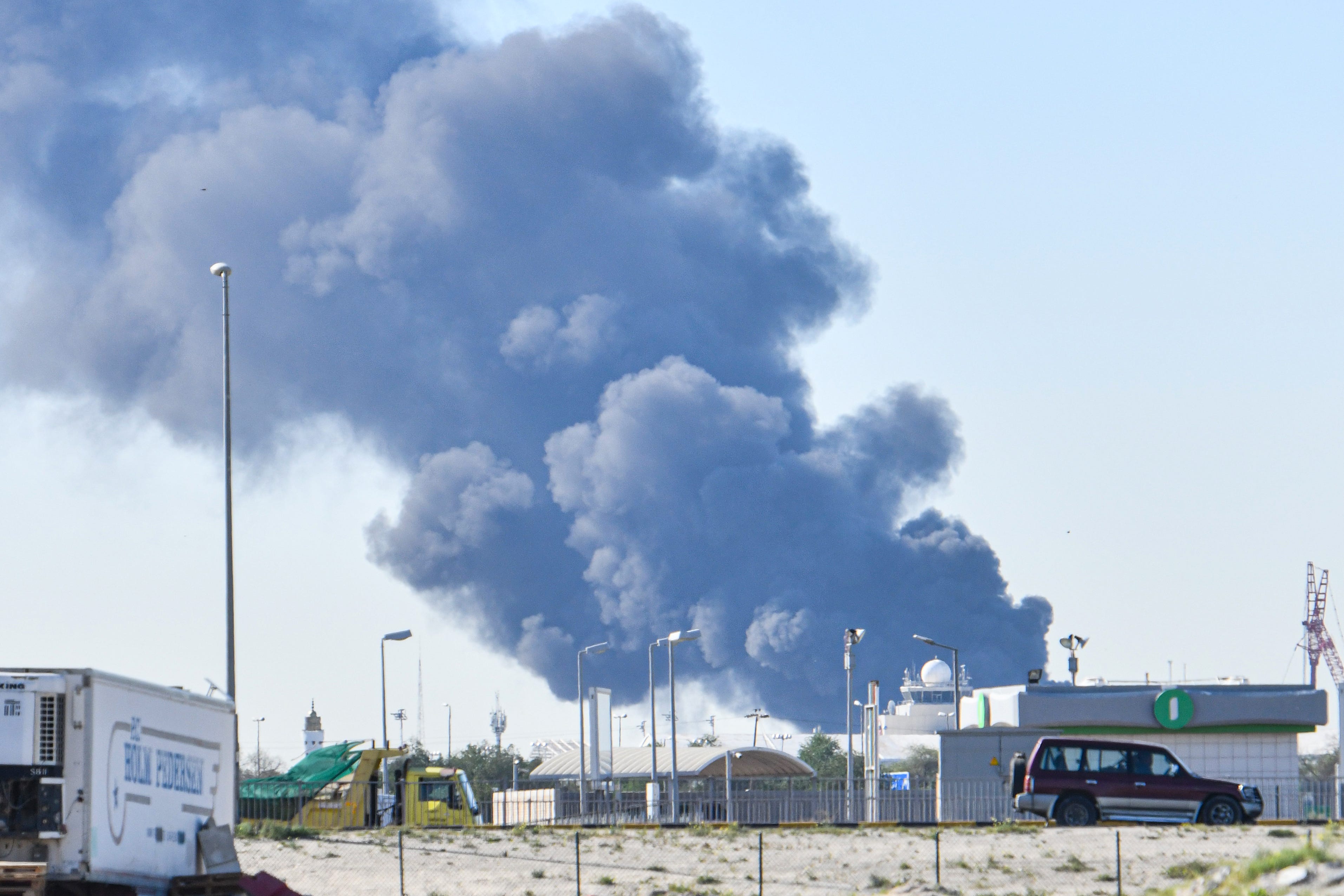
Smoke rises after a drone attack struck fuel tanks at Kuwait International Airport in Kuwait City on April 01, 2026. Photo by Stringer/Anadolu via Getty Images.

War on Iran

  • U.S.-Israeli attacks hit Iran:

    • U.S.-Israeli airstrikes hit several civilian neighborhoods in Tehran on Wednesday morning as well as in the nearby city of Malard, according to the Iranian Red Crescent. Among the targets struck in Tehran appears to be the former U.S. Embassy compound, according to AP. The embassy has been controlled by Iran’s Revolutionary Guard since the 1979 hostage crisis.
    • On Tuesday, the Red Crescent said airstrikes hit multiple sites across Iran including the Mobarakeh Steel complex in Isfahan, Shahid Haghani Port in Bandar Abbas on the Persian Gulf coast, a steel complex in Chaharmahal and Bakhtiari province in western Iran, and meteorological facilities in Bushehr. A Red Crescent emergency worker was also reportedly killed on Tuesday morning in an airstrike on Zanjan.
  • IRGC claims hundreds of attacks on Israel and Gulf: The Islamic Revolutionary Guard Corps (IRGC) said Iran’s latest wave of attacks and its allied “resistance fronts” used more than 100 heavy missiles and attack drones, along with at least 200 rockets, according to IRIB. The IRGC claimed the attacks targeted various locations in Israel, a site hosting U.S. forces in Bahrain, and a U.S. helicopter unit at the al-Adiri base in Kuwait.

  • Iran continues to hit sites in Israel: At least 25 people were wounded across 20 sites in Israel in attacks on Wednesday morning, according to Israeli media. A missile strike caused a four-story building south of Tel Aviv to partially collapse. Iran’s army also announced Tuesday that it launched drone attacks targeting what it believed to be Israeli military-linked industrial and communications facilities near Ben Gurion Airport and in Haifa, according to Fars News Agency. The army claimed the sites were affiliated with Siemens and AT&T, both of which, it claimed, support Israeli weapons production, artificial intelligence systems, and military communications infrastructure.

  • Houthis launch third attack on Israel: The Houthis said in a televised statement on Wednesday that they fired ballistic missiles at “sensitive targets” in southern Israel. Brig. Gen. Yahya Saree, a military spokesman for the Houthis, said in the statement that Israel’s “aggression, crimes and attacks on Lebanon, Iran, Iraq and Palestine will only push us towards further military escalation.”

  • Drone strike hits fuel tanks at Kuwait International Airport: A drone attack struck fuel tanks at Kuwait International Airport on Tuesday, sparking a large fire at facilities belonging to the Kuwait Aviation Fuel Supply Company, according to the country’s state news agency KUNA. Emergency crews moved to contain the blaze, with thick smoke reported at the scene. No injuries were immediately reported, though material damage was confirmed. KUNA said the attack may have been carried out by Iran-backed militias in Iraq.

  • Fires reported in Bahrain following missile strike: Bahrain’s interior ministry said on Tuesday that it is working to extinguish a fire at a business facility following what it described as an Iranian attack, with images online showing thick black smoke rising over multiple sites in the Hamala area of western Bahrain. Unverified claims from open-source trackers suggest the strike may have hit infrastructure linked to Batelco, Bahrain’s main telecommunications provider and the host of AWS cloud operations in the country.

  • Tanker struck off Qatar coast: An oil tanker leased to QatarEnergy was hit by an Iranian missile off the coast of Qatar early Wednesday, according to the Qatari Ministry of Defense, which added that it intercepted two other missiles.

  • Drones strike BP subsidiary in Iraq: Multiple drones attacked a fuel warehouse in the northern Iraqi city of Erbil on Wednesday, according to the AP. The attack started a massive fire that sent a column of black smoke into the air. The facility is owned by Castrol, a subsidiary of BP.

  • Debris kills Bangladeshi in UAE: Debris from an intercepted drone killed a citizen of Bangladesh in Fujairah, one of the UAE’s seven emirates, on Wednesday, according to authorities. The fatality brings the death toll in the UAE to nine civilians and two soldiers since the start of the U.S.-Israeli war on Iran on February 28.

  • UAE bars Iranian nationals from entering country: Emirates, Etihad Airways, and Flydubai issued travel advisories Tuesday barring Iranian nationals from entering or transiting through the United Arab Emirates, with exceptions made for certain individuals, including holders of a UAE Golden Visa. Over 1,200 Iranians living in Dubai have returned to Iran since the war started, according to the Tasnim news agency. With direct flights to Iran closed, the returnees have flown via Afghanistan and Armenia.

  • Mojtaba Khamenei praises Hezbollah: Iranian Supreme Leader Mojtaba Khamenei sent a message of gratitude to Hezbollah Secretary General Naim Qassem on Wednesday. In a statement read on air by a state television anchor, Khamenei also vowed to continue “to support the resistance against the Zionist-American enemy.”

  • IRGC commander claims strike on U.S. personnel housing in Saudi Arabia: IRGC Air Force commander Seyed Majid Moosavi claimed on Tuesday that Iranian forces struck a residence housing American pilots and aircrew in Al Kharj, Saudi Arabia. Moosavi said the attack caused multiple casualties and injuries among United States personnel, though the U.S. has yet to confirm either the casualties or the attack. Footage circulating online on Tuesday does appear to show an Iranian ballistic missile striking near a U.S. base in the Middle East, though the exact date and location of this video have not been verified.

  • China and Pakistan propose five-point peace plan: China and Pakistan on Tuesday jointly issued a five-point plan aimed at ending the conflict in the Gulf. The plan, a result of a one-day meeting between Pakistani Foreign Minister Ishaq Dar and his Chinese counterpart Wang Yi, calls for an immediate ceasefire, the launch of peace talks, protections for civilians, secure shipping in the Gulf, and a “comprehensive peace framework” under international law.

  • Syrian president says Damascus will stay out of Iran war: Syrian President Ahmed al-Sharaa said at a Chatham House event on Tuesday that Syria will not involve itself in the U.S.-Israeli war with Iran. “As long as Syria is not targeted by any party, it will remain outside any conflict,” Al-Sharaa said, adding that Damascus has had no official ties with Iran since the war began. Al-Sharaa did, however, note the risk of spillover from fighting in neighboring Lebanon and stressed the need to secure Syria’s borders against weapons smuggling.

  • Aragchi confirms messages sent from Witkoff: Iranian foreign minister Abbas Araghchi said in an interview on Al Jazeera on Tuesday that he receives messages from U.S. envoy Steve Witkoff. “I receive messages from Witkoff directly, as before, and this does not mean that we are in negotiations,” he said. “We do not have any faith that negotiations with the U.S. will yield any results. The trust level is at zero.”

  • Trump says U.S. achieved regime change in Iran, expects to leave in weeks: President Donald Trump told a reporter in the Oval Office on Tuesday that he expects the United States to withdraw from the war in Iran within two to three weeks, declaring that Washington has achieved regime change and eliminated the Iranian nuclear threat. He said a diplomatic deal between the countries is “irrelevant” to the timeline of American withdrawal, which he predicted could happen in “two to three weeks.” In similar remarks, Trump told NBC News during a phone interview on Tuesday that the United States military campaign against Iran is “coming to an end,” claiming on day 32 of the conflict that American strikes have “decimated” the Iranian military and that the U.S. is “way ahead of schedule” in its objectives. The White House announced President Donald Trump will provide “an important update on Iran” on Wednesday at 9 p.m. ET.

  • Thousands of additional U.S. troops, carrier strike group deploy to Middle East: The aircraft carrier USS George H.W. Bush departed Tuesday for the Middle East, accompanied by three destroyers and more than 6,000 sailors, as thousands of soldiers from the 82nd Airborne Division also began arriving in the region, the Associated Press reports. The Trump administration has not disclosed what role those troops will play, though the 82nd Airborne specializes in parachuting into hostile or contested territory to seize key ground and airfields. Describing the deployment, Pete Hegseth said, “Our adversary right now thinks there are 15 different ways we could come at them with boots on the ground. And guess what? There are.”

  • WSJ: UAE willing to join Strait of Hormuz military operation: The United Arab Emirates is preparing to support a U.S.-led coalition to reopen the Strait of Hormuz by force, lobbying for a UN Security Council resolution to authorize military action and potentially becoming the first Gulf state directly involved in combat since the start of the U.S.-Israeli war on Iran, Arab officials told the Wall Street Journal. Emirati officials say they are ready to assist with operations such as mine-clearing and have even proposed U.S. occupation of strategic islands. While Bahrain is sponsoring the resolution, Gulf states have so far supported the war against Iran without committing troops. Gulf countries fear a diplomatic resolution would give Iran a formal say over the Strait, the officials said. Following the report, an Emirati official said the country maintains a “defensive posture” and “remains ready to support collective international efforts aimed at safeguarding maritime security.”

  • Argentina designates IRGC a “terrorist organization”: Argentina designated Iran’s Islamic Revolutionary Guard Corps as a terrorist organization on Tuesday, enabling the country to levy financial sanctions and other operational restrictions on the group, its presidential office said. Argentina also designated Mexico’s Jalisco New Generation Cartel as a terrorist organization earlier in the week.

Lebanon

  • Israeli strikes hit Beirut, killing nine: A pair of Israeli strikes hit vehicles in two locations in the Beirut area, killing at least nine people and wounding 24, according to a Wednesday statement from Lebanon’s health ministry. One strike in the Khaldeh area south of Beirut killed two and wounded three; a second in the Jnah district killed seven and wounded 26. Israel’s military claimed both strikes targeted senior Hezbollah commanders but did not identify them or confirm whether they were killed.
  • Casualty count: At least 21 people were killed and 70 wounded in Lebanon on Tuesday, according to the Public Health Emergency Operations Center, bringing the cumulative toll since the start of Israel’s war and invasion to 1,268 killed and 3,750 wounded. The dead include 125 children and 88 women. The country’s health system has sustained severe damage across the conflict: 52 healthcare workers have been killed and 128 wounded, 52 ambulances struck, 19 medical centers damaged, and five hospitals forced out of service.
  • Israeli strikes in southern Lebanon kill at least 9: Israeli air raids, artillery, and drone strikes hit multiple towns across southern Lebanon Tuesday evening, killing at least nine people, according to Al Jazeera and L’Orient Today. Five were killed in Najjariyah near the coastal city of Sidon, including two women, in a strike on a house; three were killed and at least 19 were wounded in Srifa near Tyre; and one was killed in Arab Salim, inland from Tyre. Israeli strikes also hit towns across Nabatieh province, including Jibsheet, Aita al-Jabal, and Harouf, while artillery shelled border towns, including Kfar Tibnit, Zawtar, and Naqoura.
  • Lebanese army withdraws from southern border towns: The Lebanese military said its forces have largely withdrawn from border towns in southern Lebanon as Israeli troops invade the area. In a statement, the army said troops had to reposition as they were being encircled and cut off from their supply lines. Lebanese citizens remain in the towns however. Israel has declared it will invade and occupy southern Lebanon up until the Litani River and residents will not be able to return until further notice. Over 1 million people in Lebanon have been displaced over the past month.
  • Rockets, drone launched from Lebanon toward northern Israel: Around 50 rockets and a drone were launched from Lebanon toward northern Israel within the span of an hour, Israeli Channel 12 reported on Tuesday.

The Gaza Genocide, Israel, and the West Bank

  • Casualty count: Over the last 24 hours, four Palestinians were killed and 12 were injured in Israeli attacks across Gaza. The total recorded death toll since October 7, 2023 has risen to 72,289 killed, with 172,040 injured. Since October 11, the first full day of the so-called ceasefire, Israel has killed at least 713 Palestinians in Gaza and wounded 1,940, while 756 bodies have been recovered from under the rubble, according to the Palestinian Ministry of Health.
  • Israeli strikes kill three in Gaza: Two Palestinians, a father and his child, Mahmoud and Yahya al-Byok, were killed in an Israeli strike in Khan Younis in southern Gaza on Tuesday, according to WAFA. A separate strike in Mawasi Rafah killed one and wounded eight others.
  • Israel to nix French defense imports: Israel’s Defense Ministry announced Tuesday that it would reduce defense imports from France to zero, in retaliation for what it described as hostile French policies during the Iran war. “France has taken a series of actions that have harmed Israel’s security and the operational capabilities of its defense industry,” the statement said, which a spokesperson later clarified included the French recognition of a Palestinian state and its ban on Israeli aircraft carrying munitions through French airspace. Israeli procurement of French weapons totaled approximately $260 million between 2015 and 2024, according to the AFP.
  • Israeli settlers attack West Bank village, injuring four: Israeli settlers launched an attack on the occupied West Bank village of Tayasir on Tuesday, injuring at least four Palestinians and setting homes, vehicles, and farm structures on fire, according to CNN. Witnesses said Israeli soldiers blocked ambulances and firefighters from accessing the area while allowing the assault to continue. The attack follows an earlier settler raid on the same village in which Israeli soldiers detained and assaulted a CNN crew. Despite limited disciplinary action against soldiers, no arrests have been made over either incident.
  • Outgoing UNRWA chief calls for investigation into killing of nearly 400 agency staff: Philippe Lazzarini, outgoing commissioner-general of the United Nations Relief and Works Agency (UNRWA), called on Tuesday for a “high-level panel of experts” to investigate the killing of more than 390 UNRWA staff members since the start of Israel’s war on Gaza in October 2023. Speaking at a press conference in Geneva, Lazzarini said many others had sustained life-changing injuries or been arbitrarily detained and tortured, and called for the inquiry to extend to the deaths of other United Nations personnel and the large-scale destruction of UN premises in Gaza. “The more time” before an investigation is started, he said, “the more difficult the task for the commission will be in the future.” Lazzarini said he had raised the matter with the office of Secretary-General António Guterres and with several UN member states.
  • Protests in the West Bank and Gaza, amid widespread condemnation of death penalty law: Protests took place Wednesday in Ramallah, the occupied West Bank, where Palestinian demonstrators marched through the city rejecting Israel’s newly approved death penalty law targeting Palestinian prisoners, with calls for international intervention and a general strike declared across the northern West Bank, reported WAFA. A protest was also held outside the Red Cross headquarters in Gaza, with families of Palestinian prisoners present. The law has drawn widespread international condemnation, with UN High Commissioner Volker Türk calling it “deeply discriminatory” and a violation of international law, while a spokesperson for the UN Secretary-General said it is “particularly cruel and discriminatory” and reaffirmed opposition to the death penalty in all forms. The European Union also described the legislation as a “grave regression” and raised concerns over its discriminatory nature, urging Israel to rescind it.

United States

By Julian Andreone, with Ryan Grim. Have a tip on Capitol Hill? Email Andreone at Julian@dropsitenews.com.

  • Trump signs executive order creating national voter list, restricting mail-in voting: President Donald Trump signed an executive order Tuesday directing the Department of Homeland Security and Social Security Administration to create a national list of verified eligible voters and seeking to bar the U.S. Postal Service from sending absentee ballots to those not on state-approved lists. Voting law experts say the move unconstitutionally usurps states’ authority to run elections. Federal funding could be withheld from states that do not comply.
  • Supreme Court strikes down Colorado conversion therapy ban: The Supreme Court ruled Tuesday against Colorado’s law banning conversion therapy for LGBTQ+ minors, with an 8-1 majority finding the measure violates the First Amendment’s free speech protections. Justice Neil Gorsuch, writing for the court and joined by liberal justices Elena Kagan and Sonia Sotomayor, said the law “censors speech based on viewpoint” and sent the case back to a lower court for further review. Justice Ketanji Brown Jackson was the lone dissenter, warning the decision “opens a dangerous can of worms” that threatens states’ ability to regulate medical care. The ruling is expected to render similar laws in roughly two dozen other states unenforceable.
  • Trump to attend Supreme Court arguments on birthright citizenship: Trump plans to attend Wednesday’s Supreme Court oral arguments over his executive order limiting birthright citizenship, which would make him the first sitting president to do so. The order, signed on the first day of Trump’s second term, declares that children born to non-citizen parents who are in the United States temporarily or without authorization are not American citizens.
  • AOC commits to oppose all U.S. arms funding for Israel: Rep. Alexandria Ocasio-Cortez (D-N.Y.) said on Tuesday she would vote against “any spending on arms for Israel, including so-called defensive capabilities” at a candidate forum for the New York City branch of the Democratic Socialists of America. “There are a lot of organizations with which I may have a more transactional political relationship. I do not seek a transactional relationship with DSA,” she said. “I seek a relationship of mutuality and shared interest.” The remarks were reported by City & State NY’s Peter Sterne, full article here.
  • Pentagon weighs deploying anti-drone laser system to defend Hegseth and Rubio: The Pentagon is considering using the Army’s LOCUST anti-drone laser system near Fort Lesley J. McNair in southwest Washington, where Defense Secretary Pete Hegseth and Secretary of State Marco Rubio reside, the New York Times reports, following reports of unusual drone activity over the installation. The potential deployment is complicated by an ongoing dispute between the Federal Aviation Administration and the Defense Department over the laser’s safety risks, especially in congested airspace—a dispute that came to a head last month when the laser fired near El Paso prompted the FAA to shut down the city’s airspace.
  • Trump administration planning international summit to counter “antifa”: The Trump administration is organizing an international summit, tentatively scheduled for June or July, to convene officials from multiple nations to share intelligence and coordinate strategies against “antifa” (which is not an organization) and related left-wing groups, Reuters reports.
  • Private equity’s “continuation fund” crisis: Private equity firms are increasingly selling companies to themselves through “continuation funds,” which allow fund managers to transfer aging investments into newer investment structures. A lawsuit by Abu Dhabi’s $330 billion sovereign wealth fund against Houston firm Energy & Minerals Group offers a rare window into the practice; the suit alleges the firm presented contradictory valuations to existing and prospective investors in the sale of a natural gas company. That case, and the private equity crisis at large, are discussed in the latest from David Dayen and Moe Tkacik at The American Prospect, here.

Other International News

  • U.S. journalist kidnapped in Iraq: Iraq’s Interior Ministry said Tuesday that a foreign journalist was kidnapped by unknown assailants, with the victim later being identified as award-winning freelance journalist Shelly Kittleson, who covers Iraq and the broader Middle East for Al-Monitor, Foreign Policy, BBC World Service, and Politico. Security forces pursued the kidnappers as they fled, causing one of their vehicles to overturn and resulting in the arrest of one suspect. In an online post, Assistant Secretary of State for Global Public Affairs Dylan Johnson said the State Department was aware of the kidnapping, adding, “The State Department previously fulfilled our duty to warn this individual of threats against them and we will continue to coordinate with the FBI to ensure their release as quickly as possible.”
  • U.S. senators urge Taiwan not to be “naive” about China: A bipartisan U.S. Senate delegation visiting Taipei on Tuesday pressed Taiwan to move forward on President Lai Ching-te’s proposed $40 billion defense spending increase, which has stalled in a Taiwanese parliament controlled by Ching-te’s opposition. Sen. John Curtis (R-Utah) warned that Taiwan should heed the example of Hong Kong, where China’s “intentions…were made very, very clear.” “Please don’t be naive,” King said. The visit coincides with an invitation from China to Kuomintang chairwoman Cheng Li-wun, leader of Taiwan’s largest opposition party, to visit Beijing next week.
  • Thousands held in overcrowded RSF prison in South Darfur: Around 13,000 people are being held at the Rapid Support Forces-operated Diqris prison near Nyala in South Darfur, according to the African Centre for Justice and Peace Studies, well over three times the facility’s capacity. Reports indicate detainees have died from disease and poor conditions at the site, which remains heavily guarded and largely inaccessible to independent monitors.
  • MSF reports 3,300 sexual violence victims treated in Darfur in under two years: Médecins Sans Frontières said Tuesday it treated 3,396 survivors of sexual violence at facilities in Sudan’s North and South Darfur states between January 2024 and November 2025, identifying Rapid Support Forces fighters and allied militias as the primary responsible party for the widespread and systemic abuse. Women and girls accounted for 97% of victims, and one in five survivors in South Darfur were under 18, including 41 children under the age of five.
  • ​​Sudanese army strikes kill RSF-aligned political figure in Nyala: A senior member of the Sudan Founding Coalition, the RSF-aligned political body that forms the basis of Mohamed Hamdan Daglo’s parallel government in Nyala, was killed Tuesday during Sudanese army drone strikes on the South Darfur capital. Local sources identified the victim as Osama Hassan, a prominent young coalition leader. The strikes hit multiple areas of the city including the Cinema neighborhood, areas near the Specialized Hospital, and a Starlink internet cafe where several people were injured, marking the second consecutive day of aerial bombardment of Nyala.
  • Serbian students clash with police: Hundreds of students clashed with police in Belgrade on Tuesday after officers searched University of Belgrade offices, seizing computers and finding firecrackers, gas masks, and other materials. The police allegedly operated under a court order linked to the death of a 25-year-old female student who fell from a faculty building window last Friday. Antigovernment protests have been a feature of life in Serbia since the winter of 2024, when a train accident catalyzed opposition to President Aleksandar Vucic, who has been accused by his opponents of corruption, ties to organized crime, and stifling press freedom.
  • Argentina detains Gaza aid activist at Buenos Aires airport: Brazilian humanitarian activist Thiago Ávila, known for co-leading Gaza aid flotillas alongside climate activist Greta Thunberg under the Global Sumud Flotilla, was detained Tuesday at Buenos Aires’ Aeroparque airport and separated from his wife and child. Ávila had previously been detained by Israel during each of his last two missions to Gaza.
  • Ukraine continues strikes on Russian Baltic port of Ust-Luga: Ukrainian drones struck the Transneft crude oil loading terminal at Ust-Luga on Russia’s Baltic coast for the fifth time in ten days on Tuesday, with industry sources telling Reuters the attack hit oil export facilities at the port, which typically handles around 700,000 barrels of crude per day. At least 40% of Russia’s total oil export capacity has been halted through a combination of drone strikes, a disputed pipeline strike, and tanker seizures, according to Reuters calculations.
  • Fire at Russian petrochemicals plant kills three, injures dozens: A gas explosion and fire at the Nizhnekamskneftekhim petrochemicals complex in Russia’s Tatarstan region killed at least three people—two employees and a firefighter—and injured 68 on Tuesday, with 21 remaining hospitalized. Owner Sibur said a gas mixture exploded following a loss of pressure at a facility producing synthetic rubber and plastics, with the cause of the ignition still unclear.
  • Colombian army rescues six siblings who hid in rainforest to evade rebel capture: Colombia’s army rescued five children and their adult sister Tuesday after they spent three days hiding in a rainforest in the southwestern province of Caquetá to avoid capture by a rebel group that had kidnapped their parents, Defense Minister Pedro Sánchez said. The group responsible is led by Alexander Díaz, known as Calarca, a former Revolutionary Armed Forces of Colombia commander who refused to join the 2016 peace deal and now leads a militia faction currently in peace talks with President Gustavo Petro’s government.
  • Gang violence continues in Haiti’s Artibonite region: Armed men from the Gran Grif gang and its ally Kokorat San Ras repositioned Tuesday in the town of Pont Benoit and attempted a new offensive on Marchand Dessalines, days after a weekend assault on Jean-Denis in Haiti’s Artibonite region left approximately 70 dead. Also on Tuesday, Haiti’s prime minister met with a UN delegation to discuss expanding the partially deployed international security mission, which has been hampered by shortages of equipment, troops, and funding.
  • Video: A doctor describes the severe constraints on healthcare imposed by the U.S. blockade on Cuba, using the particularly harrowing case of a 6-year-old undergoing urological surgery. Watch the full video, from Liz Oliva Fernández here.

More from Drop Site

  • Israel’s football violations against Palestinians have been “normalized” by FIFA and UEFA, sparking legal cases and an ICC complaint: The world’s leading football governing bodies, FIFA and UEFA, are confronting a growing backlash over their handling of Israeli football, including a February filing before the International Criminal Court accusing FIFA president Gianni Infantino and UEFA president Aleksander Ceferin of aiding and abetting war crimes by permitting Israeli settlement-based clubs in the occupied West Bank to compete in their competitions. Last week, FIFA declined to sanction the Israeli Football Association over the matter, citing the West Bank’s legal status as unresolved.” “In this decision, FIFA ignored 59 years of UN resolutions and settled international legal doctrine regarding the status of the West Bank as being nothing but Palestinian land that Israel occupies,” Iranian football journalist Nima Roodsari told Drop Site News. Read more about the crisis in football and the relationship of international sports bodies to Palestine in the latest from Drop Site contributor Abubaker Abed, available here.
  • Report from Komala camp in Iraqi Kurdistan: Drop Site contributor Alexis Daloumis visited a camp of Komala, an Iranian Kurdish Marxist group banned and designated a terrorist organization by Tehran, in Iraqi Kurdistan on Tuesday, capturing new footage from inside the base. The group, led by Ibrahim Alizade and based near Sulaymaniyah, has faced growing pressure in recent months as Iraqi authorities push Kurdish opposition factions to relocate under security agreements with Iran, and its members have repeatedly been targeted in Iranian strikes. An interview with Komala’s leadership will be published by Drop Site soon.
  • LIVESTREAM: Trump, Hegseth: Open Your Own Strait of Hormuz | Ep. 52

Ryan Grim and Murtaza Hussain discuss Trump and Hegseth, the Strait of Hormuz, recent events in Bahrain, and the Cuban blockade, recently broken by Russia.

If you want to continue getting this newsletter, you don’t have to do anything. But if this is too much—we do try to be mindful of your inbox—you can unsubscribe from this newsletter while continuing to get the rest of our reporting. Just go into your account here at this link, scroll down, and toggle the button next to “Drop Site Daily” to the off setting. It looks like this:

Subscribe now

Leave a comment


From Drop Site News via This RSS Feed.


We’re Introducing Advertising!

Times are tough for media. Unless you’re owned by a socially-conscious billionaire (and good luck finding one of those), it’s hard for a publication to survive. Current Affairs does not have corporate backing. Nor do we have paywalls. Nor have we ever had advertising. We’re totally dependent on subscriptions and small donors. Unfortunately, our subscribers and small donors have been too miserly for our magazine to sustain itself long-term. So after much soul-searching, we have decided to alter our business model. We’re introducing advertising.


From blog via This RSS Feed.


A year after Amazon’s historic firing of thousands of Quebec workers, the provincial CAQ government’s promises to reassess its relationship with the giant have already been set aside. Its Ministry…

Source


From The North Star via This RSS Feed.

[–] rss@news.abolish.capital 2 points 2 months ago

Extra context added because this headline is wildly misleading.

[–] rss@news.abolish.capital 2 points 2 months ago

I've updated the URL. Try it now.

view more: next ›