The IT worker pipeline:
help desk > sysadmin > CTO/CISO > goat farmer
The IT worker pipeline:
help desk > sysadmin > CTO/CISO > goat farmer
Suddenly I'm having visions of the flash mob trend returning with purpose.
Anywhere an ICE agent is sitting in a parking lot... suddenly showtunes and choreographed dancing, or just a block party, all around them.
Punitive measures might feel emotionally satisfying in the moment, but what they actually incentivize is hiding the corruption and exploitation better (avoiding getting caught, rather than avoiding the bad activity in the first place). Also, while an angry mob might have a taste for violence and actually perform it for a little while, it doesn't last and it's not a basis for a stable government or economy.
If you want long-term stability you have to organize a system so that it incentivizes the behaviors that you want, even more than it disincentivizes the behaviors that you don't want.
I'm not sure what that looks like in this context, in a practical sense. But ultimately the problem is that everything in our society rewards the hoarding of wealth. This is not just a problem with capitalism - every communist or supposedly socialist society ever established also rewarded hoarding of wealth.
For things to be different, actually different, a different value system with a fundamentally different reward structure needs to be established, and it needs to be competitive long-term with the current system in order to exist alongside it and/or eventually replace it.
Like I said I don't really know what that looks like in practice. The only example I can think of is the "gift economy" described in Kim Stanley Robinson's Green Mars, in which the participants in every exchange always seek to give more than they get (essentially the reverse of normal behavior).
Heh, so ALSA has kind of been the audio architecture for Linux distros since forever.
Pulse Audio was supposed to modernize audio for Linux and ultimately replace ALSA.
But last time I installed Linux on my desktop, I couldn't get audio output from my motherboard's TOSLINK S/PDIF port no matter which settings I changed in the GUI, uninstalled/reinstalled drivers and codecs and whatnot, etc.
Nothing made any difference until I eventually found some forum post which suggested using ALSAmixer to check the settings for various audio channels. ALSAmixer is not typically installed by default and not commonly used anymore, but it was the only tool that could unmute the digital audio output channel that served the TOSLINK port - that functionality was not present anywhere else in any of the configuration options. Pulse appeared to be in control of the system audio hardware, but in reality it was just sitting on top of and still relying on ALSA to handle the back end. Also, whoever set ALSA to mute some audio channels by default on a clean install... wtf dude, that shit just makes people think their hardware isn't properly supported and they have a driver issue.
The point being, ALSA was supposed to be deprecated years ago and all of the old audio issues resolved and modernized with a new architecture, but... I'll believe it when I see it, when whatever the new thing is actually proves itself to be an all-singing, all-dancing audio architecture. I've seen this rodeo before, and last time I checked it was still a clownshow.
No no, see the GNU GPL is copyleft:
The licenses in the GPL series are all copyleft licenses, which means that any derivative work must be distributed under the same or equivalent license terms.
https://en.wikipedia.org/wiki/GNU_General_Public_License
So if (stressing the if) output from an AI that was trained on GPL code is considered a derivative work, then it must also be licensed as GNU GPL. That makes it open source, but not unlicensed.
GNU GPL is intentionally insidious this way, it prevents corporate profiteering from GPL projects because any derivative work must use the same license.
The question is whether a court decision would uphold that AI generated code based on GPL code training counts as a derivative work. This decision regarding generated art seems like it might set a precedent for that.
you can't really bomb a supply chain
Fuck yeah you can, hence my example of bombing ball bearing factories.
Train lines are also a classic bombing target. Fuel production/refining/storage/transport, any kind of logistics hub, shipyards, airstrips, warehouses... all things that are difficult to hide because there's always activity around them. Flatten them and the dependent supply chain grinds to a halt.
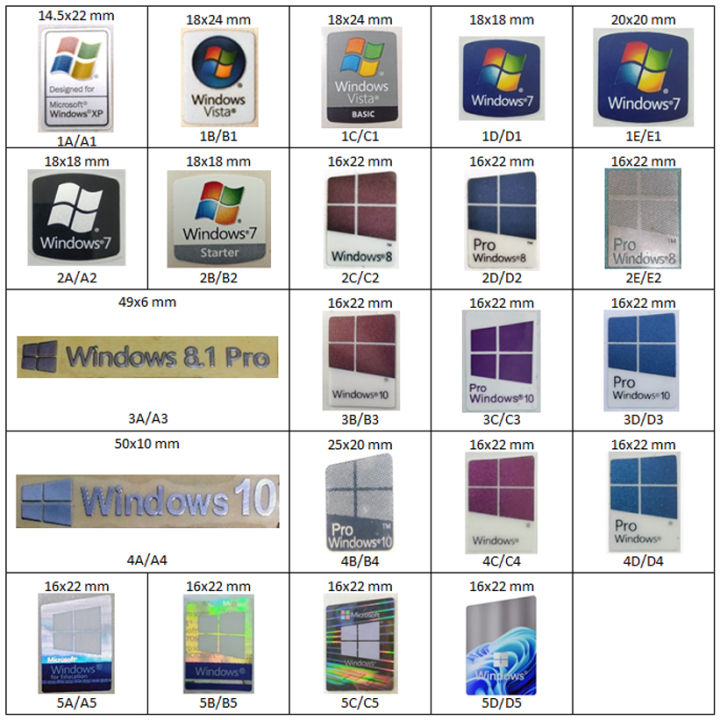
You running Windows Vista on an HP desktop with a Zip drive in 2026?
Your company isn't taking you or your work seriously, so yeah you shouldn't either.
China and Russia both trade heavily with Iran and don't care about embargoes.
Also even if they could produce everything they need within the country, that doesn't mean it's practical to produce it all in one location. At some point you have to pull raw material out of the ground and refine it, and you probably can't get everything you need all from the same hole in the ground. You probably can't manufacture electronics very well next door to a mining and refining operation. There's going to be truck routes or train lines and logistics facilities somewhere.
Heh, this would be fantastic and I think technically in line with the GNU GPL - all code produced from GPL code must also be licensed as GPL. Therefore the output of any model that trained on any GPL code would also be GPL.
Open source all the things!
off the starboard bow

Would it? I've seen some videos here of people absolutely harassing lone ICE agents in cars sitting in parking lots, and those guys just drove off as fast as they could manage.
If you have a crowd of 20+ people around the car, not doing anything directed at the occupant, just kind of hanging around the outside, plus cameras taking video and actively posting it to social media because, hey, flash mob!... what then?