politics
Welcome to the discussion of US Politics!
Rules:
- Post only links to articles, Title must fairly describe link contents. If your title differs from the site’s, it should only be to add context or be more descriptive. Do not post entire articles in the body or in the comments.
Links must be to the original source, not an aggregator like Google Amp, MSN, or Yahoo.
Example:
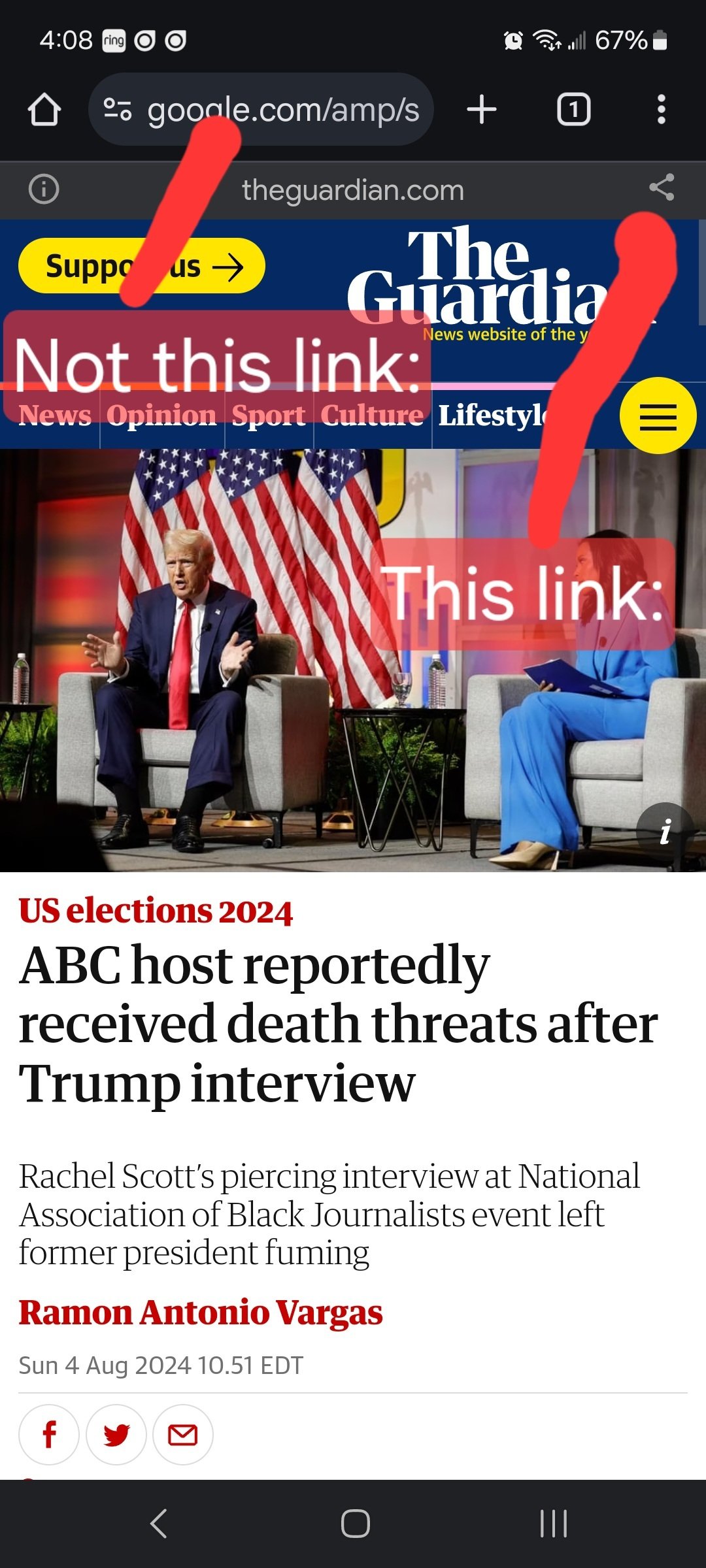
- Articles must be relevant to politics. Links must be to quality and original content. Articles should be worth reading. Clickbait, stub articles, and rehosted or stolen content are not allowed. Check your source for Reliability and Bias here.
- Be civil, No violations of TOS. It’s OK to say the subject of an article is behaving like a (pejorative, pejorative). It’s NOT OK to say another USER is (pejorative). Strong language is fine, just not directed at other members. Engage in good-faith and with respect! This includes accusing another user of being a bot or paid actor. Trolling is uncivil and is grounds for removal and/or a community ban.
- No memes, trolling, or low-effort comments. Reposts, misinformation, off-topic, trolling, or offensive. Similarly, if you see posts along these lines, do not engage. Report them, block them, and live a happier life than they do. We see too many slapfights that boil down to "Mom! He's bugging me!" and "I'm not touching you!" Going forward, slapfights will result in removed comments and temp bans to cool off.
- Vote based on comment quality, not agreement. This community aims to foster discussion; please reward people for putting effort into articulating their viewpoint, even if you disagree with it.
- No hate speech, slurs, celebrating death, advocating violence, or abusive language. This will result in a ban. Usernames containing racist, or inappropriate slurs will be banned without warning
We ask that the users report any comment or post that violate the rules, to use critical thinking when reading, posting or commenting. Users that post off-topic spam, advocate violence, have multiple comments or posts removed, weaponize reports or violate the code of conduct will be banned.
All posts and comments will be reviewed on a case-by-case basis. This means that some content that violates the rules may be allowed, while other content that does not violate the rules may be removed. The moderators retain the right to remove any content and ban users.
That's all the rules!
Civic Links
• Congressional Awards Program
• Library of Congress Legislative Resources
• U.S. House of Representatives
Partnered Communities:
• News
view the rest of the comments
One could reasonably argue that the multi-level, fractally-iterated caste system of India is more complex and more pervasive than the US's old, but not fully eradicated, white/black classification scheme.
Excellent point.
That's not a bad assumption as a first-order-of-magnitude guess. It's shocking how much racial weirdness baggage is part of a white American upbringing. It's not as bad as it used to be, but that doesn't make it good.
I think one can reasonably argue a greater social pervasiveness of the Indian caste system, especially when it comes to kinship and marriage. It's dying out in urban parts of India but boomers and the older generation, especially in rural areas, certainly still care about marriages remaining within caste.
Many of the boomers I have engaged with in the US are relatively open to their child or grandchild having an interracial relationship but there are still a lot who would be torn apart by it (on the basis of white people being a higher caste).
Institutionally, both countries have gone down different routes to address historical injustice. In India, at independence, a caste reservation system was created to make sure those of historically lower castes had equal access to oppurtunity. This is how DEI is perceived by some in the US, as a reservation system for people of historically disenfranchised groups, though it certainly isn't explicitly meant to work like that.
Some in India feel that the reservation system has been an overcorrection in some aspects but the debate is ongoing as is the debate around DEI in the US.
There is an excellent Indian film produced by Karan Johar (with Martin Scorcese as an executive producer) based on the book A Friendship, a Pandemic and a Death Beside the Highway by Basharat Peer which tells the story of a Muslim (Shoaib) and person born into a lower caste (Chandan).
I'll spoil the film since it's relevant to the conversation. Both aspire to join the police force which would break each of their family's intergenerational cycle of poverty. Both face significant hurdles in the form of Islamophobia and caste discrimination. Ultimately Chandan gets in and Shoaib does not. This creates resentment between them. Chandan's acceptance gets questioned by society at every turn, under the assumption that he got in due to his caste rather than merit.
It's a tragic story (based on true events) but Chandan's acceptance is delayed and Shoaib and Chandan end up working at the same labor mill where their friendship is rekindled. The beginning of the COVID pandemic brings an end to their labor contract. Unfortunately Chandan comes down with COVID on their way home (which goes through the middle of nowhere). They get kicked off the transport vehicle that was taking them home for the safety of other passengers and try to trek it with Chandan ultimately dying on the side of the road.
At the end of the movie it's revealed that Chandan went out of his way to make sure his caste was not mentioned anywhere on his application and he even went as far as to use a different surname to make sure his application didn't get special consideration (through the caste reservation system).
It's an interesting analysis on identity, oppurtunity and how hierarchy within society is very very hard to subvert.
Ive worked in several different American cities. I think a lot of progress has been made and I'm glad to see it. But there is still a lot of work to do. In nearly every city I've lived in, there is a section where white people live and another where black and Latino people live. In the companies and insitutions I've worked in, black and Latino folk are almost always over-represented in entry level positions and white folks are heavily represented in upper management and the C suite. It absolutely reminds me of the caste system in India. Though I acknowledge there are key differences.
Some of the rhetoric I hear in the US also mirrors the rhetoric among the privileged class in India around race/caste. Particularly (in the US) the questioning of merit targeted at African Americans or immigrants on, for example, an H1b visa. There are a lot more similarities in a situation where neither country should want to be like the other.
There is also a body of literature from American Caste and Class (Warner 1936) to Caste: The Origins of Our Discontents (Wilkerson 2020) outlining how and concluding that, in America, race is caste.
I'll end with a quote from a revered civil rights figure in the US, who was heavily inspired by Gandhi, and travelled to India to visit his home for inspiration. While doing a speech in Kerala, India he was introduced as a "fellow untouchable" (low caste) from America. He was initially aghast at the portrayal but after a moment of reflection he famously said "Yes, I am an untouchable, and every Negro in the United States of America is an untouchable" (MLK Jr.)