politics
Welcome to the discussion of US Politics!
Rules:
- Post only links to articles, Title must fairly describe link contents. If your title differs from the site’s, it should only be to add context or be more descriptive. Do not post entire articles in the body or in the comments.
Links must be to the original source, not an aggregator like Google Amp, MSN, or Yahoo.
Example:
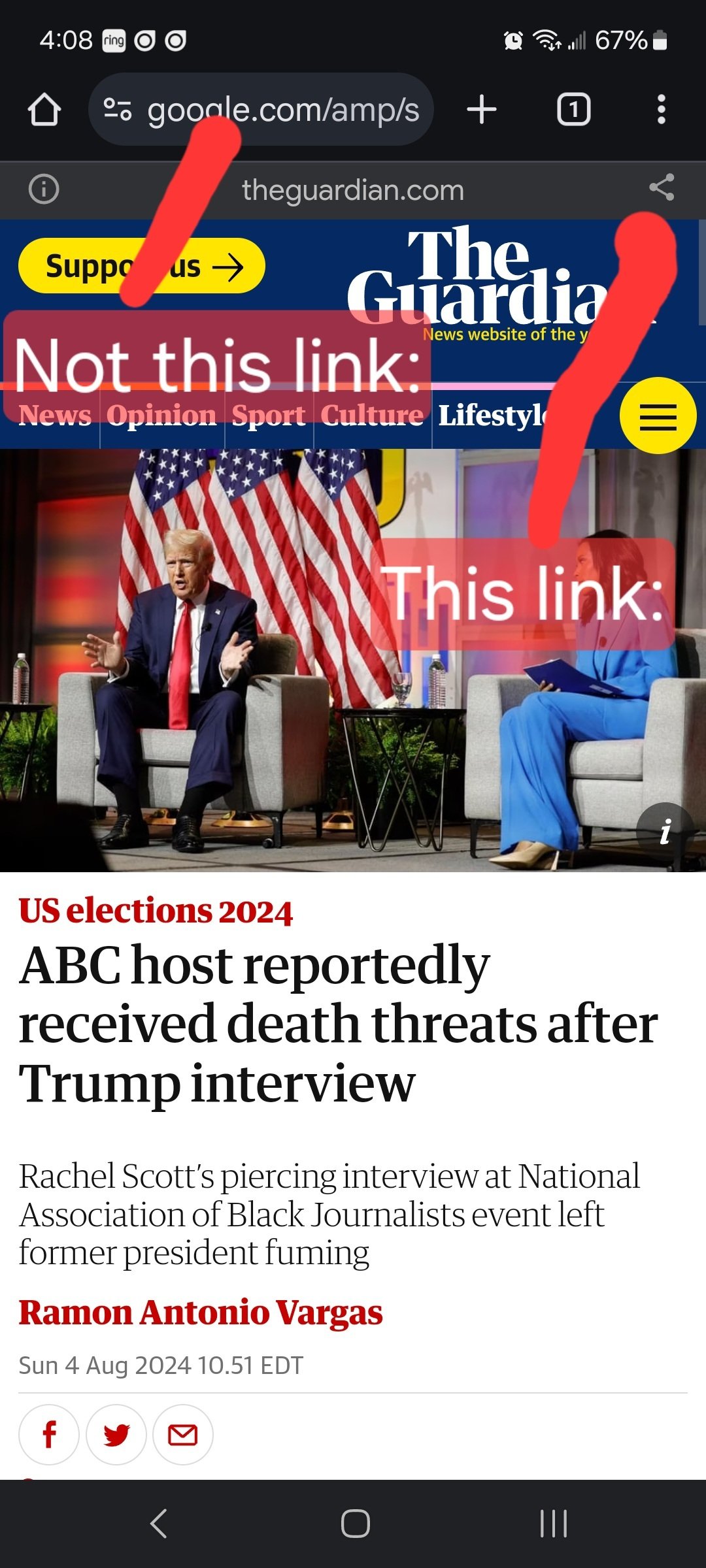
- Articles must be relevant to politics. Links must be to quality and original content. Articles should be worth reading. Clickbait, stub articles, and rehosted or stolen content are not allowed. Check your source for Reliability and Bias here.
- Be civil, No violations of TOS. It’s OK to say the subject of an article is behaving like a (pejorative, pejorative). It’s NOT OK to say another USER is (pejorative). Strong language is fine, just not directed at other members. Engage in good-faith and with respect! This includes accusing another user of being a bot or paid actor. Trolling is uncivil and is grounds for removal and/or a community ban.
- No memes, trolling, or low-effort comments. Reposts, misinformation, off-topic, trolling, or offensive. Similarly, if you see posts along these lines, do not engage. Report them, block them, and live a happier life than they do. We see too many slapfights that boil down to "Mom! He's bugging me!" and "I'm not touching you!" Going forward, slapfights will result in removed comments and temp bans to cool off.
- Vote based on comment quality, not agreement. This community aims to foster discussion; please reward people for putting effort into articulating their viewpoint, even if you disagree with it.
- No hate speech, slurs, celebrating death, advocating violence, or abusive language. This will result in a ban. Usernames containing racist, or inappropriate slurs will be banned without warning
We ask that the users report any comment or post that violate the rules, to use critical thinking when reading, posting or commenting. Users that post off-topic spam, advocate violence, have multiple comments or posts removed, weaponize reports or violate the code of conduct will be banned.
All posts and comments will be reviewed on a case-by-case basis. This means that some content that violates the rules may be allowed, while other content that does not violate the rules may be removed. The moderators retain the right to remove any content and ban users.
That's all the rules!
Civic Links
• Congressional Awards Program
• Library of Congress Legislative Resources
• U.S. House of Representatives
Partnered Communities:
• News
view the rest of the comments
Why hasn’t he been arrested by local authorities?
The law requires people who are arrested to be charged with a crime or released immediately. So in order to obtain an arrest warrant, prosecutors would need to file a criminal complaint followed by an indictment or an information. The accused could then assert their right to a speedy trial and demand an immediate trial. Depending on local court case loads, this could be scheduled in as little as a week (not typical; usually at least a fortnight up to six weeks).
Edit: A slight correction. An arrest warrant can be applied for without filing a complaint, but judges will require that a complaint or some other charging document be filed expeditiously after the accused is taken into custody. It is not legal to hold someone in jail without charge. Criminal procedure laws are not nationally uniform in the US; it varies by state.
So in a nutshell, once someone is arrested, the prosecutors are required, essentially, to already be ready to press charges and go to court. If they are not, then an early arrest followed by a judge ordering their release for lack of charges would be prejudicial to their case.
He murdered someone on a video that only the sickest people on earth are defending
The problem is that he could also probably use a federal immunity defence. The prosecutors need time to plan out a good way to attack this defence. The worst possible outcome would be to file charges now, unprepared, and then the guy gets acquitted at trial which forever bars future state prosecution for that offence, or the case is dismissed because prosecutors failed to present a good argument for why the accused is not immune. Prosecutors have only one chance so they tend to make sure their case is as good as they can get before shooting their shot.
It's actually very rare for murder trials to be argued over whether the accused killed the person in question. Usually, the argument stems from whether the killing counts as murder or whether the evidence that the accused killed the victim is legally admissible.
He's not immune because he shot a woman in her head for no reason, not related to his duties whatsoever.
He will still try to argue that, and prosecutors need to come up with real reasons why it doesn't apply. Defence lawyers are not stupid and they will probably think of a way to argue immunity. Those arguments must be anticipated, researched, and rebutted.
Yeah I get that, but murder
Well, to put it simply, you say "murder" he says "nuh uh". Now you have to prove he's wrong and why or he gets off.
I seent it
What happens if he just leaves the state?
Generally speaking, law enforcement can arrest someone based on arrest warrants nationwide, although typically, what happens is that the governor of the state where the crime was committed will make a written extradition demand to the governor of the state where the accused fled to. The receiving governor is constitutionally bound to turn over the person in question, although in reality, for political cases, this can get bogged down in political arguments, and it can result in the governor or attorney-general of one state suing another to force them to arrest the person in question.
Thank you. I assumed this would become political and difficult if he was allowed to leave the state.
I'm pretty sure the charge is 1st degree murder, however 'premeditation' is the key point of differentiation between 1st and 2nd degree.
Here's what I found from Minnesota Statutes Section 609.185: https://legalclarity.org/understanding-murder-charges-and-penalties-in-minnesota/
"In Minnesota, the criteria for murder charges are defined by state statutes, which outline the circumstances and intent required for each degree. Minnesota Statutes Section 609.185 outlines conditions for first-degree murder, including premeditated intent to kill, killing during certain felonies, or causing the death of a peace officer. Proving intent and premeditation is pivotal in distinguishing first-degree murder from other charges.
Second-degree murder, under Minnesota Statutes Section 609.19, involves intentional killing without premeditation or causing death while committing a felony not specified for first-degree murder. The absence of premeditation differentiates it from first-degree murder, yet intent remains crucial. This distinction highlights the importance of the defendant’s state of mind.
Third-degree murder, detailed in Minnesota Statutes Section 609.195, is characterized by acts that are dangerous to others and demonstrate a depraved mind, without regard for human life, but without intent to kill any particular person. This charge often applies when actions were reckless or negligent, leading to death. The focus is on the reckless nature of the act rather than specific intent to kill, differentiating it from higher degrees of murder."
Funny how this literally never applies to normal people.
It does apply. It's just that for non-high-profile cases, prosecutors are pretty quick to make a decision to prosecute/not prosecute. Years ago, I was arrested and accused of assault, and I was released mere hours after getting to the police station because the prosecutor's office thought my self-defence claim was good and decided not to file charges. Generally speaking, this is what happens. You get arrested, taken to the police station or to the local jail, and then the police department refers the case to the prosecutor's office. Someone at the prosecutor's office reviews the evidence, and then they decide whether they will file charges. If they file one or more charges, then you're brought before a judge for a preliminary hearing, usually within 24 hours (depends on state law). At the hearing, you will make a plea of guild or not guilty, then either arrange for a lawyer, or the judge will appoint a public defender to represent you. Then your lawyer can make a demand for a speedy trial and/or make any other submissions to the court in your defence.
If the prosecutor's office decide not to prosecute, they will instruct the police department to release you. Failing that, someone can make a habeas corpus petition on your behalf and a judge will order your release.
What about in the situation where the person is considered a danger to the public?
Legally, the law says "too bad". American law does not recognise the concept of administrative detention. If someone is a danger to the public, then there must be probable cause to believe they have committed a crime before an arrest warrant can be issued. After they are arrested, they must be charged by prosecutors immediately. Or, at least, this is how the normative state works. There are many exceptions in fields like national security and military law.
I love that you're providing genuine answers to questions in this thread, it's always needed because the questions are often genuine, but coming from a place of very well-justified anguish or anger.
I appreciate your insight here, all of your responses show how the legal system in the US is supposed to work, and apply to all citizens equally. But what this analysis ignores is that the Trump Administration is building up its own "in group", to which these restraints no longer apply. Both sides are playing by different rules now, enforced by an Administration and DoJ which is taking sides.
Consider the case if someone (maybe even a sworn law officer with their own qualified immunity) steps in front of a car driven by an ICE agent and kills them in cold blood. The US justice system is supposed to work the same for that person as for the Minnesota ICE agent. But we all know what will happen. The surrounding ICE agents will render their own vengeful (and biblical) verdict on the spot, Kristi Noem will spout some bullshit, and nobody involved will ever see a courtroom.
That's the problem. The rules are changing, and the courts can't keep up.
One would describe those as the actions of the prerogative state
People wait yeeeeears in pretrial detention.
This is because defence lawyers often advise their clients to waive their right to a speedy trial, so they can get more time to prepare a defence. If you insist on the right to a speedy trial, then it is usually held in a month.
Given the footage available; shouldn't the prosecution be capable of meeting them with a speedy trial? This doesn't seem like the sort of thing that requires months and months of investigations.
I appreciate you giving genuine answers. They're often hard to get.
/edit: another of your replies clears this up. Thank you.
You know why.
It’s the same people.
I don't think it is in this case. The one who kicked over the memorial was federal.
We sure as hell need some allies, and it'd be nice to have state and local authorities on our side.