earth

12805 readers
14 users here now

The world’s #1 planet!

A community for the discussion of the environment, climate change, ecology, sustainability, nature, and pictures of cute wild animals.

Socialism is the only path out of the global ecological crisis.

founded 4 years ago
MODERATORS
526


After years-long discussion, birds will no longer be named after people — a decision meant to dissociate the animals from problematic eponyms.

The American Ornithological Society announced Wednesday that all common English-language names of bird species named after people will be changed, along with other monikers that have been deemed offensive. In total, approximately 70-80 birds — primarily in the US and Canada — will be renamed.

“There is power in a name, and some English bird names have associations with the past that continue to be exclusionary and harmful today,” said Colleen Handel, president of the AOS, in a statement.

Many birds sport names that come from White men with “objectively horrible pasts,” according to the group Bird Names for Birds, a grassroots initiative that has been advocating for this change. Having their names memorialized in this manner is similar to building a statue in their honor, the group argues.

The Hammond’s flycatcher, for example, is named for William Alexander Hammond, a former US surgeon general. Hammond held racist views toward both Black and Indigenous people, writing that Black people specifically were of “little elevated in mental or physical faculties above the monkey of an organ grinder.”

Judith Scarl, the executive director and CEO of AOS, said in a statement that there has long been historic bias in how birds have been named, and scientists should work to eliminate that bias.

“Exclusionary naming conventions developed in the 1800s, clouded by racism and misogyny, don’t work for us today, and the time has come for us to transform this process and redirect the focus to the birds, where it belongs,” she said.

Though efforts toward renaming birds existed before, the movement gained momentum in 2020, in the midst of large-scale cultural upheaval surrounding racist or otherwise offensive names — like those of sports teams and school buildings. That same year, Christian Cooper, a Black birdwatcher, made headlines after a White woman called the police on him — highlighting some of the prejudices Black people face in the outdoors.

In 2021, the AOS announced an ad-hoc committee to make recommendations regarding these common English names. The committee was formed in 2022 and released its guidance earlier this year. Wednesday’s move by the AOS is in response to those recommendations, and the renaming project is set to begin next year.

527


The video was made by Kenneth Catania - a neuroecologist.

These Tiny, Beautiful Wasps Eat the Hearts Out of Cockroaches - The New York Timesarchive.today • These Tiny, Beautiful Wasps Eat the Hearts Out of Cockroaches - The New York Times

If you loathe cockroaches, you’re going to love the emerald jewel wasp.

Females of the species Ampulex compressa, known also as emerald cockroach wasps, are less than an inch long, and decked out in gorgeous, metallic green-blues. To complete their life cycles, they must first sting an American cockroach, and inject the much larger insect with mind-control toxins that turn it into a defenseless zombie.

Next, the female wasp drags the subdued cockroach by its sensitive antennae into a cavity it has found, lays a single egg on the roach’s leg and then uses dirt and debris to seal the fateful pair inside. After six days, the egg hatches, and the larva carves its way inside the cockroach’s chest. It then begins devouring the helpless insect from the inside out.

Females of the species Ampulex compressa, known also as emerald cockroach wasps, are less than an inch long, and decked out in gorgeous, metallic green-blues. To complete their life cycles, they must first sting an American cockroach, and inject the much larger insect with mind-control toxins that turn it into a defenseless zombie.

Next, the female wasp drags the subdued cockroach by its sensitive antennae into a cavity it has found, lays a single egg on the roach’s leg and then uses dirt and debris to seal the fateful pair inside. After six days, the egg hatches, and the larva carves its way inside the cockroach’s chest. It then begins devouring the helpless insect from the inside out.

It is one of the more macabre horror stories you will find in nature, and just in time for Halloween.

Gruesome as it is, there are around half a million species of parasitic wasps on this planet, and many make their living in a similar fashion. Scientists love to study these mini-monsters because many wasps zero in on insects that humans don’t really mind seeing brutalized: creatures like roaches, but also crop pests and invasive species.

But there’s something scientists never noticed about the jewel wasp’s “Cask of Amontillado” routine until now.

“Since the 1800s, people have sort of had this mantra that parasitoids selectively avoid eating the vital organs of their host so that they can keep it alive,” said Kenneth Catania, a neuroecologist at Vanderbilt University. “And what I have found is that this parasitoid goes straight to the heart of the cockroach, and eats it.”

Each fall, Dr. Catania prepares a special, Halloween-themed class for students of his Neurobiology of Behavior course. One year, he even built a three-room, Wes Anderson-style diorama and filmed a wasp dragging its victim through a dollhouse-size kitchen full of tasty, tiny treats and into a tomb shaped like a human skull.

To be clear, the video is meant to be silly and engaging, the better for students to learn how the wasps operate. But behind the cutesy props, it also shows real ecology in motion. The wasp performs her task perfectly, even going so far as to seal the skull’s eye socket with tiny bits of golden plastic treasure, just as Dr. Catania hoped she would.

And so, in another attempt to win his students’ attention, the scientist set out to film an emerald jewel wasp larva as it feasted on the cockroach from within.

“That’s the way science often unfolds for me,” said Dr. Catania, the author of “Great Adaptations.” “I’m looking at something out of curiosity, or art.”

This is how he ended up capturing the larva’s taste for cockroach heart. But he made an unexpected discovery: After eating the heart of the cockroach, the wasp larva started gnawing at its quarry’s trachea, the insect equivalent of lungs. This caused air to leak out of the cockroach’s respiratory system and into its body cavity, air that the wasp larva then eagerly slurped up.

In other words, the emerald jewel wasp both eats the cockroach’s heart out and takes its breath away.

After performing the experiment two dozen times, Dr. Catania was able to show that not only do the air bubbles allow the larva to breathe while fully inside the cockroach’s body, but they also give the little hell-raiser a metabolic boost. Once the air bubbles appear, the larvae start to chew faster, which Dr. Catania documented this year in a study published in the journal Current Biology.

Within 48 hours, the emerald jewel wasp larva has chewed its way through so much cockroach that the host dies. “You can imagine it sort of like ‘Alien,’” said Dr. Catania, referring to Ridley Scott’s 1979 film. “Once it’s inside you, it’s game over.”

In fact, the game ends much faster than has been observed with other parasitoids, some of which don’t even fully kill their hosts at this stage, but rather keep their victims on life support by avoiding vital organs. That led Dr. Catania to ask why these wasps evolved to consume with the speed of Joey Chestnut.

That sets up a perfect cliffhanger for a sequel to this natural slasher flick: Dr. Catania believes the wasp has to eat quickly before its zombified host is eaten by, well, something else. But that’s a discovery he’s not yet ready to publish.

“There’s more to this story,” he said, “and I’m currently working on the second part.”

528
529
 
 
530


I saw a tweet that I had no interest in but the thumb intrigued me so I googled.

531
532


The olive tree (botanically, European Olive) is found mainly in the Mediterranean Basin from Portugal to the Levant. This spread is because of the rich red soil (Terra Rossa). In Palestine, the olive trees are mainly planted in the Central Highlands, rich with this red soil. Olive fruit has always been an essential ingredient in Mediterranean cuisine; the content of each fruit contains 20-30% oil. For example, Palestine’s most famous dish, Musakhan, could not be prepared by local women without olive oil.

The olive tree can reach a height between 3 and 12 meters; it has numerous branches with twisted and gnarled trunks and can live for 300-500 years and the oldest trees in the world can reach to 1500-2000 years. The olive tree in Palestine has essential economic, cultural, social, and national significance. It illustrates the Palestinian attachment to their land – olive trees resist the tough conditions of drought and poor soil conditions and remain attached to their place.

Many Palestinian families inherited olive trees over many generations, which parallels the protracted Palestinian history. Because of this, families gather every year in October, harvest the olive trees, and help each other in this process (“al Ouna” means help). They feel proud, bearing in mind their ancestors who were taking care of these trees before.

Olive fruit compromises the income of 80,000 Palestinian families. Almost half of the West Bank and Gaza Strip (48%) is planted with olive trees. 70% of food production in Palestine is accounted for by olive trees, and economically olive trees contribute to 14% of the Palestinian economy. Most olive harvesting (90%) is used for oil production, while the rest (10%) is used for olive soap and pickles.

People start to cultivate the olive tree as early as 3000 BC. For harvesting olive trees there are three traditional techniques:

The first technique is called al Bad. This consists of two stones, the horizontal stone known as the huge dish and the vertical stone that is placed above the other stone. A hole opening is made at the vertical stone, and a wood staff is placed inside to allow people or animals (donkey) to turn the stone to smash the olive fruits and turn them into a paste. Afterward, the paste is placed on a straw plate and then pressed by a heavy stone or mechanical pressing, where the olive juice pours out.

The second harvesting technique is called the overflowing oil (Zeit tfah), a simple method based on chemistry. This method is applied at the very end of the olive season (from the tree to the stone – من الشجر إلى الحجر ). First, the olive fruit is smashed by a big stone (Derdas). The act is called Dardaseh. After smashing the olive, the olive fruits are put in a hot pot, and hot water is added. Taking advantage that the density of olive (0.91-0.93 gram per cubic meter) is less than the density of water (0.99 g/m3), the oil flows above the water, and hence women use their hands only to grab the oil from the surface of the water.

The third method is called Al Baddudiyeh, was used before the olive picking season when farmers ran out of olives. Al Baddudieh means smashing the olives using a big stone. At first, to make it easier to crush, olive fruits are fired, then, later on, they are crushed in a hole. The paste produced out of this process is put in a straw plate then a heavy stone is placed on it to pour out the olive oil.

Olive trees encompass every aspect of daily Palestinian life. Zeit (oil) exists in every Palestinian family house stored in unique glass jars. For every Palestinian, the olive tree symbolizes permanence and resistance. It connects them back to their ancestors who worked daily on their land, taking care of it, just as a mother taking care of her children. And in the tiredness of the harvest season, they regain all their strength through the abundant amount of gathered olives.

Megathreads and spaces to hang out:

reminders:

  • 💚 You nerds can join specific comms to see posts about all sorts of topics
  • 💙 Hexbear’s algorithm prioritizes comments over upbears
  • 💜 Sorting by new you nerd
  • 🌈 If you ever want to make your own megathread, you can reserve a spot here nerd
  • 🐶 Join the unofficial Hexbear-adjacent Mastodon instance toots.matapacos.dog

Links To Resources (Aid and Theory):

Aid:

Theory:

533
 
 
534


Look at its stupid legs lol what an absolute mess

535


A family of owls in a clock tower in France

Nitter

536


doomjak

Every green capitalism effort I've read about has been a horrible sham. ESG, carbon credits, all of it. Here's Matt Levine's summary; even the capitalists admit you cannot get capitalism to save the planet.

Once again the only real carbon offsets: https://offset.labr.io/


Money Stuff: You Can’t Sell Trees No One Cuts DownCarbon offsets

There are, I think, three main ways to get into the business of selling carbon offsets:

  1. You are an environmentalist: You want to avert climate change, and you think that the carbon offsets business is a good way to do it. Your motives are essentially idealistic.

  2. You are a logger: You own some timberland, you cut it down to make lumber or paper, you track the markets for lumber and paper closely, and you realize that the carbon offsets market will pay you more for not cutting down trees than the lumber market will pay you for cutting them down. Your motives are straightforward and price-based.

  3. You are a financial engineer: You are in the business of structuring financial products to address the perceived problems of people on both sides of the trade, and sitting in the middle and taking a cut. Your competitive position depends on coming up with creative new trades to propose, and creative new ways to take your cut. Carbon credits — which involve new and complicated accounting regimes, and which involve selling a product that you don’t create (emissions) to people who don’t use it — are a particularly appealing generator of financial engineering. Your motives are basically profit-oriented, though also somewhat aesthetic.

“ESG Consultant But Evil," I have sometimes called the last category.

There has been a lot of reporting, over the years, about how a lot of carbon offset projects are somewhat fake. In particular, a classic form of carbon credits comes from designating some forest and promising not to cut down the trees in that forest. That naturally leads to dubious accounting regimes: The cheapest way to generate those credits is by promising not to cut down trees that you wouldn’t have cut down anyway. And so there are verification and auditing regimes that are basically about figuring out the baseline and making sure that people only get credits for not chopping down trees that would otherwise have been chopped down. But this is imperfect and game-able in various ways.

If you run a carbon credits business, and it comes to your attention that some of the credits that you are selling are fake — that you are getting paid for not chopping down trees that would not have been chopped down anyway — what do you do about it? I think it sort of depends on your original motivations:

  1. If you came to carbon credits as an environmentalist, then you will take this news badly. You might announce your findings, apologize, pay back the money and promise to do better. You might resign in a huff. Or you might not. You might have come to the business as an environmentalist, but it’s a good business. You might have gotten used to the money. You might say “ehh it’s good enough.” Or “yes but we are making the world better by selling these credits, even if some of them are fake, and let’s not undermine that by admitting to the fakes.” Your original idealistic principles might be compromised by contact with the real world, or with money.

  2. If you came to carbon credits as a logger, you are just selling your trees to the highest bidder. You don’t care if it’s for fake carbon credits or real carbon credits or pulp. This is a non-event.

  3. If you came to carbon credits as a financial engineer, and you find out that you are getting paid for some pure accounting abstraction rather than for saving the world, you will be like “yes, exactly.” If you are an ESG Consultant But Evil, the evil is part of the point.

At the New Yorker, Heidi Blake has a wild story about a carbon credit project in Zimbabwe. “The world’s largest carbon-offsetting firm, South Pole Holding AG,” structured “a deal to sell carbon offsets from an effort to protect a vast swath of forest on the banks of Lake Kariba.” South Pole signed the deal with the owner of the forest, Steve Wentzel, “a former show jumper who had made a fortune in offshore finance and then started investing in gold mines.” South Pole would sell the carbon credits to big companies that wanted to boast that they were carbon neutral; it would take a cut and send the rest of the money to Wentzel; he would take a cut and spend the rest of the money on projects (“farming activities, … new school huts and clinics, anti-poaching patrols, and fire-suppression measures”) to encourage local development without deforestation.

The thrust of the story is that (1) the money kind of disappeared and (2) a lot of the carbon credits turned out to be fake. But I also enjoyed the differing motives of the players. Renat Heuberger, the chief executive officer of South Pole, is portrayed as someone who got into carbon credits because he was a committed environmentalist who wanted to change the world, but who got used to the way things are done. By the time he was confronted with the carbon credits being fake, he didn’t care:

To Heuberger’s mind, the Kariba project was as good as it needed to be: “Is it perfect? Is the guy a hundred per cent? Every dollar always a hundred per cent?” He shrugged. “You have to navigate your way around.”

This is a contrast to South Pole’s previous CEO, who decided that carbon credits were fake and quit:

“I was building up this worry,” he said. “It’s just paper credits.” He told me that he remained friends with Heuberger, but did not share his encompassing faith in offsetting. “The big majority of what you see in the market, in my view, boils down to a lot of greenwashing, a lot of marketing, a lot of money-making,” he said.

Meanwhile Dirk Muench, Heuberger's friend from college, had gone off to be an investment banker, got disillusioned and joined South Pole. He was a financial engineer, but he got into the carbon credits racket as an idealist, and he seems to have stayed one: He got a bad feeling about the Kariba project, investigated it, decided that the money was misplaced and the credits fake, and made trouble:

On July 9th, Muench sent an e-mail to Heuberger and other executives, with the subject line “Red Flag.” He reported that, after a long investigation, he could only conclude that most of the funds for the Kariba project had gone astray. In private, he says, he urged Heuberger to admit the problems: “We need to come public before it is in the press.”

And was ignored:

Heuberger was disinclined to listen to Muench. “He’s very driven—the mind-set is totally on impact,” Heuberger told me. “For him, there’s only good and bad.” South Pole removed Muench from the inquiry into Wentzel’s finances, after which “the relationship and flow of information proved to be more productive again,” the company said

And then there is Wentzel, “a white Zimbabwean tycoon,” who doesn’t care about any of this, got the Kariba land “as payment for a debt,” and is a fountain of gleefully cynical quotes:

“I don’t know anything,” he said. “I’m not a tree scientist or anything like that.”

And, sure, he took a lot of money from South Pole without being able to account for how it was spent, but, see, that was on purpose:

Years of political and economic instability had made it too precarious to bank in Zimbabwe, he said, and transferring money to a sanctioned state from Guernsey was a bureaucratic headache: “Do you know how much compliance I had to go through to just have one transaction?” So he had devised an untraceable way of moving the funds. “It was illegal,” he acknowledged, “but it got looked over.” …

“This looks really bad, because you’re just sending money here, there, and everywhere, but, on the receiving side, I can show where we’ve got it,” he told me. “Well, I can show you the bundles of cash on the floor.” When payments arrived, he said, he would “grab the money and run with it,” distributing it among the stakeholders in the project. “For any kind of European or American, that’s not comprehensible,” he said. “How many Western people have carried half a million dollars of cash in their hand?”

Wentzel’s demeanor seemed to lighten as he unburdened himself, and he began to stage a mock interrogation. “Can I see the swift?” he boomed, referring to the code that banks use for international payments. “The money got there swiftly, but I can’t tell you what the swift was.” Suddenly his waggish smile gave way to a frown. “I don’t know what you’re going to report on this, and I hope to God it’s not all of it, because I probably will go to jail,” he said. Then he reassured himself. “I’ll go to jail for the right reasons,” he said. “Savior or villain? I’m right in the damned middle. And I’m happy to be that way.”

I sometimes talk around here about not putting compromising things in email, but if you are going around telling a New Yorker reporter, on the record, “I don’t know what you’re going to report on this, and I hope to God it’s not all of it, because I probably will go to jail,” you are far beyond my power to help or harm you. I bet that guy will be fine. Also: “A hundred thousand dollars is only as big as a brick,” he tells Blake. “It’s not difficult to carry it around.”

Anyway that’s the money. The bigger problem at Kariba, arguably, is that some of the carbon credits were fake. What that means specifically is that the project was registered with Verra, a nonprofit that serves as “the primary standard-setter of the voluntary carbon trade,” which has a methodology to determine if a project is actually preserving trees:

To register the Kariba project with Verra, South Pole had to predict how much of the forest would be lost without any intervention, and thus determine how much carbon the scheme would conserve over a thirty-year life span. Credits would be issued every year against that total, and the prediction would be checked once a decade, by comparing Kariba with an unguarded reference area nearby. … On that basis, the project would be eligible for almost two hundred million credits.

And so they went out and sold lots of credits. But then when they checked, years later, they found that they had sold too many, because Kariba had not had nearly the effects they had calculated, in part because it lost some trees but mostly because the reference forest did not:

Project monitors had surveyed the site and found fewer trees than South Pole planned to claim credit for. Then [South Pole co-founder Christian] Dannecker learned something even more alarming: the rate of forest loss in the project’s reference region—the benchmark against which its success would be measured—was starkly lower than projected. The wave of deforestation that South Pole’s efforts were supposed to prevent was looking more like a trickle, which could significantly diminish the value of the project.

The problem with this anti-deforestation project was that there was too little deforestation. That seems good? For the climate? But bad for the people hawking carbon credits. The idealistic Muench pointed out the problem, and the now-jaded Heuberger was like “meh still fine”:

Muench and another executive urged Heuberger to stop selling offsets from the Kariba project immediately. “If it comes out that we’ve knowingly sold credits that weren’t equivalent to a ton of CO2 emissions avoided, it would do huge damage,” Muench said. Heuberger rejected that idea. The credits had been validated by Verra, he argued: “If you want to scale, you have to rely on certain rules and systems.”

And there was a staff meeting that really got to the heart of the problem:

“Are the Kariba credits based on reality?” one staffer asked.

“I give the question back: What is reality?” Dannecker snapped.

South Pole’s head of U.S. sales tried again: “We have clients coming to us saying, ‘Hey, the credits that you sold us, that impact that we claimed, did that actually happen? Yes or no?’ ”

A public-affairs executive intervened: “Which is why we’re holding the current verification at the moment—because we want to make sure that that is the case.”

“How much profit has South Pole made by selling Kariba credits?” another staffer asked.

“I didn’t do the numbers, to be honest,” Dannecker replied. “I guess we probably made ten million dollars.” There were audible gasps, before another executive warned, “To be clear, we don’t want to repeat that publicly.”

I hesitate to point it out, but I am a financial engineer at heart, and there is a solution here. The essential problem with Kariba is not that the trees in the protected forest were cut down: They mostly weren’t. The problem is that the trees in the unprotected reference forest also weren’t cut down. Simply speaking, the carbon impact of the Kariba project is calculated by (1) adding up the trees in Kariba that were not cut down and (2) subtracting the trees in the reference forest that were not cut down. If Kariba was perfectly preserved and the reference forest was razed to the ground, then Kariba did a good job of protecting trees in a dangerous neighborhood for trees. If Kariba was perfectly preserved and the reference forest was also perfectly preserved, then Kariba had no real effect on emissions.

You see the solution, right? The solution is: You are a shady guy anyway, you do lots of stuff off the books, you have access to a poorly paid local workforce who want to continue getting the economic benefits of the carbon credit project, you hand them a brick of cash to burn down the reference forest.

More generally the optimal way to do carbon offsets is:

  1. You set up an entity called like Green Niceness that buys a forest and promises to preserve it.
  2. You have your buddy set up an entity called Nasty Lumber LLC, with no traceable ties to you or Green Niceness, that buys a nearby forest.
  3. You get Green Niceness’s forest certified as a carbon offset project, with Nasty Lumber’s forest as the reference forest.
  4. Green Niceness puts a fence around its trees; Nasty Lumber deforests as fast as it can.
  5. Green Niceness makes a lot of money selling carbon credits; Nasty Lumber probably makes some money selling lumber.
  6. You split the profits by passing around bricks of cash.

I mean, not optimal for the world or anything, just optimal for you.

537


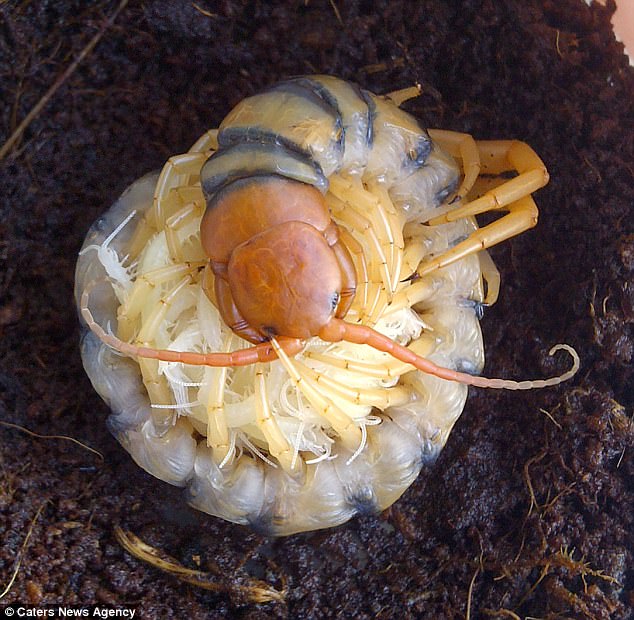
Every bug I post makes me a little less sad because I love bugs so much since I'm a bug-loving weirdo

538


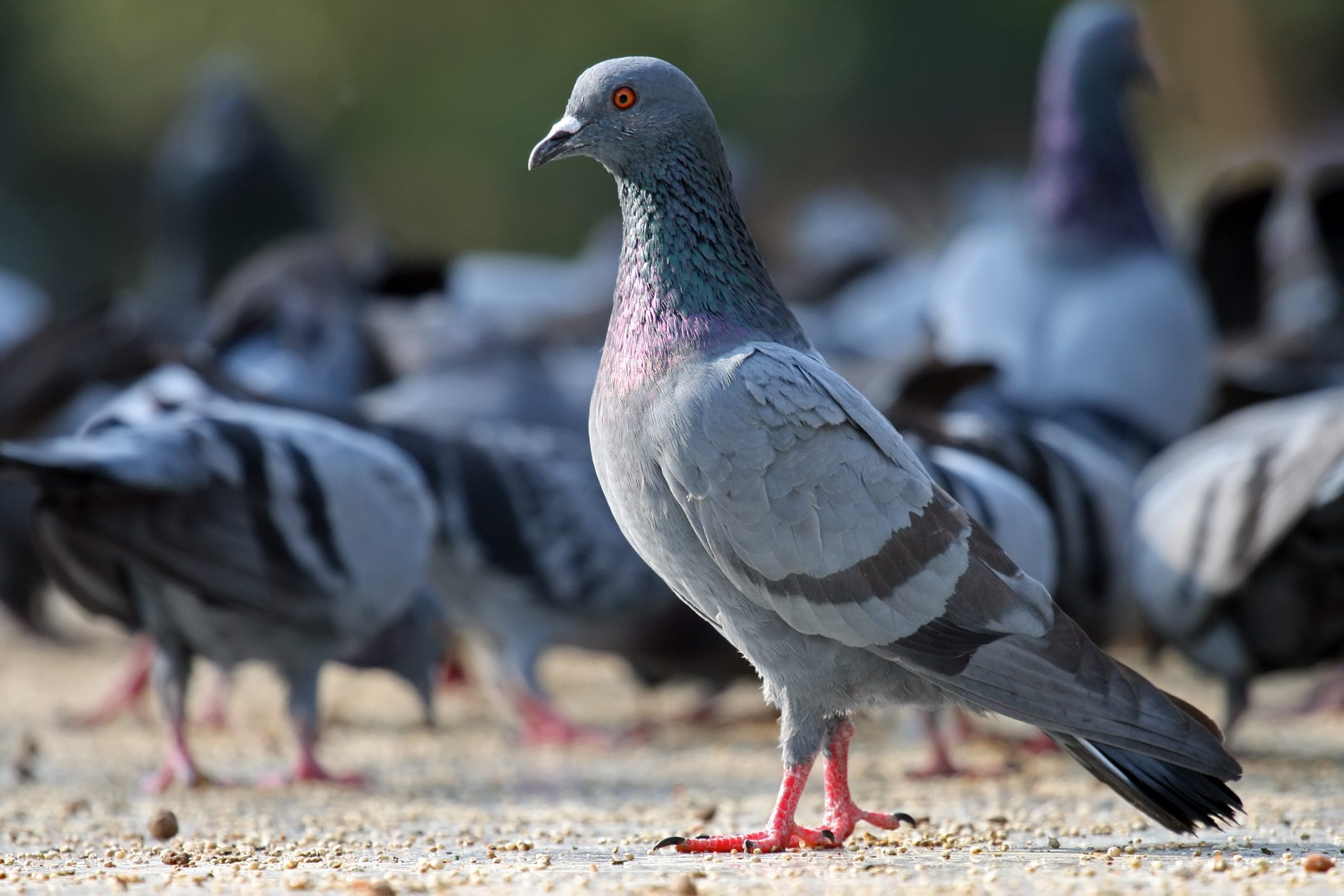
They are the proletariat of birds

539


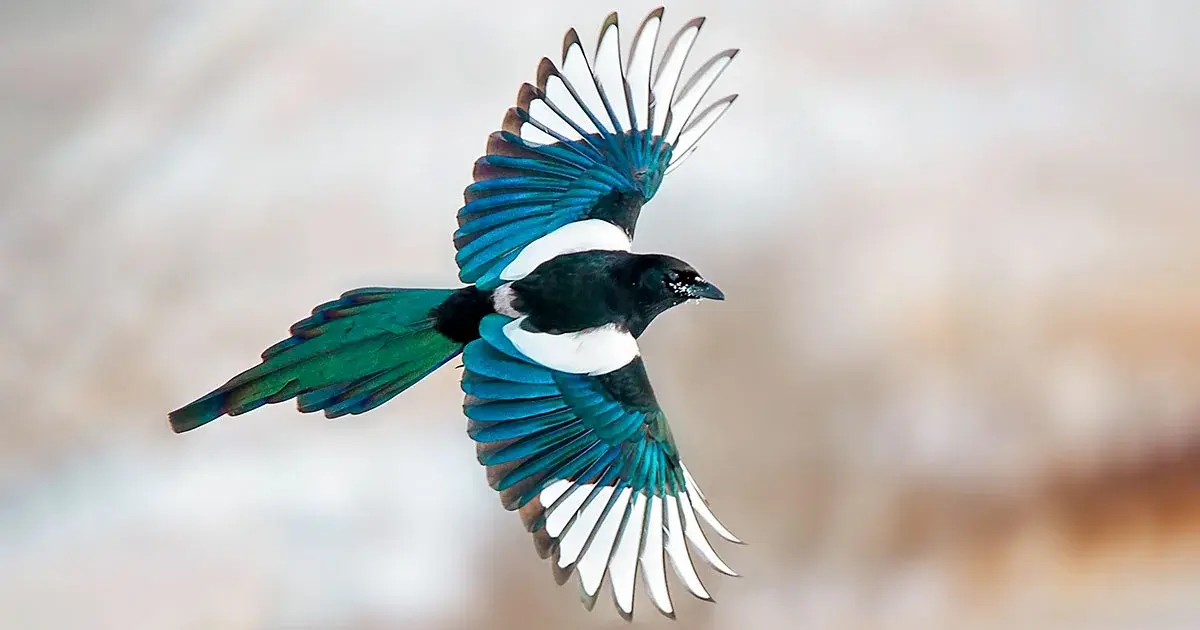
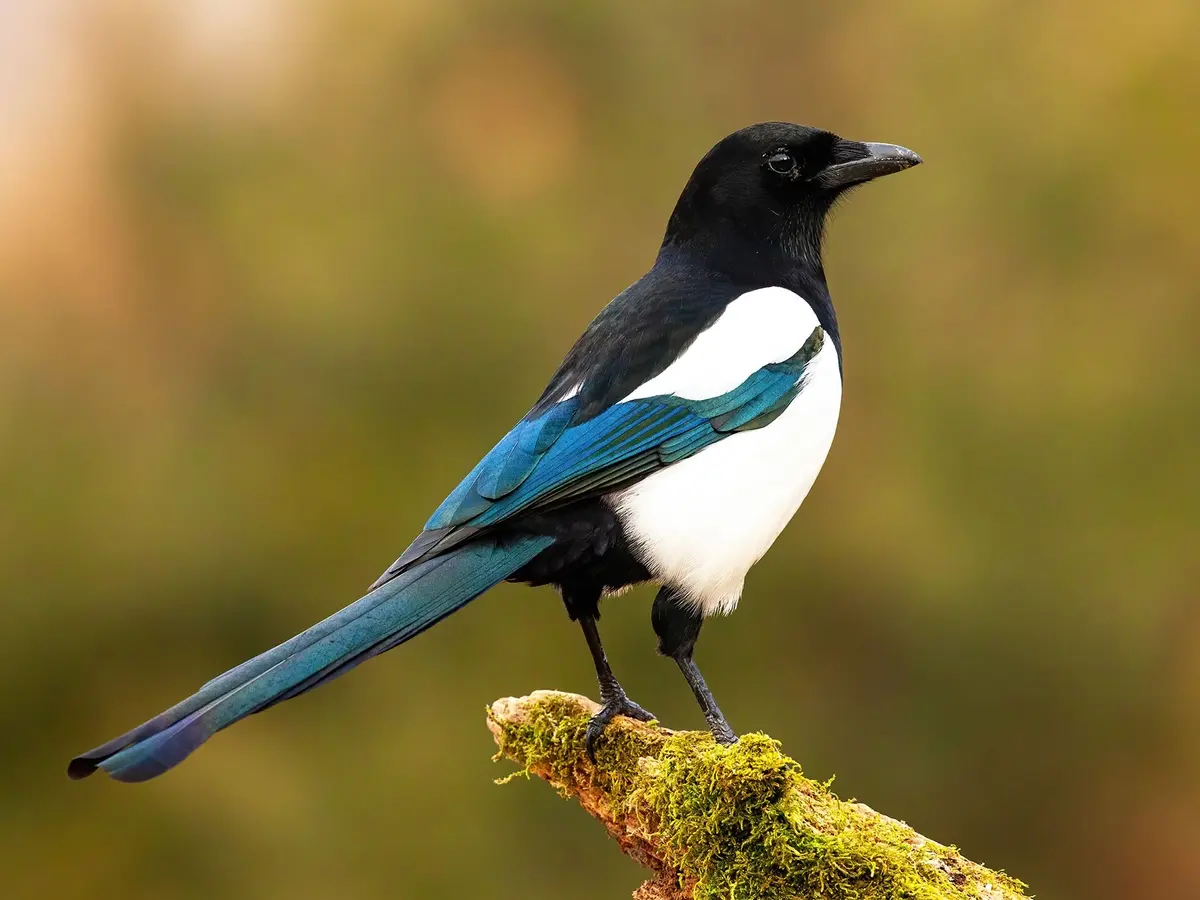
Eurasian Magpie, my favourite bird

540


They're so tiny

541


unfathomable degrees of floof

542


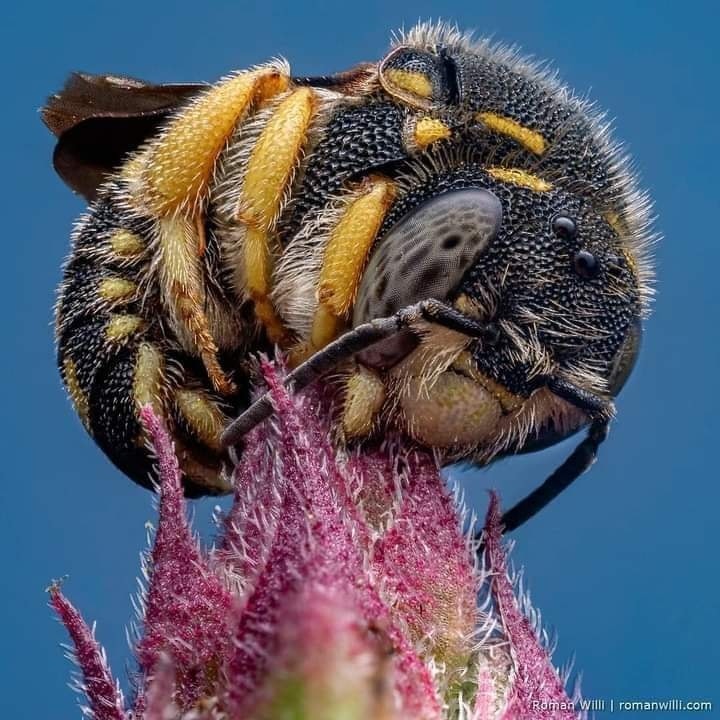
All tuckered out from her bee chores

(The sad bug posting continues)

543


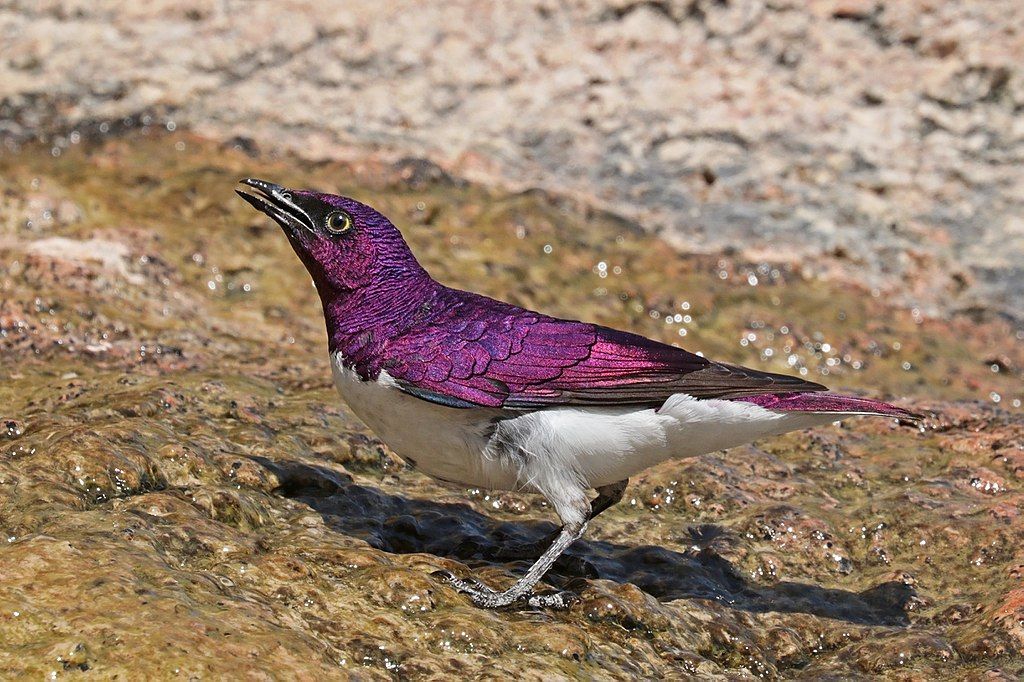
He's a violet backed starling.

544


Spoiler

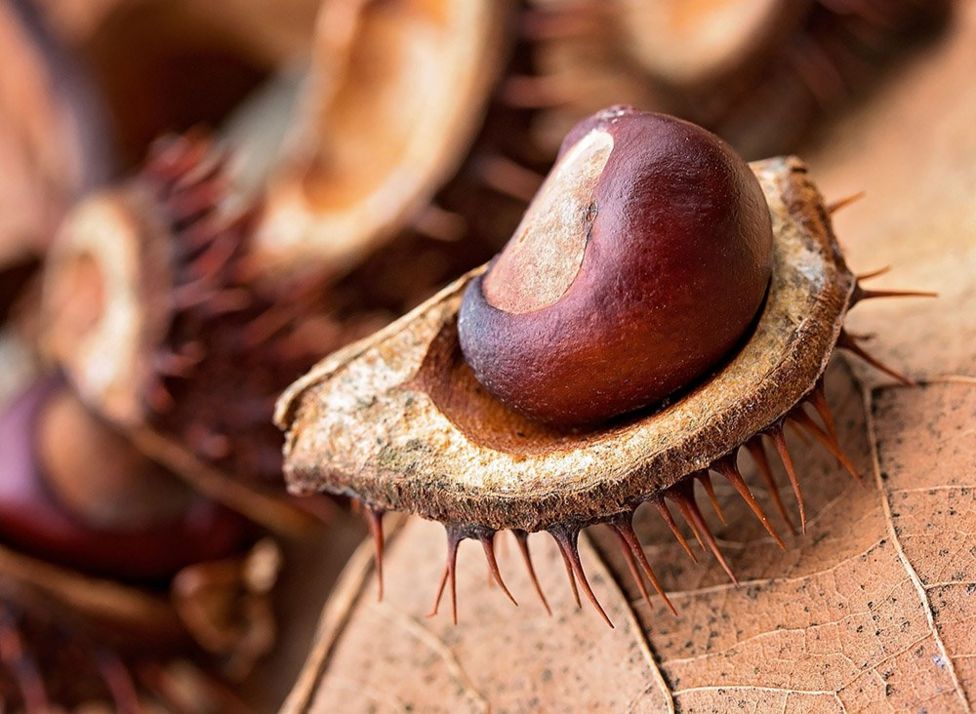
It's conker season. The rough exterior shell protects the smooth horse-chestnut inside.

---

Your pictures on the theme of 'texture' - BBC News

We asked our readers to send in their best pictures on the theme of "texture". Here is a selection of the photographs we received from around the world.

545


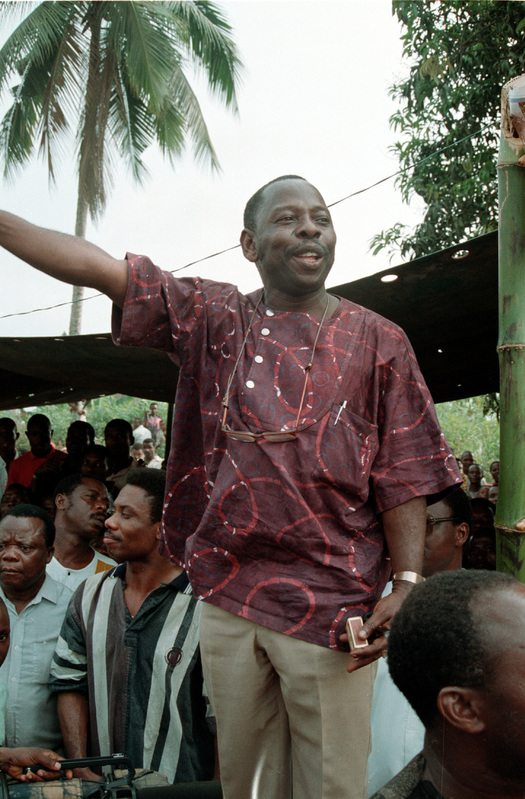
Ken Saro-Wiwa was a prominent Nigerian author, activist and television producer. He garnered attention by leading a nonviolent campaign against the multinational petroleum industry. That industry recklessly dumped petroleum waste in Saro-Wiwa’s home region, the Nigerian delta, which gave rise to severe environmental damage.

Saro-Wiwa was born on 10 October 1941 into a prominent Ogoni family. As a child, he demonstrated a talent for scholarship and, upon completing his secondary schooling at Government College Umuahia, he won a scholarship to read English at the University of Ibadan.

He taught briefly at the University of Lagos after graduating in 1965. But he soon left that position to pursue a bureaucratic career, and served as a federal administrator for the Bonny Island oil terminal. Nigeria experienced a civil war between 1967 and 1970, and during the conflict, Saro-Wiwa supported the government’s goal of preventing the state of Biafra from seceding. He gained an appointment as the commissioner for education in the Rivers State as a reward for his support.

He left government service in 1973 because he advocated greater autonomy for the Ogoni people. But he achieved considerable success in that decade in a variety of commercial ventures in real estate and retail. In the 1980s, though, he shifted his focus from business to television production, writing and journalism. He wrote a satirical television series, Basi & Company, which looked at looked at the lives of gang members in Lagos. The series was reportedly the most popular television series in Africa in its day. He also published books such as Sozaboy, and Forest of Flowers, and wrote a regular column for the Lagos Times. He managed to gain an audience beyond Nigeria due to his newspaper writing.

Saro-Wiwa served in one presidential administration in the late 1980s. But his service did not last for long and by the end of the decade he had come to believe that corruption was an entrenched feature of Nigeria’s successive military regimes and that that unfortunate state of affairs could not be challenged from within the existing political structure.

In 1990, he helped found the Movement for the Survival of the Ogoni People (MOSOP). He also wrote the Ogoni Bill of Rights and worked with Greenpeace International. He became the principal opposition leader in Nigeria. And MOSOP was one of the most visible groups that stood in opposition to economic exploitation of Nigeria’s oil resources, and the concomitant environmental fallout.

But his position atop the oppositional hierarchy was far from secure. MOSOP divided into competing factions. Some people within the fold advocated and resorted to violence. And some Ogoni tribal leaders believed in ongoing negotiation with international oil companies. So he found himself between people with irreconcilable approaches.

On 21 May 1994, four people who opposed Saro-Wiwa were killed in an attacked orchestrated by a group affiliated with MOSOP. Saro-Wiwa had typically decried the use of violence. But he was arrested and tried by a Nigerian military court all the same along with eight other people. The defendants were referred to as the Ogoni Nine. Saro-Wiwa was sentenced to death. And despite international protestation regarding the unfairness of the procedure, he was executed by hanging on 10 November 1995 before he could appeal his conviction.

Megathreads and spaces to hang out:

reminders:

  • 💚 You nerds can join specific comms to see posts about all sorts of topics
  • 💙 Hexbear’s algorithm prioritizes comments over upbears
  • 💜 Sorting by new you nerd
  • 🌈 If you ever want to make your own megathread, you can reserve a spot here nerd
  • 🐶 Join the unofficial Hexbear-adjacent Mastodon instance toots.matapacos.dog

Links To Resources (Aid and Theory):

Aid:

Theory:

546
 
 
547


The erect-crested penguin (Eudyptes sclateri) is a penguin endemic to the New Zealand region and only breeds on the Bounty and Antipodes Islands. It has black upper parts, white underparts and a yellow eye stripe and crest. It spends the winter at sea and little is known about its biology and breeding habits. Populations are believed to have declined during the last few decades of the twentieth century, and the International Union for Conservation of Nature has listed it as being "endangered".

Appearance:

This is a small-to-medium-sized, yellow-crested, black-and-white penguin, at 50–70 cm (20–28 in) and weighing 2.5–6 kg (5.5–13.2 lb). The male is slightly larger than the female and as in most crested penguins has a larger bill. It has bluish-black to jet black upper parts and white underparts, and a broad, bright yellow eyebrow-stripe which extends over the eye to form a short, erect crest. With a mean body mass in males of 6.38 kg (14.1 lb) (sample size 22) and females of 5.4 kg (12 lb) (sample size 22), the erect-crested penguin is the largest of the crested penguin species and as the fourth heaviest extant penguin, being nearly as heavy on average as the gentoo penguin.

Its biology is poorly studied and only little information about the species has emerged in the past decades. The only recent study conducted on the Antipodes Islands focused on aspects of the mate choice. Research on the species is hampered by logistics and restrictive permitting by the New Zealand Department of Conservation.

It presumably feeds on small fish, krill and squid like other crested penguin species.

Distribution

Erect-crested penguins breed on the Bounty and Antipodes Islands. Previous records of small breeding populations have also been reported from Campbell Island and the Auckland Islands; in the 1940s a breeding pair was documented on the Otago Peninsula on the New Zealand mainland. The species spends extended times at sea during the pre-moult period (February-March) as well as over the winter months (March-August). Individuals have been found as far away as the Falkland Islands and it is also a vagrant to Argentina, Antarctica and Australia.

Erect-crested penguins nest in large colonies on rocky terrain. On the Antipodes Islands, the penguins breed in mono-specific colonies or sometimes sympatrically with Southern Rockhopper penguins. On the Bounty Islands, Erect-crested penguins breed in large mixed colonies with Salvin's albatross.

Interactions with Humans:

In the past, extensive seal hunting took place on both the Antipodes Islands and the Bounty Islands, which without a doubt inflicted damage on the penguin habitat by introducing animals and destroying vegetation. There are also records of New Zealand merchants trading for Erect-crested skins. Warham in 1972 wrote that the survivors of the “Spirit of the Dawn,” a ship that wrecked at Antipodes in 1893, mainly survived on penguin meat and eggs. For the past hundred years, this species has had very minimal contact with humans, and now, except for a small number of researchers who are allowed, people are strictly prohibited from landing on these islands. Needless to say, not having direct contact with man does not make this penguin immune from man’s harmful actions. They are still affected by overfishing, global warming, and chemical changes taking place in our oceans.

Megathreads and spaces to hang out:

reminders:

  • 💚 You nerds can join specific comms to see posts about all sorts of topics
  • 💙 Hexbear’s algorithm prioritizes comments over upbears
  • 💜 Sorting by new you nerd
  • 🌈 If you ever want to make your own megathread, you can reserve a spot here nerd
  • 🐶 Join the unofficial Hexbear-adjacent Mastodon instance toots.matapacos.dog

Links To Resources (Aid and Theory):

Aid:

Theory:

548


An orange is a fruit of various citrus species in the family Rutaceae (see list of plants known as orange); it primarily refers to Citrus × sinensis,[1] which is also called sweet orange, to distinguish it from the related Citrus × aurantium, referred to as bitter orange. The sweet orange reproduces asexually (apomixis through nucellar embryony); varieties of the sweet orange arise through mutations.

The orange is a hybrid between pomelo (Citrus maxima) and mandarin (Citrus reticulata). The chloroplast genome, and therefore the maternal line, is that of pomelo. The sweet orange has had its full genome sequenced.

The orange originated in a region encompassing Southern China, Northeast India, and Myanmar, and the earliest mention of the sweet orange was in Chinese literature in 314 BC. As of 1987, orange trees were found to be the most cultivated fruit tree in the world. Orange trees are widely grown in tropical and subtropical climates for their sweet fruit. The fruit of the orange tree can be eaten fresh, or processed for its juice or fragrant peel. As of 2012, sweet oranges accounted for approximately 70% of citrus production.

In 2019, 79 million tonnes of oranges were grown worldwide, with Brazil producing 22% of the total, followed by China and India.

History

The sweet orange is not a wild fruit, having arisen in domestication from a cross between a non-pure mandarin orange and a hybrid pomelo that had a substantial mandarin component. Since its chloroplast DNA is that of pomelo, it was likely the hybrid pomelo, perhaps a BC1 pomelo backcross, that was the maternal parent of the first orange. Based on genomic analysis, the relative proportions of the ancestral species in the sweet orange are approximately 42% pomelo and 58% mandarin. All varieties of the sweet orange descend from this prototype cross, differing only by mutations selected for during agricultural propagation. Sweet oranges have a distinct origin from the bitter orange, which arose independently, perhaps in the wild, from a cross between pure mandarin and pomelo parents. The earliest mention of the sweet orange in Chinese literature dates from 314 BC.

In Europe, the Moors introduced the orange to the Iberian Peninsula, which was known as Al-Andalus, with large-scale cultivation starting in the 10th century, as evidenced by complex irrigation techniques specifically adapted to support orange orchards. Citrus fruits—among them the bitter orange—were introduced to Sicily in the 9th century during the period of the Emirate of Sicily, but the sweet orange was unknown until the late 15th century or the beginnings of the 16th century, when Italian and Portuguese merchants brought orange trees into the Mediterranean area. Shortly afterward, the sweet orange quickly was adopted as an edible fruit. It was considered a luxury food grown by wealthy people in private conservatories, called orangeries. By 1646, the sweet orange was well known throughout Europe. Louis XIV of France had a great love of orange trees and built the grandest of all royal Orangeries at the Palace of Versailles. At Versailles, potted orange trees in solid silver tubs were placed throughout the rooms of the palace, while the Orangerie allowed year-round cultivation of the fruit to supply the court. When Louis condemned his finance minister, Nicolas Fouquet, in 1664, part of the treasures that he confiscated were over 1,000 orange trees from Fouquet's estate at Vaux-le-Vicomte.

Spanish travelers introduced the sweet orange to the American continent. On his second voyage in 1493, Christopher Columbus may have planted the fruit on Hispaniola. Subsequent expeditions in the mid-1500s brought sweet oranges to South America and Mexico, and to Florida in 1565, when Pedro Menéndez de Avilés founded St Augustine. Spanish missionaries brought orange trees to Arizona between 1707 and 1710, while the Franciscans did the same in San Diego, California, in 1769. An orchard was planted at the San Gabriel Mission around 1804, and a commercial orchard was established in 1841 near present-day Los Angeles. In Louisiana, oranges were probably introduced by French explorers.

Archibald Menzies, the botanist and naturalist on the Vancouver Expedition, collected orange seeds in South Africa, raised the seedlings onboard, and gave them to several Hawaiian chiefs in 1792. Eventually, the sweet orange was grown in wide areas of the Hawaiian Islands, but its cultivation stopped after the arrival of the Mediterranean fruit fly in the early 1900s.

As oranges are rich in vitamin C and do not spoil easily, during the Age of Discovery, Portuguese, Spanish, and Dutch sailors planted citrus trees along trade routes to prevent scurvy.

Florida farmers obtained seeds from New Orleans around 1872, after which orange groves were established by grafting the sweet orange on to sour orange rootstocks.

Megathreads and spaces to hang out:

reminders:

  • 💚 You nerds can join specific comms to see posts about all sorts of topics
  • 💙 Hexbear’s algorithm prioritizes comments over upbears
  • 💜 Sorting by new you nerd
  • 🌈 If you ever want to make your own megathread, you can reserve a spot here nerd
  • 🐶 Join the unofficial Hexbear-adjacent Mastodon instance toots.matapacos.dog

Links To Resources (Aid and Theory):

Aid:

Theory:

now all fediverse discussion will be considered a current struggle session discussion and all comment about it are subject to be removed and even banning from the comm.

have all of you a good day/night meow-coffee

549
 
 
550
 
 
view more: ‹ prev next ›