The Grind & Bind Art Alchemist's Guild

61 readers
39 users here now

This is a dark place.

Most art will leave you feeling inspired and maybe even joyful if not a little thoughtful. That won't happen here.

This is a place of paint drinking gremlins with caustic burns on our hands and ink stains on our feet. A dark, damp basement smelling of bleach and burning and bioplastics, of empty wallets and ephemeral passions, of education, of science.

Most art makes people better, but this place can only make you worse, poorer, stained, and consumed by the craft.

Welcome to The Grind and Bind Art Alchemist's Guild.

An artist's community for the kind of people who don't just paint, they grind the pigments themselves. It's for potters who build their own kilns and dig their clay up from the river bed. For weavers who spin their own wool, and, hell, probably know the name of the sheep.

All flavors of inspiration are welcome. Talk about your materials, your processes, post art lore, discuss art-adjacent topics, and share your pieces for questions, praise and critique.

How it goes:

Be kind

Do onto others with kindness and civility. Be curious. Follow the instance rules.

Images:

All posts must have an image, even if you're asking for advice. Post your cat, or your neighbour's cat, whatever. No AI. Please attribute appropriately. Tag NSFW if necessary.

Content

For art, talk about the piece and the process. For media and methods, tell us how you did it. If you're asking for advice, try to be clear and concise with your questions.

Tags Required

[Show and Tell]— Show off your finished or mostly finished pieces.

[Advice Wanted] — "How do you...?" and "Please help, something exploded," kind of thing.

[Info] — Free, online information on DIY media.

[From Scratch] — For all DIY art-making materials. Paints, spun wool, a new kiln, glass blowing studio, bioplastics reactor, etc.

[Discussion] — In the huddle of stained alchemists debate and hugs are equally encouraged.

[Misc] — Anything that doesn't fit in the above categories, but you think still vibes with fhe community.

On Self-Promotion

We all need to put food in the ferret bowl, but let's not talk money here. Do not list prices or link to a personal sales page. Linking to a site that has a sales page is fine as long as that's not the purpose of posting. If someone asks to buy something please take it to DMs. This is a hard rule.

Icon drawn by Wren

Banner image taken by Cottonbro on Pexels

founded 3 days ago
MODERATORS
1


I was inspired to make a community after this post.

This is a dark place.

Most art will leave you feeling inspired and maybe even joyful if not a little thoughtful. Not here.

This is a place of paint drinking gremlins with caustic burns on our hands and ink stains on our feet. A dark, damp basement smelling of bleach and burning. Of empty wallets and ephemeral passions. Of education. Of science.

Most art makes people better, but this place can only make you worse. Poorer, stained, consumed by the craft.

This is an art community for people who don't just draw, they gather oak galls in the night, pockets full of inkstuffs and hair full of sticks and leaves.

Pictured above: My crowded kitchen counter full of filtering pigments made using the lake pigment method.

The blue and purple are from the same cabbage, red from beets, mauve from avocado skins. The yellow orange and brown are all from the leftover water from making carrot lox, expired orange juice, spilled tumeric, and old lemon rind mixed together with different chemicals added to change the shades.

So, what kind of things would folks like to see here?

2


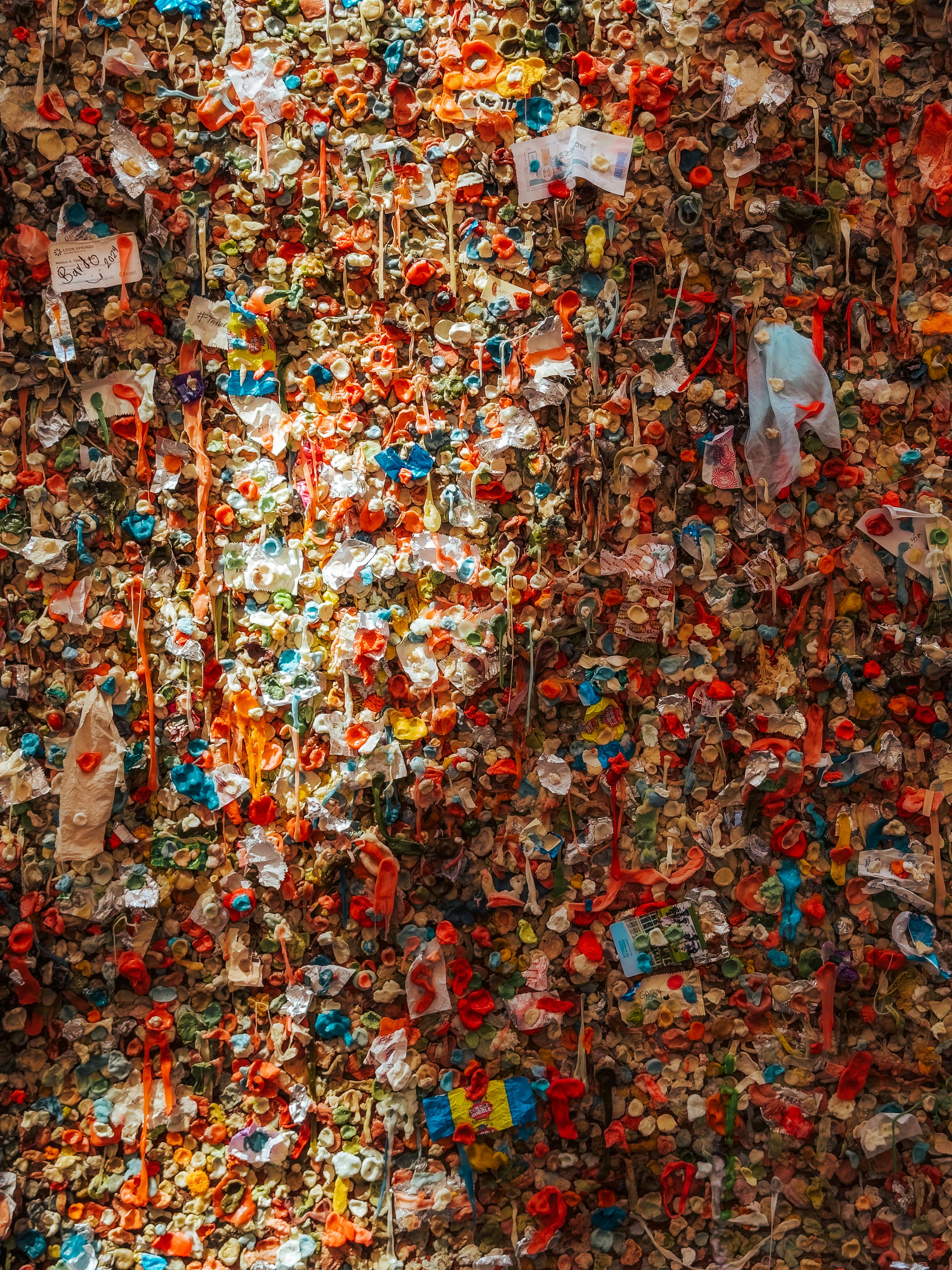
Photo: The gum wall in Seattle, Washington, U.S.A. by Hudson MacDonald on Pexels.

Cicada exoskeleton jewelry? Pop can tab armor? A wedding dress spun and knit from plastic bags?

What was your weirdest inspiration?

3


Did you know you can recycle paper on your own? You can even make paper out of non-paper.

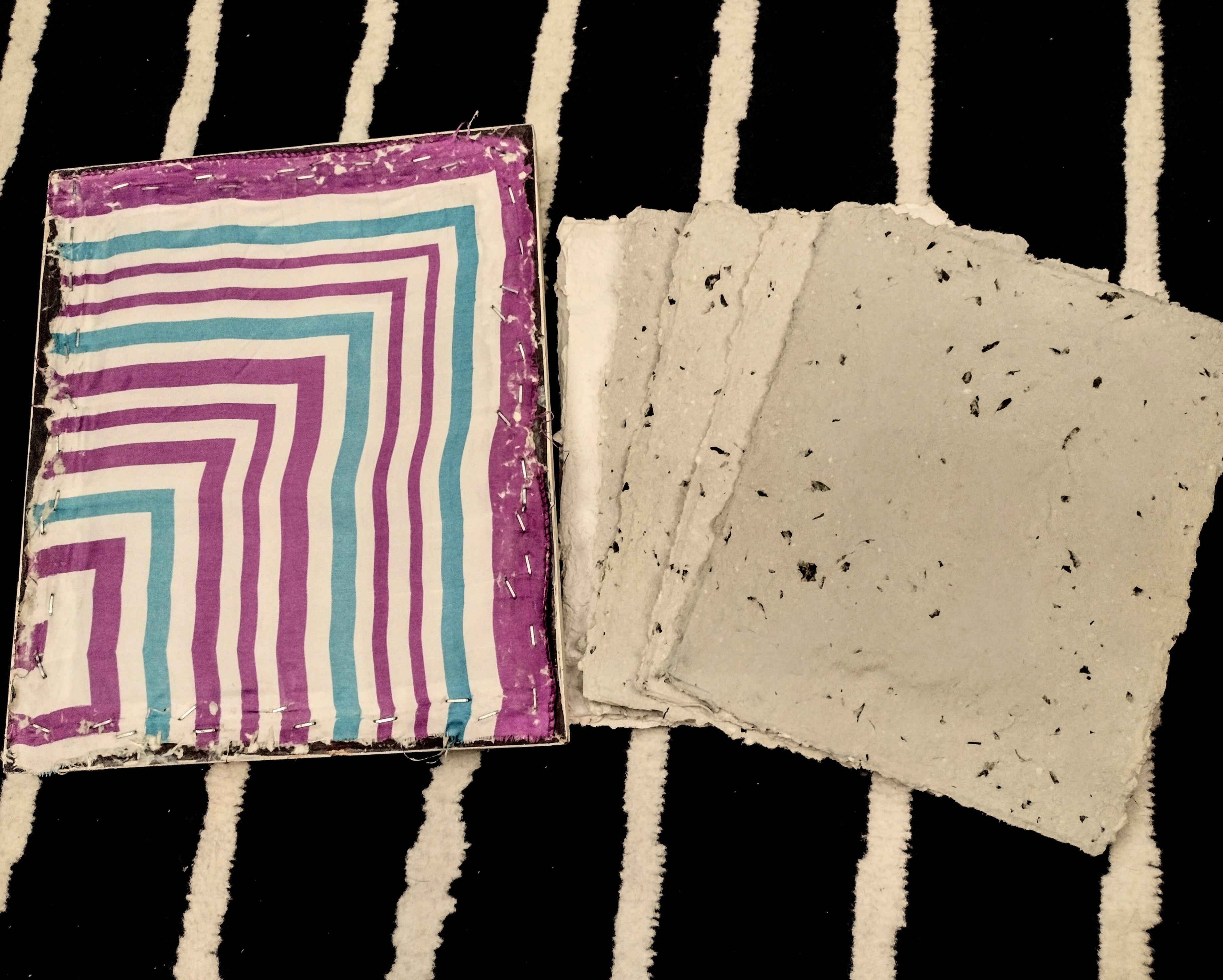
Using my trash gremlin screens made of thrifted silk scarves stapled to picture frames, I've made hundreds of sheets from collected junk mail, packages, and other waste. I also dry out herbs and banana and citrus fruit peels to add or make into paper on their own.

DIY paper is a bit too rough for fine line drawing and detailed painting, but it's a neat vibe for crafts and covers for bookmaking/repairing.

All you need is gloves, a screen (as explained above,) a dedicated blender, a bucket big enough to fit your screen, and a whole lot of towels. The learning curve is shallow, it only takes a bit of practice to get a good sheet. You can get thinner, flatter sheets by sandwiching the paper between two screens and hanging to dry.

These sheets were made from personal paper waste and a dead mint plant.

4


As India nears its 100th year of independence, plans for highways, smart cities, and bullet trains dominate its future narrative. But in the hills of Meghalaya, another blueprint persists—one built not on concrete, but on roots. For generations, the Khasi and Jaiñtia tribes have grown bridges, not built them—living structures coaxed from rubber fig trees, shaped by hand over decades, passed down like heirlooms. But that inheritance is at risk. Tourism moves faster than the roots. Policy arrives from the top down. And the knowledge—passed barefoot through forests, from uncle to nephew—is fading.

Morningstar Khongthaw, a 29-year-old Khasi conservationist, is trying to hold the line. His story isn’t just about preserving tradition. It’s about whether we still know how to grow anything that lasts.

“Root bridges are perhaps one of the most elegant examples of ecological intelligence and cultural heritage intertwined,” says Sameer Shisodia, CEO of Rainmatter Foundation, which supports community-led conservation projects across India. “Morningstar’s careful approach shows us that meaningful innovation often lies in quietly enhancing traditions rather than forcing external solutions.”

“A single tree is a forest,” Morningstar said. “Imagine if we had more.” He sees the Ficus not just as a structure, but as an anchor and climate shield. “They help the water table, prevent landslides. Even a lone Ficus supports life—birds, squirrels, insects, people.”

Putting the focus on a lesser known art form. The beauty that comes from necessity is breathtaking in these bridges. It makes me wonder if I could coax roots to grow in unique shapes.

5


As it turns out, you can make spinning even more labour intensive than a hand spindle by making one of the most basic tools yourself. It's not efficient, but it is calming. When you finally get enough to make a small cloth, you'll wonder why you didn't just buy a skein at the store, then you'll remember: That's not how we do things here.

Did you know people have been using hand spindles for at least 7000 years?

Here's a hat I made with wool spun on a drop spindle(I dyed it, too:)

6


This is the most vivid yellow I've made so far. It only took the peels of about ten lemons to make 2x this (there will be much, much less when it dries.) I used the juice to shift the colour in my red cabbage dye, and to make a zesty screwdriver.

Lemon juice is a slightly lower PH than cleaning vinegar, so it doesn't take as much.

I should have taken a pic of my tests when I filled a handful of small jars with the lemon dye to determine which chemicals to use. The combination of aluminum phosphate(alum) and sodium carbonate(washing soda) turned it red, but aluminum sulphate and washing soda didn't shift the colour at all.

Copper mordant bleached it a tiny bit and iron mordant turned it brown.

7


This page provides an “in-progress” alphabetical list of plants that I use successfully to eco print textiles and paper as described in my blog posts. The plants are garden-grown or foraged locally (in the Ottawa, Ontario area), with an emphasis on native plants for all North America, especially the north-east and that can also be grown in other parts of the world. I have given the common names in English and French, plus the scientific (Latin) names, noting briefly colours most often obtained in eco prints with alum mordant.

A superb and sciencey documentation of one person's journey printing with natural materials. There are quite a few pages on the site on the subject of natural dyes and eco-printing, including a how-to on raw material printing.

8


By rummaging in old libraries, I uncovered several ancient recipes for pastels. The authors most certainly had uses in mind other than street painting, but they served as a starting point. These were personal formulas based on the experiences and intuitions of the artists who wrote them down. They called for mixing natural pigments with a range of comestible binders, such as sugar, milk, fig’s milk, beer, ale, and honey. Orwell reports that pavement artists bought their colors in the form of powder and worked them into cakes using condensed milk as the binder. The old recipes simply consisted of ingredient lists, without mixing proportions, apart from the occasional spoonful or cupful of an ingredient (although there was no standardization for the size of a spoon or cup).

Did you know that "Master" is a legitimate designation? This guy backs up the title with the amount of research he puts into every part of his art, down to reseaeching the historical formulas for mandonnari pastels.